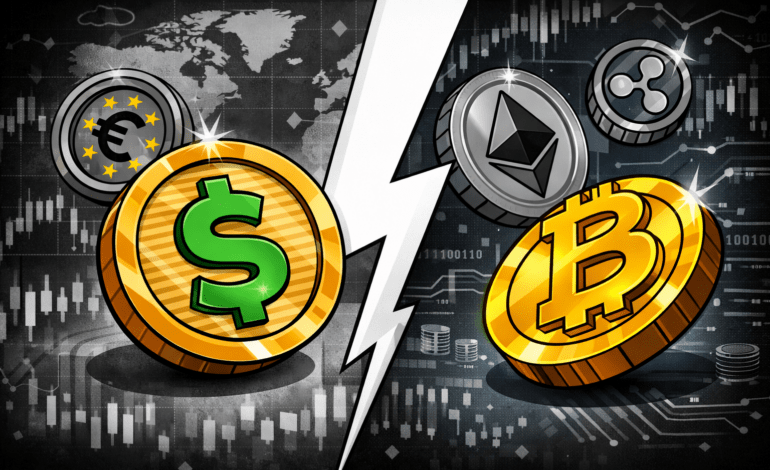









Everyone Is Talking About Forex – But What Is It Really?

If you’ve been on Kenyan social media lately, you’ve probably seen people talking about forex like it’s a fast road to wealth. Screenshots of profits, “signals,” WhatsApp groups, and promises like “turn 2k into 20k.”
But before you risk your money, you deserve a clear explanation. We will be answering the following questions:
- What is forex?
- How does forex trading work?
- Why do currency prices move?
- Who is trading forex?
- Where do people trade forex?
- How do people make money in forex?
- What are the common forex traps?
Let’s break it down.
1) Forex means “Foreign Exchange”
Forex is simply the market where currencies are exchanged.
If you’ve ever changed Kenyan shillings to dollars for travel, online shopping, or school fees abroad, you have already interacted with foreign exchange.
The difference is this:
- Normal people exchange currency because they need it.
- Forex traders try to profit from changes in currency prices.
2) How does forex trading work?
Currencies are traded in pairs, because you’re exchanging one currency for another.
Examples:
- EUR/USD (Euro vs US Dollar)
- GBP/USD (British Pound vs US Dollar)
- USD/JPY (US Dollar vs Japanese Yen)
When you trade a pair, you’re basically making a prediction:
- If you think the first currency will rise compared to the second, you buy.
- If you think it will fall, you sell.
A simple example
Imagine EUR/USD is 1.10.
That means: 1 Euro = 1.10 US Dollars
If the Euro becomes stronger, the rate may move to 1.12.
If you bought earlier, you could profit from that movement.
Sounds simple, right?
The problem is: prices can move against you just as fast.
3) Why do currency prices move?
Forex prices move because of big real-world events, especially:
– Interest rates
When a country raises interest rates, its currency may become more attractive to investors.
– Inflation and cost of living
High inflation often weakens a currency.
– Economic news
Jobs numbers, GDP, trade balance, central bank announcements.
– Political events and uncertainty
Elections, conflicts, major policy changes.
– Market sentiment
Sometimes traders react emotionally, and prices move fast even before the “real reasons” are clear.
In short: Forex is driven by global economics, not just luck.
4) Who is trading forex?
Forex is one of the largest markets in the world. It’s dominated by:
- Big banks
- Investment funds
- Large companies doing international business
- Central banks
Retail traders (normal people like us) are a small part of the market.
That doesn’t mean you can’t make money – but it does mean you are competing in a space where many players have:
- better tools
- faster information
- larger capital
- more experience
5) Where do people trade forex?
Most beginners trade using a broker.
A broker is a company that gives you a trading platform and connects you to the market.
Popular platforms you might hear about:
- MetaTrader 4 (MT4)
- MetaTrader 5 (MT5)
Important: You are not trading “on Telegram.”
Telegram and WhatsApp groups usually just share “signals” (trade suggestions). The actual trading happens through a broker.
6) How do people make money in forex?
There are two main ways:
A) Making profit from price movement
Buy low, sell higher or sell high, buy back lower.
B) Using leverage (this is where the danger starts)
Many brokers offer leverage, meaning you can control a bigger trade with a small amount of money.
Example:
- You deposit KSh 5,000
- With leverage, you can open a trade worth much more than 5,000
This can increase gains… but it also increases losses.
Leverage is why forex can wipe an account quickly.
7) The truth about forex: it is not “easy money”
Forex is real. It’s not a scam by default.
But the way it’s marketed online often makes it look like:
- quick
- guaranteed
- simple
In reality, forex is a high-risk activity where many beginners lose money because of:
– No risk management
They risk too much per trade.
– Overtrading
They trade all day out of excitement or panic.
– Following signals blindly
They don’t understand why they’re entering a trade.
– Emotions
Fear makes them close too early.
Greed makes them hold too long.
– Thinking they can “recover” losses fast
This leads to revenge trading and bigger losses.
If someone shows you only profits and never losses, that’s already a red flag.
8) Common forex traps
Here are scams and “soft scams” that are common anywhere forex gets popular:
– Fake account screenshots
Screenshots are easy to fake. Some people use demo accounts and pretend it’s real money.
– “Send money I trade for you”
This is risky. If they disappear, you may never recover your money.
– Signals groups that push you to deposit with a specific broker
Sometimes they earn money when you deposit or lose money (affiliate schemes).
– Unrealistic promises
“Guaranteed daily profits”
“90% accuracy”
“Double your money weekly”
Real trading has losing days. Anyone promising guaranteed returns is not being honest.
– Courses marketed like a shortcut to riches
Education is good—but not when it’s sold as a guarantee.
9) If you want to learn forex, start the safe way
If you’re curious, you don’t have to rush.
Step 1: Learn the basics first
Understand:
- currency pairs
- spread
- leverage
- lot size
- stop loss and take profit
- risk management
Step 2: Use a demo account
A demo account lets you practice with “fake money” using real market prices.
It’s not perfect (because emotions are different), but it helps you learn the platform and basics.
Step 3: If you go live, start small
Only use money you can afford to lose.
A smart mindset is:
“I’m paying to learn.”
Not:
“I’m paying rent with forex next week.”
Step 4: Avoid borrowing money to trade
Borrowing creates pressure and pressure leads to bad decisions.
10) Is forex better than crypto?
They are different.
Forex:
- mostly driven by global economics and interest rates
- generally less volatile than crypto
- often involves leverage (which increases risk)
Crypto:
- can move very fast
- influenced by market sentiment, regulation news, hacks, and hype cycles
- also has leverage on some platforms
Both can be profitable. Both can be dangerous.
The real question is: Do you understand what you’re doing?
Now that we’ve unpacked what forex is, the obvious question follows. In the next article, we’ll compare forex and crypto and look at how they differ, where they overlap, and why that distinction matters.