








Bitcoin Is Too Slow? Meet the Lightning Network

If you have ever tried to send Bitcoin and thought, “Why is this taking so long?” or “Why is this fee higher than my lunch?” you are not alone.
Bitcoin is secure. Bitcoin is decentralized. Bitcoin is powerful. But it is not always fast or cheap for small everyday payments.
That is where the Lightning Network comes in.
Think of Lightning as Bitcoin’s fast payment layer that sits on top of the main network. It helps Bitcoin move quickly without changing how Bitcoin itself works.
Let’s walk through it in simple terms and answer the questions that usually come to mind.
Why Bitcoin Needs Lightning
Bitcoin creates a new block about every 10 minutes. That delay is intentional. It protects the network and makes attacks extremely difficult.
The downside is that Bitcoin’s main network cannot handle thousands of small payments every second the way payment companies like Visa can.
If everyone in the world tried to buy coffee with Bitcoin directly on the main network, transactions would slow down and fees would rise. It would feel like trying to drive through town during rush hour when everyone had the same idea.
Bitcoin was designed to be secure first. Speed came second.
Instead of changing Bitcoin’s rules, developers built another layer on top of it. That layer is the Lightning Network.
Lightning is not a new cryptocurrency. It does not have its own coin. You use the same Bitcoin you already have. The only difference is how the payments move.
Lightning allows small payments to happen instantly and cheaply, while the final balance is still secured by the Bitcoin network.
How Lightning Works in Simple Terms
Imagine you and a friend buy lunch together every day.
Instead of sending Bitcoin to each other every single time, you could open a shared tab. Both of you put some Bitcoin into a shared balance. Then you update who owes what during the week.
You can update the balance instantly as many times as you want. When you are done, you close the tab and record the final balance on the Bitcoin network.
That shared tab is basically what Lightning calls a payment channel.
Lightning connects thousands of these channels together. This means you do not need a direct channel with every person you pay. The network finds a path automatically, similar to how the internet routes data.
You do not need to understand the technical details. Your wallet handles that for you.
Using Lightning Requires the Right Wallet
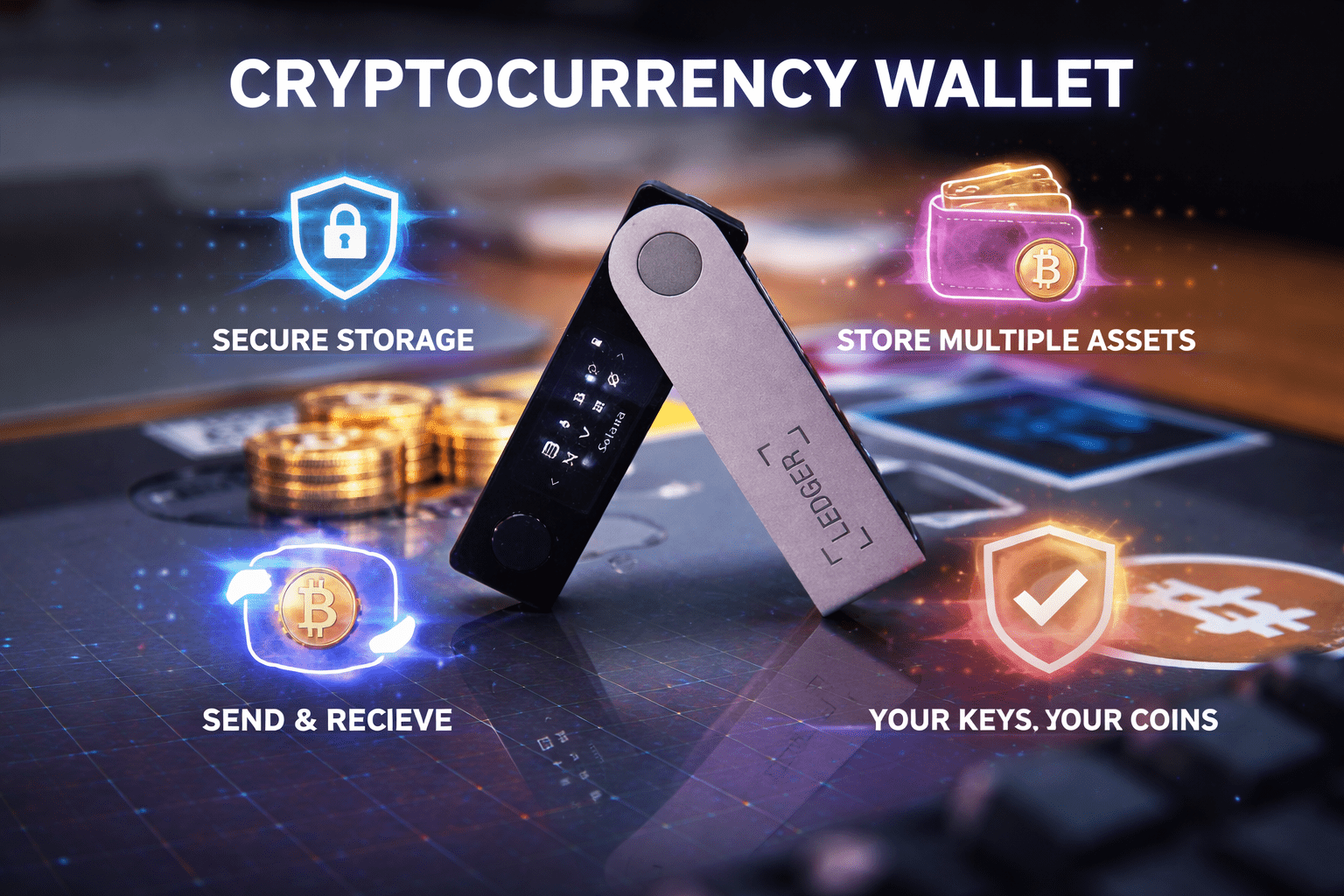
To use Lightning, you need a wallet that supports it. The good news is that you do not need special Bitcoin. Your normal Bitcoin works fine.
Modern wallets handle most of the complicated parts behind the scenes. For a beginner, Lightning can feel almost as simple as sending a normal payment.
Some beginner-friendly Lightning wallets include Wallet of Satoshi, Phoenix Wallet, Muun Wallet, and BlueWallet.
Wallet of Satoshi is one of the easiest ways to get started. You install it and start sending payments almost immediately. The downside is that the company holds your Bitcoin, which means you must trust them.
Phoenix Wallet and Muun Wallet give you more control. They manage the technical parts automatically while still letting you control your funds.
BlueWallet gives more flexibility and options while still remaining beginner friendly.
If you are completely new, Wallet of Satoshi or Phoenix are usually the easiest starting points.
When sending Bitcoin from a Lightning wallet, you will usually see two types of payments.
A normal Bitcoin address looks like a long string of letters and numbers and often starts with bc1, 3, or 1. These payments go through the main Bitcoin network and may take time to confirm.
Lightning payments use something called an invoice. These usually look longer and often start with lnbc. Lightning invoices are designed for fast payments and usually expire after some time.
Sending a Lightning payment usually looks like this. You tap Send, scan a QR code or paste the payment request, and confirm. The wallet often detects automatically whether the payment is Lightning or regular Bitcoin.
Receiving is just as simple. You tap Receive, select Lightning, enter the amount, and generate an invoice. The sender scans the invoice and the payment arrives almost instantly.
After a few tries, it usually feels no different from sending a mobile money payment.
You may hear the terms custodial and non custodial wallets.
Custodial wallets hold your Bitcoin for you. They are simple but require trust in the provider.
Non custodial wallets give you full control of your Bitcoin. They are safer in the long run but may require slightly more setup.
The important thing for beginners is simply to start with a wallet that feels easy to use.
Exchanges and Lightning
Some large exchanges support Lightning, but not all of them do.
This surprises many beginners. Just because an exchange supports Bitcoin does not mean it supports Lightning.
Support is improving as the technology becomes more popular.
Some exchanges such as Binance and Kraken allow Lightning deposits and withdrawals. When Lightning is available, you usually see it as a network option when withdrawing Bitcoin. Instead of choosing the normal Bitcoin network, you select Lightning and paste a Lightning invoice from your wallet.
Other exchanges still rely mainly on normal Bitcoin transactions. Because support varies, it is always worth checking before trying to use Lightning.
Even if an exchange supports Lightning, many people prefer moving Bitcoin into a personal wallet before spending it.
A simple way to remember this is that exchanges are good for buying Bitcoin while Lightning wallets are better for spending it.
Is Lightning Safe?
This is one of the first questions beginners ask.
Lightning is designed to be safe because it uses Bitcoin’s security.
When you use Lightning, your Bitcoin is still protected by the main Bitcoin network. Lightning does not replace Bitcoin. It works together with it.
Some of your Bitcoin is temporarily locked so that fast payments can happen. That Bitcoin still belongs to you. No one can just take it.
If something goes wrong, the Bitcoin network acts like a referee and makes sure the correct balance is returned.
Modern Lightning wallets handle most of this automatically. In daily use, it usually feels no different from a normal wallet.
What If Something Goes Wrong
People often worry about what happens if the other person disappears or stops using Lightning.
Your Bitcoin does not disappear with them.
You can close the payment channel and recover your Bitcoin through the normal Bitcoin network. Most wallets provide a simple way to do this.
The system is designed so that neither person can run away with the money.
As long as you control your wallet, you control your Bitcoin.
Lightning payments themselves are usually irreversible, just like normal Bitcoin payments. It is always important to double-check before sending.
The good news is that Lightning invoices are created fresh for each payment and usually expire, which helps prevent mistakes.
Lightning payments cannot be sent directly to normal Bitcoin addresses. However, many wallets allow easy switching between Lightning and regular Bitcoin inside the app.
Can Lightning Really Compete With Traditional Payments?
Companies like Visa process thousands of transactions every second.
Bitcoin’s base layer cannot do that.
Lightning was designed to move Bitcoin closer to that level of speed while keeping Bitcoin decentralized and secure.
Because Lightning payments happen off the main blockchain and settle later, the network can handle far more transactions than Bitcoin alone.
Whether Lightning reaches the same level of reliability as traditional payment systems depends on adoption and continued improvements.
But technically, Lightning makes high speed Bitcoin payments possible.
Common Concerns
Some people worry that Lightning might become centralized because certain nodes handle many payments.
However, anyone can run a Lightning node and the network remains open.
Lightning still depends on Bitcoin’s decentralized base layer for final settlement.
Others wonder whether governments could shut Lightning down. Since Lightning runs on top of Bitcoin and Bitcoin operates globally, shutting down the entire network would be extremely difficult.
Lightning also does not change Bitcoin’s 21 million coin limit. No new Bitcoin is created. Lightning simply moves Bitcoin more efficiently.
Lightning will probably not replace banks entirely. Many people may still use banks for convenience and services. Lightning simply gives people another option for sending money.
Lightning was not part of Bitcoin at the beginning because Bitcoin first needed to prove that decentralized digital money could work. As adoption grew, scaling solutions like Lightning became necessary.
The Bigger Picture
Without Lightning, Bitcoin might mostly function as digital gold. People would store value and move funds occasionally while paying higher fees for strong security.
With Lightning, Bitcoin can also work as everyday digital cash.
If Bitcoin wants to compete globally for payments, it needs to offer something close to the speed and cost of traditional payment networks. Lightning is the attempt to achieve that while preserving decentralization.
We are still early. Adoption is growing and wallets are improving every year.
Lightning is not perfect, but it is one of the most serious attempts to make Bitcoin practical for everyday payments.