








When Hormuz Shakes, Africa Listens

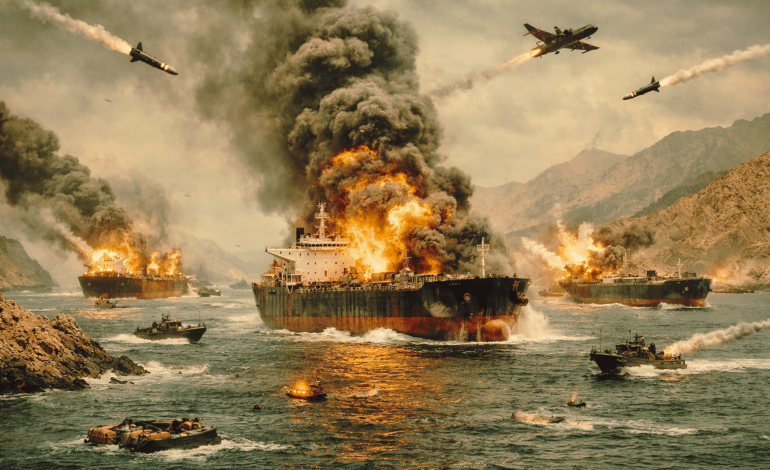
The Strait of Hormuz is only about 39 kilometers wide at its narrowest point. Yet through it flows nearly a fifth of the world’s oil supply. It is a corridor of steel hulls and silent calculations, tankers, insurers, naval escorts, futures traders.
When it trembles, the world reprices risk.
And when the world reprices risk, Africa feels it.
A Brief History of a Narrow Passage
The Strait has rarely been fully closed in modern history, but it has often been threatened.
During the 1980s Iran–Iraq “Tanker War,” both sides targeted oil vessels. In recent years, tensions between Iran, the United States, and Gulf states led to vessel seizures and military escorts, but traffic never stopped completely.
The Strait has never sustained a long-term total closure in recent decades. Why?
Because closure is mutually destructive. Gulf economies depend on exports. Global powers depend on supply stability. The Strait survives on deterrence and interdependence.
Yet even the threat of closure is enough.Markets do not wait for ships to sink. They move in anticipation.
Kenya: A Price Taker in a Volatile World
Kenya does not sit on the Persian Gulf. But Kenya buys fuel in a global market priced in Brent.
If Hormuz traffic is disrupted:
- Global crude prices spike
- Shipping insurance costs rise
- Freight premiums increase
Fuel is not just petrol at the pump.
It is a transport for maize.
It is diesel for generators.
It is power for manufacturing.
It is the input cost embedded in nearly every good.
Higher energy prices push inflation upward.
Inflation pressures interest rates.
Higher rates constrain credit.
Credit constraints slow enterprise growth.
The chain reaction is invisible, but real.
Africa’s Energy Exposure is Uneven but Connected
Africa is not uniform.
Nigeria and Angola export oil.
Kenya, Rwanda, Uganda, and much of East Africa import it.
South Africa refines but remains dependent on global pricing dynamics.
If Hormuz disruption is prolonged:
- Oil exporters may enjoy short-term revenue windfalls.
- Oil importers face widening trade deficits.
- Food-importing nations feel secondary inflation through fertilizer and shipping costs.
Energy is a universal denominator.
Even countries not importing directly from the Gulf experience price contagion because oil is globally benchmarked.
Could Mombasa or Durban Benefit?
At first glance, ports like the Port of Mombasa or the Port of Durban might appear positioned to gain from rerouted maritime flows.
But the benefit narrative is limited.If Gulf shipments reroute around Africa’s Cape of Good Hope to avoid risk zones, South Africa’s maritime traffic could see temporary increases in bunkering and port services. Durban may capture marginal service revenue.
Mombasa, however, is primarily a regional gateway serving East Africa’s hinterland. It is unlikely to become a substitute corridor for Middle East–Asia oil flows.In fact, higher shipping costs could reduce trade volumes passing through African ports rather than expand them.
Ports thrive on stable, predictable logistics. Crisis is rarely good for throughput.
The Digital Asset Connection: Energy Is Infrastructure
There is another dimension often overlooked.
Energy prices shape liquidity.
When oil rises sharply:
- Inflation expectations climb
- Central banks delay rate cuts
- Bond yields adjust
- Global liquidity tightens
Digital assets are sensitive to liquidity cycles.
When liquidity is abundant, Bitcoin rallies.
When liquidity contracts, risk assets reprice.
Yet there is a paradox.
If energy shocks weaken fiat currencies in emerging markets, Bitcoin and other crypto assets can simultaneously act as:
- A hedge against local currency depreciation
- A volatility amplifier in global risk cycles
For African crypto users, especially in countries facing currency pressure, crypto becomes less speculative and more functional.
Energy instability abroad can increase digital asset adoption at home.
Africa’s Structural Question
The deeper issue is not oil alone.
It is a dependency.
Africa remains energy-fragile:
- Limited refining capacity
- Heavy import exposure
- Weak currency buffers
- Underdeveloped strategic reserves
Each Hormuz scare exposes structural vulnerability.
And yet it also exposes opportunity:
- Accelerate regional energy integration
- Expand renewables and distributed generation
- Invest in local refining
- Strengthen continental trade under AfCFTA
A shock can either widen fragility or accelerate reform.
Africa’s Position in a Narrow World
When Hormuz shakes, Africa does not control the event.
But Africa can control its response.Kenya cannot influence Gulf geopolitics.But it can strengthen energy diversification.It can deepen financial resilience.It can embrace digital financial rails that hedge against volatility.
In the end, the Strait of Hormuz is a narrow waterway.
But it exposes a wide truth:
Global chokepoints define local realities.
The question is not whether shocks will come.
The question is whether Africa builds systems, physical and digital resilient enough to absorb them.