









Rwanda Pushes Back on Crypto:

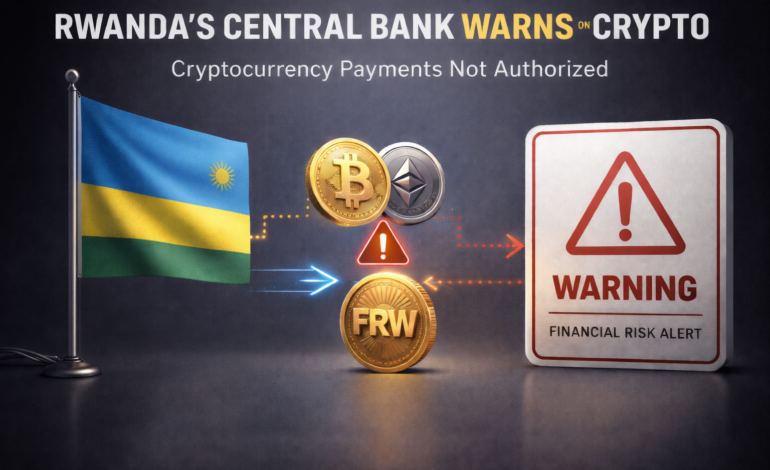
A recent public statement from the Central Bank of Rwanda has sparked renewed discussion about the role of cryptocurrency in emerging markets.
In the message, the bank made three things clear:
- The Rwandan Franc (FRW) is the only legal tender
- Crypto-assets are not authorized for payments or conversion involving FRW
- Citizens are urged to avoid such transactions due to financial risks and lack of protection
This comes shortly after a crypto exchange, Bybit, announced support for peer-to-peer (P2P) trading using the Rwandan Franc.
The timing is not a coincidence.
What Happened?
The situation is simple on the surface.
- Bybit introduced P2P trading involving Rwanda’s local currency
- This allows users to buy and sell crypto directly with each other using FRW
- Shortly after, the Central Bank issued a warning distancing itself from such activity
This reflects a growing tension seen in many countries:
Crypto platforms expand access faster than regulations can keep up
Why Crypto Still Grows in Places Like Rwanda
Despite restrictions, crypto adoption continues to rise in many African countries.
This is not accidental.
Crypto solves real problems:
- Cross-border payments are faster and cheaper
- Access to global markets without a bank account
- Protection against local currency instability
P2P trading, in particular, becomes popular because it bypasses traditional barriers.
So while governments warn against it, users continue to explore it.
The Gap Between Policy and Reality
This situation highlights a wider pattern:
- Governments move cautiously
- Crypto companies move quickly
- Users adapt even faster
The result is a gap between what is officially allowed and what actually happens on the ground.
In Rwanda’s case:
- Crypto is not authorized for use with FRW
- But platforms are already enabling it
- And users are likely already participating