








U.S. Sanctions Iranian Crypto Exchanges as Digital Assets Become a Sanctions Battleground

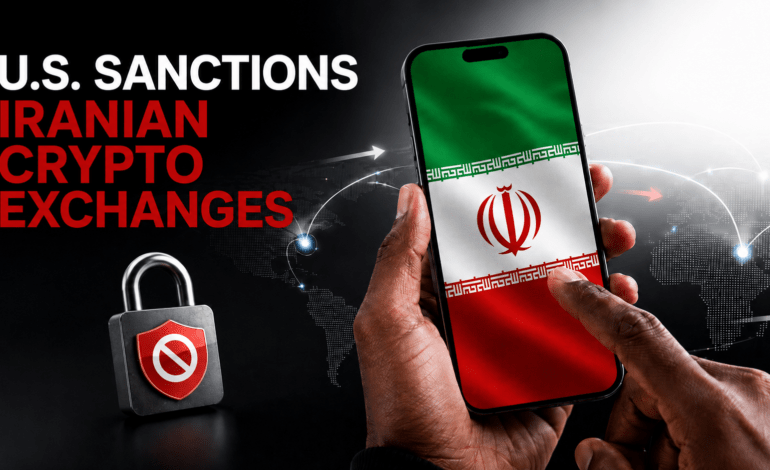
The United States has sanctioned several Iranian crypto exchanges in one of its strongest actions yet against Iran’s digital asset sector.
The U.S. Treasury’s Office of Foreign Assets Control, known as OFAC, targeted Nobitex, Iran’s largest digital asset exchange, along with Wallex, Bitpin, and Ramzinex. The sanctions also named several Iranian nationals linked to Nobitex.
This is a major development because it shows how crypto has become part of global sanctions enforcement.
For years, digital assets were mainly discussed as tools for trading, saving, speculation, and payments. But governments now also see crypto exchanges, wallets, stablecoins, and blockchain rails as part of national security.
The U.S. is accusing parts of Iran’s crypto ecosystem of helping the country move value, evade restrictions, and support institutions linked to the Iranian state and the Islamic Revolutionary Guard Corps, known as the IRGC.
This matters far beyond Iran. It shows that crypto companies everywhere may face more pressure to monitor transactions, screen users, and avoid exposure to sanctioned entities.
What Has the U.S. Announced?
The U.S. Treasury announced new Iran-related sanctions targeting four Iran-based digital asset exchanges: Nobitex, Wallex, Bitpin, and Ramzinex.
According to Treasury, Nobitex processed more than 50% of all Iranian digital asset inflows in 2025. Treasury accused Nobitex of providing significant support to the Iranian regime and facilitating transactions linked to the IRGC, including wallets associated with IRGC-affiliated ransomware actors.
Treasury also said Wallex was Iran’s second-largest digital asset exchange by volume and received 12% of all Iranian digital asset inflows in 2025. Bitpin reportedly received 10% of Iranian digital asset inflows that year, while Ramzinex has processed more than $2.45 billion in transactions since it was founded in 2018.
In simple terms, the U.S. is not only targeting small crypto addresses or unknown wallets. It is targeting major parts of Iran’s domestic crypto exchange infrastructure.
What Does It Mean to Be Sanctioned by OFAC?
When OFAC sanctions a person or company, U.S. persons are generally prohibited from doing business with them.
Any property or interests in property belonging to the sanctioned party that are in the United States, or under the control of U.S. persons, must be blocked and reported to OFAC. Treasury also says entities that are 50% or more owned by sanctioned persons are also blocked, even if they are not separately listed.
The impact can go beyond the United States.
Foreign financial institutions and non-U.S. companies may also face sanctions risk if they engage in certain transactions involving sanctioned entities.
For crypto, this means exchanges, wallet providers, payment companies, stablecoin issuers, market makers, and compliance teams may need to review whether they have direct or indirect exposure to the named Iranian exchanges.
Why Nobitex Is the Main Target
Nobitex is at the center of this action because it is Iran’s largest crypto exchange.
Treasury says Nobitex enabled Iranian regime insiders to access international digital asset exchanges and supported sanctions evasion across multiple jurisdictions. It also accused Nobitex of contributing to the repression of Iranian people by helping the government move value and reportedly enabling surveillance.
Nobitex had become a major node in a parallel financial system used to process hundreds of millions of dollars for Iran’s central bank and the IRGC. The report also said Nobitex continued processing transactions even during government-imposed internet shutdowns.
Nobitex has denied government ties or wrongdoing, according to Reuters.
That distinction is important for responsible reporting. The U.S. Treasury is making serious allegations. Nobitex disputes wrongdoing. But the sanctions still have immediate legal and compliance consequences.
Why Wallex, Bitpin, and Ramzinex Were Also Targeted
The sanctions did not stop at Nobitex.
Treasury also designated Wallex, Bitpin, and Ramzinex for operating in the financial sector of the Iranian economy.
The U.S. says Wallex facilitated numerous transactions linked to the IRGC. Bitpin allegedly processed millions of dollars in transactions, including transactions linked to the IRGC. Ramzinex is accused of processing transactions connected to the IRGC and a financial institution backed by the Iranian government.
This wider targeting suggests that the U.S. is not only focused on one exchange. It is trying to disrupt a broader domestic crypto network that may help Iran move money despite sanctions.
Why Crypto Matters in Sanctions Evasion
Crypto can move value across borders without using traditional banks.
That is useful for legitimate users, especially in countries with weak banking systems, high inflation, or capital controls. But it can also be attractive to sanctioned actors trying to move funds outside the normal financial system.
Stablecoins are especially important here.
A stablecoin like USDT or USDC can act like a digital dollar. It can move quickly across blockchains, settle outside banking hours, and pass through many wallets and exchanges. That makes stablecoins useful for payments and remittances, but also risky when used by sanctioned networks.
TRM Labs reported earlier this year that OFAC designated two wallets associated with Iran’s central bank, with links to the IRGC-Qods Force and Hizballah. Tether coordinated with OFAC and U.S. law enforcement to freeze about $344.2 million across those two addresses, according to TRM.
That action showed that U.S. authorities are not only targeting exchanges. They are also targeting wallets, stablecoin balances, and reserve-like crypto holdings.
This Is Part of a Wider Pattern
The latest sanctions follow earlier action against Iran-linked crypto infrastructure.
In January 2026, OFAC designated Zedcex and Zedxion, two UK-registered crypto exchanges, for allegedly operating in Iran’s financial sector and processing cryptocurrency transactions for the IRGC. Chainalysis described that action as the first time digital asset exchanges had been sanctioned specifically for activity within Iran’s financial system.
Treasury also said at the time that the U.S. would continue targeting attempts by the Iranian regime to exploit digital assets to evade sanctions and finance cybercriminal operations.
This means the Nobitex action is not isolated. It is part of a larger sanctions strategy aimed at digital asset infrastructure linked to Iran.
What Blockchain Analytics Firms Are Seeing
Blockchain analytics firms have been tracking Iran-related crypto flows for years.
Chainalysis reported that on-chain activity from major Iranian exchanges spiked after U.S.-Israeli airstrikes in February 2026, with about $10.3 million in crypto outflows between February 28 and March 2.
The firm said the spike could reflect several things at once: ordinary Iranians moving funds into self-custody, Iranian exchanges moving funds to new infrastructure, or state-linked actors moving money through domestic exchange rails.
That nuance is important.
Not every Iranian crypto user is a sanctions evader. Many ordinary people use crypto to protect savings, access liquidity, or move value during economic instability. But the same infrastructure can also be used by state-linked actors, ransomware groups, and sanctioned networks.
That is why compliance is difficult. Crypto is transparent on-chain, but understanding who controls a wallet and why money is moving can be complex.
Why This Matters for Crypto Exchanges
This action sends a clear message to crypto exchanges worldwide.
Sanctions compliance is no longer optional.
Exchanges that operate globally need to screen users, monitor blockchain flows, check wallet exposure, and respond quickly when sanctioned addresses or entities are identified.
The risk is not only direct exposure. A platform may also face risk through indirect exposure, such as funds that move from a sanctioned exchange to a nested service, then to another wallet, then to a mainstream platform.
For large exchanges, this means stronger compliance systems. For smaller exchanges, it could mean higher operating costs and pressure to adopt blockchain monitoring tools.
Why Stablecoin Issuers Are Also in the Spotlight
Stablecoin issuers are becoming central players in sanctions enforcement.
If a sanctioned actor holds assets in a freezeable stablecoin, the issuer may be able to block those tokens. This is what happened when Tether coordinated with OFAC and U.S. law enforcement to freeze hundreds of millions of dollars linked to Iranian central bank wallets, according to TRM.
This gives stablecoin issuers a powerful role.
They are not just issuing digital dollars. They are increasingly expected to cooperate with law enforcement, monitor sanctioned activity, and freeze assets when legally required.
That may strengthen trust with regulators, but it also creates a debate inside the crypto community. Some users value censorship resistance. Others argue that regulated stablecoins need compliance controls if they are going to be used at scale.
What Could Happen Next?
The latest sanctions could lead to several outcomes.
First, more Iranian crypto flows may move to smaller platforms, peer-to-peer channels, decentralized exchanges, bridges, and new wallets.
Second, global exchanges may tighten monitoring of funds linked to Iranian platforms.
Third, stablecoin issuers may freeze more addresses if law enforcement identifies sanctioned wallets.
Fourth, blockchain analytics firms may publish more reports connecting wallets, exchanges, and state-linked actors.
Fifth, other governments may copy the U.S. approach by targeting crypto infrastructure linked to sanctions evasion, terrorism financing, cybercrime, or military networks.
This could make crypto compliance more demanding, but it could also make the industry more acceptable to regulators.
FAQ
Did the U.S. sanction Iranian crypto exchanges?
Yes. The U.S. Treasury sanctioned Nobitex, Wallex, Bitpin, and Ramzinex, along with several Iranian nationals linked to Nobitex.
Why was Nobitex sanctioned?
Treasury accused Nobitex of supporting Iran’s regime, enabling sanctions evasion, and facilitating transactions linked to the IRGC.
What is OFAC?
OFAC is the U.S. Treasury’s Office of Foreign Assets Control. It enforces U.S. sanctions against countries, individuals, companies, and groups.
What happens when a crypto exchange is sanctioned?
U.S. persons are generally prohibited from dealing with it. Any property under U.S. jurisdiction must be blocked and reported to OFAC.
Why are stablecoins involved?
Stablecoins can move dollar-linked value across blockchains quickly. This makes them useful for payments, but also attractive for sanctioned actors trying to move value outside traditional banks.
Does this mean all Iranian crypto users are criminals?
No. Many ordinary people use crypto for savings, self-custody, and access to value during economic instability. The sanctions target specific exchanges, individuals, and alleged state-linked activity.
Why should African crypto companies care?
African exchanges, fintechs, and payment companies using stablecoins need strong compliance systems. Global regulators are paying closer attention to how stablecoins move across borders.
What is the bigger lesson?
Crypto is becoming part of global finance and geopolitics. As adoption grows, sanctions compliance, monitoring, and regulatory pressure will also grow.