









Western Union Launches USDPT Stablecoin as Remittance Giants Move Into Digital Dollars

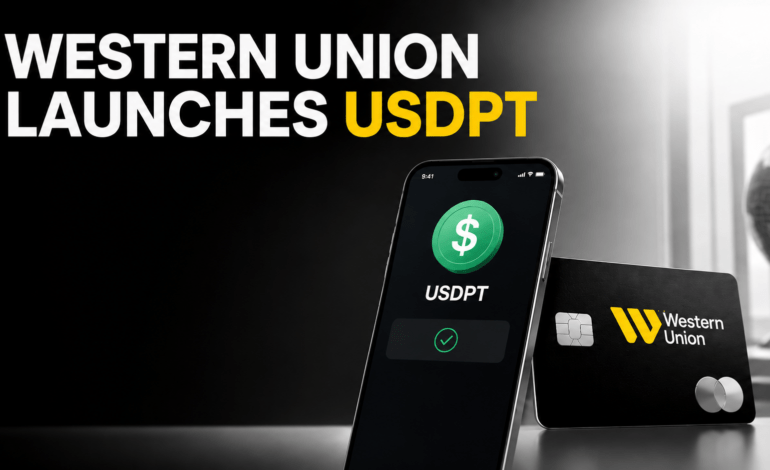
Western Union has officially launched its own stablecoin.
The global money transfer giant has introduced USDPT, short for U.S. Dollar Payment Token, a U.S. dollar-denominated stablecoin built on the Solana blockchain and issued by Anchorage Digital Bank, N.A.
This is not a small crypto startup experimenting with digital dollars. This is Western Union, one of the oldest and most recognized names in global money movement.
The launch matters because remittance companies are no longer just watching stablecoins from the sidelines. They are beginning to build stablecoin infrastructure directly into their payment networks.
For Africa, this is especially important. Millions of people depend on cross-border transfers, and many users need faster, cheaper, and more reliable ways to send and receive money. USDPT could become part of a bigger shift where stablecoins move from crypto exchanges into everyday payment systems.
What Is USDPT?
USDPT is Western Union’s U.S. dollar stablecoin.
A stablecoin is a digital asset designed to maintain a stable value. In this case, USDPT is meant to remain equal to one U.S. dollar.
Western Union says USDPT is redeemable 1:1 for U.S. dollars. For every USDPT issued, an equal amount of U.S. dollar value is held in reserves, including bank deposits, U.S. Treasury bills, and similar cash equivalents.
In simple terms, USDPT is designed to act like a digital dollar that can move quickly across blockchain rails while still being backed by traditional dollar reserves.
Who Issues USDPT?
USDPT is issued by Anchorage Digital Bank, N.A.
Anchorage Digital Bank is a U.S. national trust bank that provides digital asset services such as custody, settlement, staking, trading, and stablecoin issuance infrastructure.
This is important because Western Union is positioning USDPT as regulated digital payment infrastructure, not as an unregulated crypto token.
By using Anchorage Digital Bank as the issuer, Western Union is trying to build trust with regulators, financial partners, agents, and customers.
Why Western Union Chose Solana
USDPT is built on Solana.
Solana is known for fast transactions and relatively low fees. That makes it attractive for payments because remittances often involve small transfers where high fees can hurt users.
Western Union said USDPT is built on Solana to support fast, low-cost, 24/7 money movement.
This matters because traditional payments often depend on banking hours, correspondent banks, and settlement delays. A blockchain-based stablecoin can move value at any time, including nights, weekends, and holidays.
That does not automatically make every transfer free or instant for end users. But it can improve the infrastructure behind the transfer.
How Western Union Plans to Use USDPT
Western Union is expected to use USDPT in several ways.
First, it can support treasury operations. Large money transfer companies need to move funds between countries, agents, and partners. Stablecoins can help settlement happen faster and with less friction.
Second, USDPT can support agent and partner settlement. Reports say Western Union plans to use USDPT for 24/7 settlement with agents and partners, giving selected partners faster access to funds.
Third, USDPT may eventually support customer-facing digital dollar services. Western Union has said USDPT is part of its broader push toward digital-first financial infrastructure.
This means the stablecoin may start behind the scenes, then gradually become more visible to customers.
Western Union Is Building a Digital Asset Network
USDPT is not the only part of Western Union’s digital asset strategy.
In 2025, Western Union announced plans for a Digital Asset Network alongside USDPT. The company said the network would expand ways for customers, agents, and partners to move money and support treasury capabilities.
The bigger idea is to connect digital assets with Western Union’s existing global network.
That is powerful because most stablecoin projects struggle with the last mile. A digital dollar is useful, but users still need ways to cash in, cash out, receive local currency, and spend money in the real world.
Western Union already has a large global distribution network. If it can connect stablecoin rails to that network, USDPT could become more useful than a token that only lives inside crypto exchanges.
Why This Matters for Remittances
Remittances are one of the clearest use cases for stablecoins.
People send money across borders every day for school fees, rent, medical bills, family support, business payments, and emergency needs.
But traditional remittances can still be slow or expensive. Transfers may pass through multiple intermediaries. Currency conversion can be costly. Settlement may take time. Some recipients may have limited banking access.
Stablecoins can help by moving dollar-linked value across borders faster and outside normal banking hours.
Western Union says USDPT is designed as a fast, low-cost way to send and receive money around the world, 24/7.
If that vision works, stablecoins could become part of the infrastructure behind future remittance services.
MoneyGram and Western Union Are Now Both Moving Toward Stablecoins
Western Union’s move is even more interesting because MoneyGram has also entered the stablecoin race.
MoneyGram launched MGUSD, its own U.S. dollar stablecoin on Stellar, as part of its plan to support digital dollar payments and global money movement.
That means two of the most recognizable remittance brands are now building stablecoin strategies.
This is a major shift.
For years, crypto startups argued that stablecoins could improve remittances. Now the traditional remittance giants are beginning to adopt the same idea.
The competition may no longer be “crypto versus remittance companies.” It may become “which remittance company uses stablecoin rails best?”
Blockwisely Take
Western Union launching USDPT is bigger than one stablecoin.
The real story is that legacy remittance companies are now admitting that stablecoin rails are too important to ignore. Western Union built its reputation on moving money across distance. Now it is trying to use blockchain to keep that role in a digital-first financial world.
For Africa, this could be important even if users never touch USDPT directly. If stablecoins help remittance firms settle faster, reduce liquidity pressure, and improve cross-border payments, the impact could still reach ordinary customers.
But the biggest question is whether the benefits will reach users or stay inside company operations. Faster treasury settlement is good for Western Union. The real test is whether families and small businesses eventually get cheaper, faster, and more flexible transfers.
USDPT shows that stablecoins are becoming financial infrastructure. Now the industry must prove that this infrastructure actually helps the people who depend on remittances most.
FAQ
Does Western Union have a stablecoin?
Yes. Western Union has launched USDPT, a U.S. dollar stablecoin.
What does USDPT stand for?
USDPT stands for U.S. Dollar Payment Token.
Which blockchain does USDPT use?
USDPT is built on the Solana blockchain.
Who issues USDPT?
USDPT is issued by Anchorage Digital Bank, N.A.
Is USDPT backed by real dollars?
Western Union says USDPT is backed by reserves that include bank deposits, U.S. Treasury bills, and similar cash equivalents.
Can USDPT be redeemed for dollars?
Yes. Western Union says USDPT is redeemable 1:1 for U.S. dollars.
Is USDPT for ordinary Western Union customers?
It may eventually support customer-facing services, but the first major use cases appear to include treasury, agent settlement, partner settlement, and payment infrastructure.
Why does this matter for Africa?
Africa depends heavily on remittances and cross-border payments. If stablecoins improve settlement and reduce friction, they could eventually make money transfers faster and more flexible.