









Why Bitcoin Is Like M-Pesa, But for the Whole World

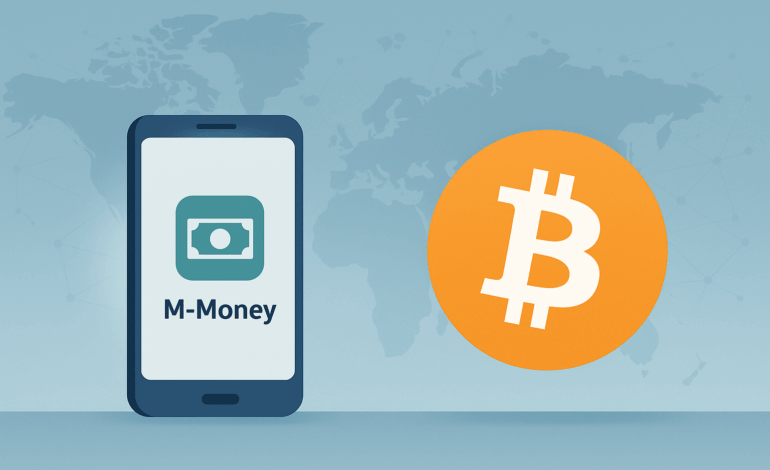
Is M-Pesa Money “Real Money”?
Yes, it represents real money.
But no, it is not physical money sitting somewhere with your name on it.
What you have in your M-Pesa wallet is a record in Safaricom’s database that says:
“You are owed this amount of money.”
It’s an IOU – a digital promise.
You trust Safaricom to give you real cash when you withdraw.
There is no little box with your name in a vault.
It is simply digits on a screen backed by Safaricom’s accounting.
So, the money is virtual, but the claim is real because Safaricom is required to honor it.
Is Bitcoin “Real Money”?
Bitcoin is also digital money but instead of the record being kept by Safaricom the record is kept by thousands of computers around the world working together.
No company, no CEO, no office.
The system itself is called the blockchain.
Imagine this:
Instead of ONE company keeping the records, every person who joins the Bitcoin network also keeps a copy of the record.
Every time a transaction happens:
- All those computers check the transaction
- If they all agree it’s valid…
- The record updates everywhere at the same time
Now no one can cheat:
- No one can secretly change balances
- No one can create fake money
- No one can freeze your account
- No one can delete the system
It is trust built into technology, not trust in a company.
Both Are Digital Money – But Stored Differently
M-Pesa
What you see as money is really just numbers inside Safaricom’s database.
Safaricom is keeping the records:
- “James has KES 500”
- “Mary has KES 2,000”
If that database disappears – M-Pesa disappears.
What Happened In Real Life
On September 11, 2025, Safaricom’s network in Kenya experienced a major outage that lasted over 12 hours. Customers couldn’t send money, make calls, or access mobile money services – Read about it here.
Also on September 22, 2025, Safaricom announced a scheduled system upgrade from 12:30 am to 3:30 am during which all M-Pesa services would be unavailable. Read about it here.
With M-Pesa, your balance is recorded in Safaricom’s databases. If those databases or systems are offline, you cannot send, receive, or withdraw money.
Because everything depends on that central system, any maintenance, failure, or outage stops the whole service.
In short: if the database disappears (or becomes inaccessible), then effectively M-Pesa vanishes for users until it’s restored.
When you understand this for M-Pesa, you can see why other systems (like crypto) try to fix that vulnerability:
- A central database is a single point of failure.
- Digital money works via records. if those records disappear, the money goes “offline”.
- The stronger systems are the ones where the records are spread out, not in one place.
Bitcoin
Bitcoin is also just numbers but not inside a company’s computer.
The records are stored in thousands of computers around the world all at once.
This global record system is called the blockchain.
If one computer goes off,
the others still keep the record safe.
Simple summary:
- M-Pesa = digital money inside 1 company
- Bitcoin = digital money inside the whole world
Agents vs. Exchanges: Where Digital Money Enters and Leaves the Real World
When you use M-Pesa, your money moves between two worlds:

- The physical world (cash in your hand)
- The digital world (your M-Pesa balance)
The bridge between those two worlds is the M-Pesa agent.
You take cash to an agent → Your digital balance goes up.
You withdraw cash from an agent → Your digital balance goes down.
The agent is the on-ramp and off-ramp for your money.
Cryptocurrency works the same way but instead of M-Pesa agents, the bridge is a crypto exchange.
A crypto exchange lets you:
- Deposit normal money (like KES or USD)
- Convert it into Bitcoin or another cryptocurrency
- Withdraw back into normal money anytime
So:
- Want Bitcoin? → Deposit cash/M-Pesa into an exchange
- Want cash? → Sell Bitcoin on an exchange, receive M-Pesa/bank money
A crypto exchange is basically:
“A digital M-Pesa agent for the entire world.”
Phone Number vs Bitcoin Address: How We Know Who the Money Goes To
To send someone money on M-Pesa, you need their phone number.
That number tells the system where the money should go.
When you type 0712 ___ ___:
- Safaricom checks the number
- It makes sure it belongs to someone
- The money lands in their mobile wallet
A phone number is like your digital name inside M-Pesa.
Bitcoin works in a similar way but instead of a phone number, you use a Bitcoin address.
A Bitcoin address looks like a long code: bc1qa3r542xyz...
It’s not meant to be memorized. You usually scan a QR code or copy and paste it.
When you send Bitcoin to that address:
- The blockchain checks if it’s a valid address
- The money moves to that wallet
A Bitcoin address is simply where your crypto lives.
What It Costs to Move Money: M-Pesa Fees vs Bitcoin Fees
Every time you send money on M-Pesa, there is usually a transaction fee.
The more money you send, the higher the fee.
This fee helps Safaricom run the system and pay agents.
Example:
- Sending KES 500 to someone may charge a few shillings
- Sending KES 20,000 may cost much more
So moving money isn’t free, you pay for the service.
Bitcoin also has transaction fees, but they work differently.
Bitcoin fees depend mainly on:
- How busy the network is
- How fast you want your transaction confirmed
You can choose:
- Higher fee → The transaction is confirmed faster.
- Lower fee → The transaction is confirmed slower.
Sometimes Bitcoin fees may be:
- Cheaper than M-Pesa for large amounts
- More expensive for tiny amounts
But one thing stands out:
- Bitcoin fees are usually the same whether you send money across town or across the world.
Sending 0.01 BTC to a friend in:
- Nairobi – Same fee
- New York – Same fee
- Tokyo – Same fee