







Visa’s Stablecoin Experiment Might Rewrite How Creators Get Paid

For years, creators and freelancers have learned to live with slow payouts. Money travels through banks, processors, correspondent networks and sometimes through a maze of international rules before it finally lands in someone’s account. And everyone wants a cut; imagine being chased by 10 KRAs. Even though they might not know it, this is the reality for a lot of freelancers.
Now, Visa is testing something different, and if it scales, the norms of online work could shift faster than people expect.
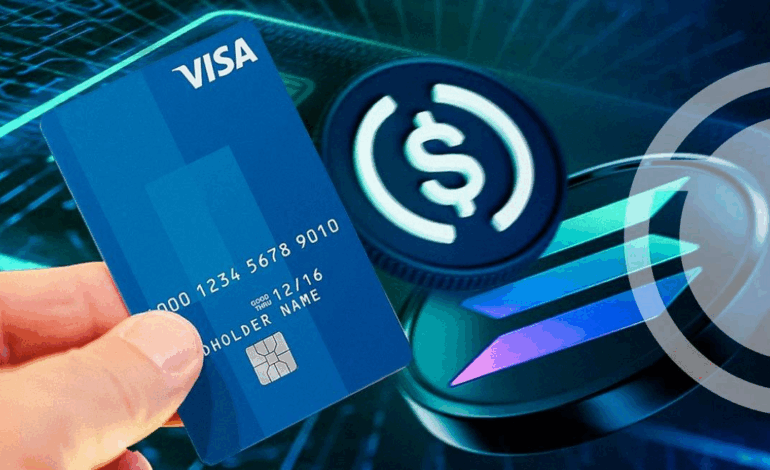
Visa’s new pilot allows businesses to fund payouts in regular fiat while letting recipients choose to receive those funds in a USD-pegged stablecoin such as USDC. The payment lands directly in a crypto wallet, often within minutes. No bank waits. No settlement delays. Just a quiet message on the screen showing that the money has arrived.
Anyone who has tried running a digital business across borders will tell you the pain: a design contract paid out after five days, a YouTube revenue share stuck in “processing”, a brand deal strangled by bank holidays. Cash flow becomes a negotiation with the system rather than a reflection of your work. Visa is trying to soften that friction.
The Timing Matters
Creators have never been more global than they are today. In a world where tools have connected the world, payments haven’t kept pace. Stablecoins, however, already move across borders with the speed of a text message. Visa is essentially borrowing that capability and plugging it into the payout flows that platforms already use.
If this becomes widely available, platforms will feel the pressure to adopt it. as a competitive advantage. The creator who relies on weekly income will pick the platform that gives them access to their earnings the fastest. And in regions where banks are slow or currencies swing unpredictably, receiving income in a stable, dollar-pegged asset offers a kind of personal stability that local systems can’t always guarantee.
Grounding in Reality
No innovation enters the payments industry without resistance. Regulators have been watching stablecoins closely. Some worry about consumer protection, others about money laundering, and many about the long-term impact of dollar-denominated tokens on local economies. Visa’s brand gives the experiment credibility, but credibility does not neutralize scrutiny.
Adoption isn’t guaranteed either. For creators unfamiliar with crypto, a new payout method, even a fast one, comes with learning curves. If its gonna be self custodial, wallet setup, key management, conversion to local currency, or even the psychological jump from “bank” to “digital token” might slow uptake. problem, but it doesn’t erase the rest.
Where This Could Lead
Visa is one of the biggest names in global finance, for one, you’ll nolonger feel sketchy asking someone to pay you in crypto.
If Visa rolls this out at scale in 2026, creators might gain something the banking system has struggled to deliver: reliable, fast and globally accessible income.
More interesting is the cultural effect. Once creators get used to near-instant earnings, waiting three days for a payout will feel archaic. And when a standard feels archaic, the market doesn’t wait politely. It moves.
In conclusion
For anyone running a marketplace, a digital product shop, or a creator platform start with small pilots. Educate users. Integrate conversion partners. Build compliance early. Treat stablecoin payouts not as a gimmick but as a service that improves the financial lives of the people who keep your platform alive.
The companies that prepare today will have an edge when the rollout expands. Those that ignore it may find themselves answering an uncomfortable question from their top creators: “Why do they pay in minutes while you take a week?”
The creator economy thrives when the tools get out of the way. Payments have always been one of the last obstacles, a reminder that the digital world is still tethered to old rails.
Sometimes the future arrives quietly. A pilot program. A faster payout. A card network testing an idea. Then suddenly, everyone expects their money to move at the speed of the internet.
This might be one of those moments.