








Sui Blockchain Goes Down Again, Raising Reliability Questions

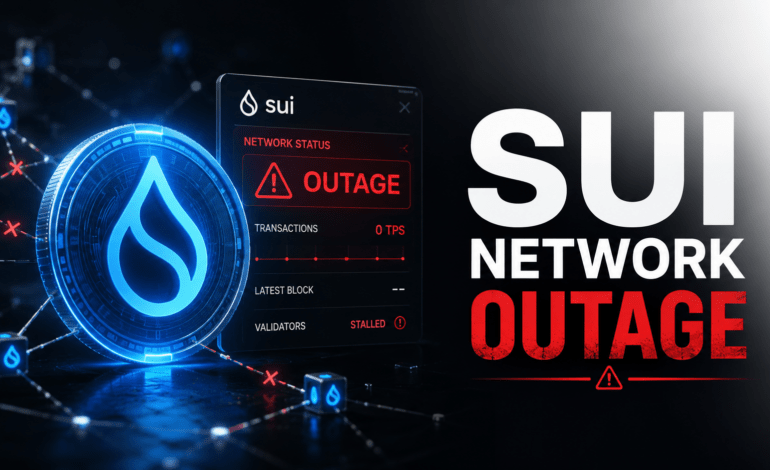
Sui is facing fresh questions about reliability after its blockchain suffered another network outage.
The Layer-1 blockchain, known for speed and scalability, experienced a mainnet stall on May 28, 2026. During the incident, transaction processing was temporarily disrupted, meaning users and apps could not rely on the network as usual.
For a blockchain that competes in the high-performance Layer-1 market, this is a serious issue.
Sui is not just another small crypto project. It is one of the most watched newer blockchains, backed by strong technology claims, a growing DeFi ecosystem, and a community that expects fast and smooth transactions.
But when a blockchain goes down, the most important question becomes simple:
What is the use of speed if the network cannot stay online?
What Happened to Sui?
On May 28, 2026, Sui’s mainnet experienced what was described as a network stall.
A blockchain stall means the network stops processing activity normally. In simple terms, users may not be able to send transactions, use apps, trade tokens, mint NFTs, or interact with DeFi protocols while the network is affected.
Sui’s own status page listed the issue as a Mainnet settlement incident.
Crypto news reports said transaction processing was temporarily paused while the Sui core team worked on a fix.
This matters because the mainnet is the live version of a blockchain. It is where real users, real assets, and real applications operate.
When mainnet settlement is disrupted, the issue is bigger than a wallet glitch or a website problem. It affects the blockchain’s core ability to finalize activity.
Why This Outage Matters
Every blockchain can face technical problems.
But users expect the base network to be reliable, especially when real money is involved.
Sui is designed to support fast transactions, DeFi apps, gaming, NFTs, and other blockchain products. These use cases depend on uptime.
If the network stalls, several things can happen:
Users may be unable to send tokens.
DeFi traders may be unable to open or close positions.
NFT buyers and sellers may be stuck.
Games and apps built on Sui may stop working properly.
Exchanges and wallets may pause deposits or withdrawals.
Developers may lose confidence in the network’s reliability.
This is why outages are not just technical events. They are trust events.
This Is Not Sui’s First Major Outage
The May 2026 incident is especially important because Sui has faced previous reliability concerns.
In January 2026, Sui suffered another major outage that reportedly lasted around six hours. That incident was linked to validator consensus problems and stopped normal transaction activity until validators deployed a fix.
Sui also experienced a major disruption in November 2024, when the network stopped processing transactions for a period due to a bug.
This history is why the latest outage is getting more attention.
A single outage can be explained as a rare technical failure.
Repeated outages raise a bigger question:
Is the network’s design strong enough for mass adoption?
What Is Sui?
Sui is a Layer-1 blockchain developed by Mysten Labs.
A Layer-1 blockchain is a base network, like Bitcoin, Ethereum, Solana, Cardano, or Avalanche. Other apps and projects can be built on top of it.
Sui is known for its focus on speed, scalability, and a different way of handling digital assets. It uses the Move programming language, which is designed to improve security and asset management in blockchain applications.
The network has attracted attention from developers, investors, DeFi users, and gaming projects.
Its main promise is simple:
Fast blockchain performance for real-world applications.
But that promise depends on one important thing: the network must keep running.
Why Do Blockchains Go Down?
Many beginners assume blockchains never stop.
That is not always true.
Some blockchains are more decentralized and slower. Others are faster but may rely on more complex systems to coordinate validators and process transactions quickly.
Validators are the computers that help run a blockchain. They check transactions, agree on the state of the network, and help keep everything secure.
If validators cannot agree properly, or if a bug affects how they process data, the blockchain can stall.
This does not always mean funds are stolen.
It can mean the network pauses activity to avoid a worse problem, such as inconsistent data or conflicting records.
In some cases, stopping or slowing the network is a safety measure.
But even if user funds remain safe, the outage still damages confidence.
What Does “Mainnet Settlement” Mean?
Settlement is the process of finalizing transactions.
When a transaction is settled, it means the network has accepted it as part of the official blockchain record.
If mainnet settlement is disrupted, the network may not be able to finalize transactions normally.
For users, this can feel like the blockchain is frozen.
You may click send, swap, mint, or interact with an app, but the transaction may not complete as expected.
That is why settlement problems are serious. They affect the basic function of a blockchain.
Did Users Lose Funds?
So far, available reports have not shown that the latest outage caused a direct loss of user funds.
In previous Sui incidents, the team has emphasized that safety mechanisms helped prevent worse outcomes.
However, “funds are safe” does not mean users are unaffected.
If a trader cannot close a position, that can still be costly.
If a DeFi app pauses during market volatility, users may face risk.
If deposits and withdrawals are delayed, confidence can fall.
So the issue is not only whether coins were stolen.
The issue is whether the network can be trusted when users need it most.
How Did the Market React?
Reports around the outage said the SUI token dropped as users reacted to the network stall.
That is not surprising.
When a blockchain goes down, the market often prices in fear. Investors may worry about lost confidence, developer hesitation, exchange caution, or future outages.
For newer Layer-1 networks, reputation matters a lot.
Sui competes with other fast blockchains. If users start seeing it as unreliable, that can hurt adoption.
In crypto, technology and perception move together.
A network can recover technically, but the trust damage may take longer to repair.
Why Reliability Is More Important Than Speed
Crypto projects often compete on speed.
They talk about transactions per second, low fees, instant settlement, and smooth user experience.
Those things matter.
But reliability matters more.
A blockchain that is fast when it works but unavailable during major moments can be risky for users and developers.
Imagine a banking app that is very fast but goes offline when you need to send money.
Or a stock exchange that offers cheap trading but freezes during market volatility.
That is the problem blockchain outages create.
Speed is valuable, but uptime is essential.
FAQ
What happened to the Sui blockchain?
Sui’s mainnet experienced a network stall on May 28, 2026. This temporarily disrupted transaction processing and mainnet settlement.
Did Sui go offline completely?
Reports described the incident as a mainnet stall that temporarily paused transaction activity. This means the network was not processing activity normally.
Were user funds lost?
Available reports have not shown that user funds were directly stolen. However, outages can still affect users by delaying transactions, trades, deposits, withdrawals, or DeFi activity.
Why is the Sui outage important?
It matters because Sui is a high-performance Layer-1 blockchain. Repeated outages raise questions about whether the network can support serious DeFi, gaming, and mainstream use.
Has Sui gone down before?
Yes. Sui also suffered a major outage in January 2026 linked to validator consensus issues. It also had an earlier disruption in November 2024.
What should Sui do next?
Sui should publish a clear post-mortem explaining what caused the outage, how it was fixed, whether user funds were at risk, and what changes are being made to prevent another incident.