








UNDP Moves Stellar Aid Payments Beyond Pilot Stage After Tests in Kenya and The Gambia

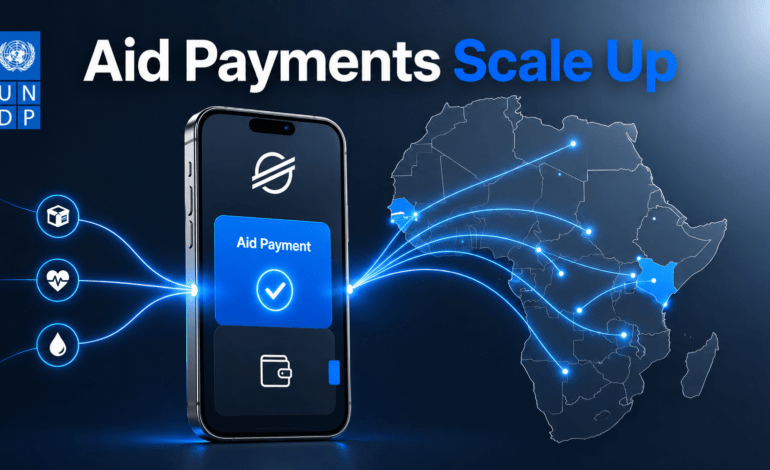
The United Nations Development Programme is moving its blockchain-based payment work with the Stellar Development Foundation beyond isolated experiments and toward infrastructure that its country offices can use in regular programme delivery.
The expansion follows 16 months of research across 17 countries and live pilots in Haiti, Syria, Kenya, Guatemala and The Gambia. The next phase will establish governance, safeguards, onboarding procedures and operational guidance for wider use across humanitarian assistance, social protection and financial-inclusion programmes.
From Separate Pilots to a Standing Payment Capability
UNDP and the Stellar Development Foundation signed an extended agreement on July 6, 2026, shifting their focus from testing individual blockchain-payment projects to building a reusable capability that UNDP country offices can deploy when appropriate. The agreement is scheduled to run through 2027.
UNDP will remain responsible for programme delivery and implementation. The Stellar Development Foundation will provide technical advice, network expertise and coordination with companies developing payment tools within the initiative.
The programme does not mean that every UNDP payment will immediately move onto Stellar. Instead, the partners plan to create a structured process through which country offices can evaluate and adopt tested digital-payment solutions without treating every deployment as a completely new experiment.
Other Pilots Produced Measurable Results
The strongest published performance figures came from pilots outside Africa.
In Aleppo, Syria, UNDP used digital payments for a Cash-for-Work programme and recorded transactions on-chain. The organisation said the estimated distribution cost fell from approximately 10% of the funds under conventional methods to around 2%, with all participants receiving and cashing out their payments.
In Haiti, a payment system designed for low-connectivity conditions continued operating when the cellular network failed during testing. UNDP reported a 100% transaction success rate and near-instant settlement using alternative connectivity.
These results cannot automatically be transferred to Kenya, The Gambia or every African payment corridor. They do, however, provide evidence that blockchain-based disbursement systems can lower costs, create traceable transaction records and remain functional in difficult operating environments when the surrounding infrastructure is designed appropriately.
The Initiative Is Broader Than Cryptocurrency Trading
The UNDP programme is not an exchange, investment product or effort to encourage recipients to speculate on cryptocurrency.
Its focus is payment delivery. Stellar provides the underlying public blockchain infrastructure, while participating programmes determine the payment tools, wallet experience, local partners and methods through which recipients access and use funds.
This distinction matters for African policymakers. Blockchain is increasingly being considered as infrastructure for traceability, settlement and programme administration, even when users may interact primarily through familiar wallets, agents or local-currency services.