








Inside Kibera’s Growing Bitcoin Circular Economy: A Conversation With Meave Akinyi

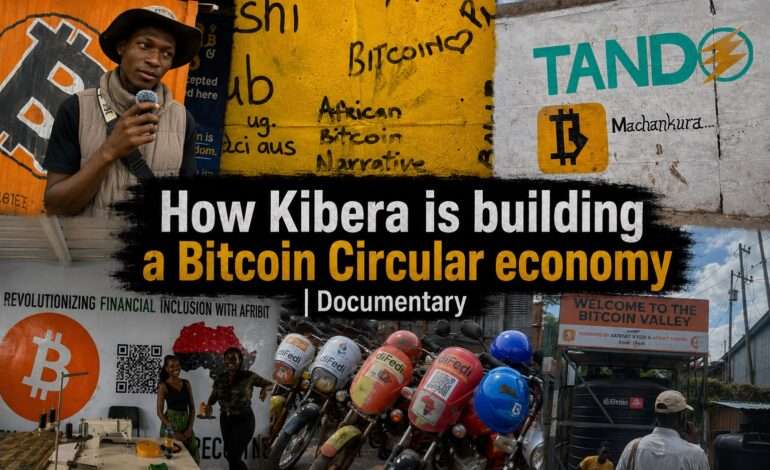
A customer enters a small shop in Kibera to buy food and household essentials. Instead of reaching for cash or sending money directly through M-PESA, they open a Bitcoin wallet, scan a payment request and complete the purchase within seconds.
The merchant receives the Bitcoin almost immediately. She may keep part of it as savings, use it to purchase airtime, spend it at another participating business or convert it into Kenyan shillings when she needs to pay a supplier who does not yet accept Bitcoin.
This is the basic idea behind a Bitcoin circular economy: Bitcoin moves between residents and businesses within the same community instead of being bought only as an investment and held while people wait for its price to rise.
In Kibera, one of Nairobi’s largest informal settlements, educators, developers, merchants and residents are experimenting with Bitcoin as a tool for payments, savings and financial independence.
The growing ecosystem includes platforms that connect Bitcoin to M-PESA, wallets designed for everyday payments, community savings tools and educational programmes that teach residents how to use and protect their Bitcoin.
Blockwisely spoke with Meave Akinyi, a documentary filmmaker who has been recording the experiences of the people building and participating in Kibera’s Bitcoin economy.
Akinyi is not an operator or founder of the circular economy. Her role is to document what is happening, interview the people involved and introduce their stories to a wider audience.
In this conversation, Meave Akinyi explains how Bitcoin is being used in Kibera, why residents and merchants are participating, the challenges they face and what the future could hold. Her documentary is available to watch on YouTube and Vimeo, while further information and opportunities to support the production are available on Artizen.
Understanding the Bitcoin Circular Economy
What is a Bitcoin circular economy?
Blockwisely: For someone hearing the term for the first time, what is a Bitcoin circular economy?
Meave Akinyi: A Bitcoin circular economy is an economy where Bitcoin does not simply enter a community and immediately leave it.
Someone earns Bitcoin and spends it at a local shop. The shopkeeper may then use the Bitcoin to pay a supplier, purchase another service or save it. The Bitcoin continues circulating between people and businesses within the same community.
The aim is to complete as much of this economic activity as possible without repeatedly converting the Bitcoin back into Kenyan shillings or relying on a bank at every stage.
Residents of Kibera have always exchanged and circulated value through informal and community-based systems. What is new is that Bitcoin provides an additional peer-to-peer payment system that can operate without a traditional bank account.
Is this a project or an economy?
Blockwisely: Would you describe what is happening in Kibera as a Bitcoin project?
Meave Akinyi: I would not describe the Bitcoin circular economy itself as an initiative or project.
Calling it a project may suggest that one organisation owns, funds or controls everything. What is happening in Kibera involves different educators, merchants, developers, products and residents.
It is better understood as an emerging economy or ecosystem in which Bitcoin is being used to exchange value.
We would not normally describe the Kenyan economy as an initiative. In the same way, the Bitcoin economy in Kibera is larger than any one organisation involved in it.
Documenting Kibera’s Bitcoin Story
How did the documentary begin?
Blockwisely: How did the idea of documenting a Bitcoin circular economy in Kibera begin?
Meave Akinyi: I did not initially set out to document a Bitcoin story.
I wanted to document Kibera’s existing culture of circulating value within the community. Once I started filming, I discovered that local builders were already adding Bitcoin to those existing economic relationships.
The Bitcoin story therefore developed naturally from what was already happening on the ground.
What role do you play?
Blockwisely: What role do you personally play in the Bitcoin circular economy?
Meave Akinyi: I am not one of the builders or operators of the economy.
My role is to document it. I film interviews with the educators, developers, merchants and residents who interact with Bitcoin in their everyday lives.
I am helping tell their story to a wider audience, particularly people who may never have heard about grassroots Bitcoin adoption within communities such as Kibera.
Why did you choose Kibera?
Blockwisely: Why did you choose Kibera as the location for the documentary?
Meave Akinyi: Kibera has a large and active informal economy. Many transactions depend on community relationships, personal networks and trust.
Those conditions make it an interesting place to observe how a peer-to-peer form of money may be used.
Kibera is also underrepresented in international technology coverage. Many stories about Bitcoin in Africa focus on remittances, inflation or large cryptocurrency companies.
There is less coverage of what happens when people within one neighbourhood begin earning, spending and saving Bitcoin among themselves.
Kibera appears to have one of Kenya’s most developed Bitcoin circular economies. Similar communities are also emerging in places such as Githurai and Kisii.
Bitcoin Circular Economies Beyond Kibera
Have similar economies developed elsewhere?
Blockwisely: Have similar Bitcoin circular economies been developed in other communities?
Meave Akinyi: Yes. There are other Bitcoin circular economies in Kenya and in other countries.
Bitcoin Chama has supported Bitcoin activity in Kisii, while other efforts are developing in Githurai.
Outside Kenya, Bitcoin Ekasi in South Africa is one of the better-known examples. It has worked with residents and businesses to create an economy in which Bitcoin can be earned and spent within the local community.
There are also several Bitcoin communities in El Salvador.
However, a country recognising Bitcoin under its laws is not the same as residents actively using it within a functioning circular economy.
The main lesson from these communities is that adoption is more likely to grow when people receive practical education, have simple tools and can spend Bitcoin on goods and services they already need.
Education and Community Participation
How do residents first hear about Bitcoin?
Blockwisely: How do residents first learn about Bitcoin and the circular economy?
Meave Akinyi: Many residents learn through education programmes and community organisations.
These include activities connected to Trezor Academy, Afribit Kibera, The Core and BitBiashara. Some provide general Bitcoin education, while others help merchants understand how to receive Bitcoin payments.
However, much of the growth also happens through word of mouth.
One merchant sees another merchant accepting Bitcoin. A neighbour watches someone complete a payment. People become interested because someone they already trust is using it.
Trust has always moved from person to person within Kibera. Bitcoin education is spreading in a similar way.
What does the onboarding process involve?
Blockwisely: What does Bitcoin education and onboarding involve?
Meave Akinyi: The education begins with practical lessons.
Participants learn what Bitcoin is, how to create and use a wallet, how to send and receive payments and how to protect their funds.
They are also taught about self-custody, price volatility, scams, recovery phrases and the importance of checking payment details before sending money.
Residents may be introduced to locally relevant products such as Tando, Bitika, Minmo, Machankura and Fedi.
The goal is not simply to explain Bitcoin as a theory. Participants are shown how to use it in situations they already understand, such as receiving money, purchasing goods or saving as a group.
How do you explain Bitcoin to a complete beginner?
Blockwisely: How do educators explain Bitcoin to someone with limited experience using digital finance?
Meave Akinyi: Some describe it as “the people’s money” or “freedom money.”
Instead of beginning with complicated explanations about mining, blockchain technology and cryptography, educators start by explaining what Bitcoin allows someone to do.
You can receive money directly, send it to another person and control it without needing a traditional bank account.
The technical details can come later. For a new user, understanding how to operate and protect a wallet is more important than understanding every part of the Bitcoin network.
What motivates residents and merchants?
Blockwisely: What motivates residents and local businesses to participate?
Meave Akinyi: The merchants I interviewed spoke mainly about practical benefits.
Bitcoin payments can settle quickly. A completed Bitcoin payment generally cannot be reversed by the sender, which may reduce the risk of fraudulent reversals that some businesses experience with other payment methods.
Merchants can also receive payments directly without needing a bank account.
Some residents are attracted to Bitcoin because they want an alternative way to save. Others participate because they have attended training, are curious about the technology or can use it at businesses they already visit.
The benefits depend on the wallet and payment method being used. It is important not to suggest that every Bitcoin transaction is automatically free. Users should understand any charges before completing a payment.
How many people have joined?
Blockwisely: How many residents and businesses have been onboarded so far?
Meave Akinyi: There is a small but growing number of participating merchants in the areas where I filmed.
However, I do not have a reliable total for the number of residents or businesses that have been onboarded.
Publishing an unconfirmed figure could give people a misleading picture of the economy’s current size.
What roles are women and young people playing?
Blockwisely: Are women, young people and community groups playing a particular role?
Meave Akinyi: Yes. Young people and women appear to be central to the growth of the economy.
Many of the merchants I encountered were women. This is significant because women often manage household spending and participate in chamas, which are informal savings groups through which members pool their resources.
Some young women are also teaching teenage mothers about Bitcoin and digital financial tools.
For young people, the ecosystem can provide opportunities to learn new skills, earn income and connect with the wider Bitcoin industry.
Some participants told us that these opportunities can help young people find constructive ways to earn a living.
However, more research would be needed before claiming that Bitcoin directly reduces crime. What can be said is that access to education and employment opportunities may positively influence the choices available to young people.
How Bitcoin Is Used in Kibera
How does the economy work in practice?
Blockwisely: How does the Bitcoin circular economy work in practice?
Meave Akinyi: The ecosystem works as a stack of different tools rather than through one application.
A resident may use Kenyan shillings from M-PESA or Airtel Money to obtain Bitcoin through an on-ramp such as Bitika.
They can then send the Bitcoin to another person, spend it at a participating merchant or place it in a community-based savings arrangement using a tool such as Fedi.
Other platforms help users move between Bitcoin and the mobile-money services they already understand.
This makes adoption easier because residents are not being asked to abandon M-PESA immediately. Bitcoin products are being connected to financial systems that are already part of everyday life.
What can residents buy with Bitcoin?
Blockwisely: What goods and services can residents currently pay for using Bitcoin?
Meave Akinyi: Residents can use Bitcoin at participating businesses to pay for goods and services such as:
- Food
- Airtime
- Clothing
- Transport
- Car-washing services
- Household products
- Other everyday retail goods
The available choices depend on which merchants currently accept Bitcoin.
The economy will become more useful as more businesses begin accepting it and existing merchants continue seeing demand from customers.
How do residents acquire Bitcoin?
Blockwisely: How do residents obtain Bitcoin in the first place?
Meave Akinyi: One method is Bitika, which allows users to exchange funds from M-PESA or Airtel Money for Bitcoin.
Residents can reportedly begin with amounts as low as KES 10. This makes it possible for someone to experiment without committing a large amount of money.
Residents may also earn Bitcoin through work, receive it from another person or receive small rewards during educational activities.
Once they complete the education process, participants are generally expected to earn, buy or receive Bitcoin through normal transactions rather than depending on free distributions.
Is Bitcoin being used for payments or savings?
Blockwisely: Are residents mainly using Bitcoin for payments, savings or investment?
Meave Akinyi: It is a combination, but payments are an important part of the economy.
This is different from wealthier markets, where many people buy Bitcoin mainly as an investment and rarely use it to purchase everyday goods.
Some residents also save part of the Bitcoin they receive because Bitcoin is widely viewed as a potential long-term store of value.
However, Bitcoin remains volatile. Its price can rise, but it can also fall significantly. Anyone saving in Bitcoin should understand that they could lose part of the value of their money, especially in the short term.
How are payments completed quickly?
Blockwisely: Bitcoin transactions on the main network can take time. How do merchants complete payments quickly?
Meave Akinyi: Many everyday payments happen through the Lightning Network.
The Lightning Network is a payment system built on top of Bitcoin. It allows smaller Bitcoin payments to be completed faster and usually more cheaply than transactions made directly on Bitcoin’s main network.
Tools such as Tando use Lightning payments so that merchants do not have to wait for several Bitcoin network confirmations during a live sale.
How do merchants convert Bitcoin into shillings?
Blockwisely: How do merchants convert Bitcoin into Kenyan shillings when necessary?
Meave Akinyi: Merchants can use services such as Tando to convert Bitcoin into value they can receive or spend through M-PESA.
This is useful when a merchant needs to pay a supplier or service provider who does not yet accept Bitcoin.
However, when Bitcoin is converted immediately, it leaves the circular economy.
For the economy to become more circular, merchants will eventually need more suppliers, workers and service providers who are also willing to accept Bitcoin.
What technology is required?
Blockwisely: What type of phone or internet connection does someone need to participate?
Meave Akinyi: Most users can participate using an internet-connected smartphone and a Bitcoin wallet.
Affordable internet access is therefore important. Providers such as SateNet contribute to the wider technology environment by offering internet connectivity within Kibera.
People who do not own smartphones may also have options.
Machankura, for example, allows people to access certain Bitcoin functions through basic mobile phones, commonly known in Kenya as kabambe.
Volatility, Security and User Protection
How are residents taught about volatility?
Blockwisely: How do residents learn about Bitcoin’s price volatility?
Meave Akinyi: As the documentarian, I am not personally responsible for teaching residents about financial risk.
However, the educators I filmed try to move the conversation beyond the idea of buying Bitcoin only because its price may rise.
They explain Bitcoin’s use as a payment system and as money that users can control directly.
When Bitcoin is received and spent within a short period, price movements may have less effect than when someone holds it for months or years.
Long-term holders still face significant volatility. The education should therefore make it clear that Bitcoin can lose value and that residents should be careful about placing essential household money at risk.
What security training is provided?
Blockwisely: What security training do residents receive?
Meave Akinyi: Wallet security is an important part of education programmes such as those organised by The Core and Trezor Academy.
Participants are taught how to:
- Protect passwords and wallet PINs
- Keep recovery phrases private
- Avoid sharing sensitive information
- Confirm recipient details before sending money
- Recognise possible scams
- Understand self-custody
Self-custody means that a person controls the credentials needed to access their Bitcoin rather than depending entirely on an exchange, wallet company or financial institution.
What happens when someone makes a mistake?
Blockwisely: What happens if someone loses access to their wallet or sends Bitcoin to the wrong recipient?
Meave Akinyi: Bitcoin transactions are generally irreversible.
If someone sends Bitcoin to the wrong wallet address, there may be no bank or company capable of reversing the transaction.
A person who loses their recovery phrase may also permanently lose access to a self-custody wallet.
That is why participants are taught the phrase: “Not your keys, not your coins.”
It means that controlling your private keys gives you control over your Bitcoin, but it also gives you responsibility for protecting it.
When sending funds through services connected to M-PESA, Tando has introduced a recipient-name confirmation feature for phone numbers, paybills and till numbers.
This gives users an opportunity to confirm the recipient before completing the transaction.
Regulation and Sustainability
How could Kenyan regulation affect the ecosystem?
Blockwisely: How could Kenya’s virtual asset regulations affect the Bitcoin circular economy?
Meave Akinyi: Kenya is developing a clearer regulatory system for businesses that provide virtual asset services.
These rules are likely to affect commercial intermediaries such as cryptocurrency exchanges, custodial wallet providers and companies that transfer or hold digital assets on behalf of customers.
Direct peer-to-peer payments and personal self-custody may be treated differently from commercial services.
However, the final effect will depend on how Kenya’s laws and regulations are implemented.
Requirements covering licensing, anti-money-laundering controls, capital, cybersecurity and consumer protection could affect some of the companies providing tools within the Kibera ecosystem.
The important question is whether regulation will protect users while still allowing community-level innovation to continue.
Has the economy faced opposition?
Blockwisely: Have you encountered concerns from residents, government authorities or financial institutions?
Meave Akinyi: I have not personally encountered significant opposition during the documentary process.
However, the absence of visible opposition does not mean concerns will never arise.
Questions about consumer protection, volatility, taxation, scams and licensing are likely to become more important as the economy grows.
How is the circular economy funded?
Blockwisely: How is the Bitcoin circular economy currently funded?
Meave Akinyi: I do not think it is accurate to describe the entire circular economy as one funded initiative.
Individual education organisations, developers and community groups may have their own funding arrangements.
However, the economy itself becomes sustainable when residents find the products useful and continue exchanging value with one another.
It is similar to asking how ordinary mobile-money activity in Kenya is funded. The companies providing the infrastructure have their own business models, but people continue using mobile money because it provides value.
Do residents receive free Bitcoin?
Blockwisely: Do residents receive Bitcoin when they join?
Meave Akinyi: Some education programmes may use small Bitcoin rewards to make lessons interactive and allow participants to practise using a wallet.
Once they complete the training, residents generally need to earn, purchase or receive Bitcoin through ordinary transactions.
Free Bitcoin may introduce someone to the technology, but free distributions cannot sustain an economy by themselves.
How can the ecosystem avoid depending on donations?
Blockwisely: How can the ecosystem avoid becoming dependent on outside funding?
Meave Akinyi: This question would be better answered by the builders and organisations operating within the circular economy.
Generally, a circular economy becomes less dependent on donations when residents earn Bitcoin through real work, merchants receive it from genuine customers and businesses can spend some of what they receive without immediately converting it into shillings.
Impact, Challenges and Future Growth
What changes have you observed?
Blockwisely: What changes have you observed in the lives or financial habits of participants?
Meave Akinyi: Merchants have spoken about changes in how they receive payments, manage cash flow and think about saving.
Young participants have also gained exposure to Bitcoin tools, digital finance and possible employment opportunities.
These observations are important, but they should not be presented as proven community-wide outcomes without formal research.
The documentary can show individual experiences. Longer-term research would be required to determine the broader economic and social impact.
Can you share a success story?
Blockwisely: Can you share the story of a resident or merchant who has benefited?
Meave Akinyi: The documentary focuses on the experiences of individual merchants and residents who have chosen to use Bitcoin.
Their stories can show practical benefits, such as receiving payments quickly, attracting Bitcoin-paying customers, learning a new skill or developing a different approach to saving.
Specific stories should be presented with the participants’ permission and in their own words.
It is also important not to present residents as passive beneficiaries of an outside initiative. They are active participants within an economy they are helping shape.
What are the biggest challenges?
Blockwisely: What have been the biggest challenges in building the economy?
Meave Akinyi: This question would be better answered by educators and builders working directly within the Afribit Kibera ecosystem.
Areas worth exploring with them include:
- Limited awareness
- Smartphone and internet access
- Bitcoin price volatility
- Wallet security
- Merchant liquidity
- Converting between Bitcoin and shillings
- Regulatory uncertainty
- Building trust among new users
- Finding enough merchants and suppliers who accept Bitcoin
How should success be measured?
Blockwisely: How can the community determine whether the circular economy is succeeding?
Meave Akinyi: Success can be measured through several indicators:
- The number of active merchants accepting Bitcoin
- The frequency of Bitcoin payments
- The number of residents regularly using Bitcoin products
- Whether merchants can spend Bitcoin at other businesses
- The number of people completing education programmes
- Whether participants continue using Bitcoin after training
- The amount of economic activity remaining within the community
The most meaningful measure is not simply how many wallets have been created.
It is whether people continue using Bitcoin to meet genuine everyday needs.
What is needed for expansion?
Blockwisely: What would need to happen for the economy to expand to more residents and communities?
Meave Akinyi: Education and awareness remain essential.
People need information that is simple, honest and available in languages they understand.
The products must also reflect local habits instead of copying tools designed for users in Europe or North America.
Expansion would require:
- More merchants accepting Bitcoin
- Better connections between merchants and suppliers
- Reliable and affordable internet
- Strong consumer-protection practices
- Easy ways to move between Bitcoin and Kenyan shillings
- Clear regulation
- Locally relevant wallets and payment products
What support is the documentary seeking?
Blockwisely: What support or partnerships are you currently looking for?
Meave Akinyi: From the documentary’s perspective, I would like as many people and organisations as possible to help tell and distribute the story.
However, I cannot speak on behalf of the builders about their funding or partnership needs.
Questions about partnerships for the circular economy should be directed to organisations such as Afribit Kibera, The Core, BitBiashara and the developers behind the products being used.
Where could the economy be in five years?
Blockwisely: Where do you hope the Kibera Bitcoin circular economy will be in the next three to five years?
Meave Akinyi: The hope is that more merchants across Kibera will accept Bitcoin and that more residents will understand how to use it responsibly.
There is also a desire to see young people become more financially informed and develop skills that connect them to employment opportunities within the wider Bitcoin ecosystem.
If the model proves useful and sustainable, similar Bitcoin circular economies could emerge in more communities across Kenya.
The goal is not simply to have more people owning Bitcoin.
It is to build an economy in which residents can earn it, spend it, save it and exchange value without being excluded by the traditional financial system.
A Community Testing a Different Kind of Money
Kibera’s Bitcoin economy remains small, experimental and difficult to measure.
It should not be romanticised as a simple technological solution to unemployment, poverty or financial exclusion.
Bitcoin cannot automatically create jobs, eliminate price volatility or guarantee that users will never lose money.
What makes the Kibera story significant is that residents are testing Bitcoin in ordinary situations rather than discussing it only as an investment.
They are asking practical questions.
- Can Bitcoin be used to buy food?
- Can a merchant receive a payment within seconds?
- Can someone begin with as little as KES 10?
- Can a person without a bank account control their own money?
- Can Kenyan developers build tools that work with M-PESA, community savings groups, smartphones and feature phones?
The answers are still developing.
But inside Kibera, Bitcoin is beginning to move beyond price charts, trading platforms and online debates.
It is entering shops, classrooms and conversations between neighbours.
Whether it grows into a lasting circular economy will depend on education, trust, responsible regulation, useful local products and one crucial factor: whether Kibera residents continue finding genuine value in using it.