








Digital Dollar Dominance: How USD Stablecoins Are Extending the Cantillon Effect Across Africa


They protect your money from naira or shilling volatility, but at what cost to Africa’s monetary sovereignty?
A growing number of African startups now keep part of their treasury in stablecoins rather than local banks.Not because they are “crypto companies,” but because volatility planning has become a survival strategy.
As of May 2026, the total stablecoin market is valued at $318 billion, according to CoinGecko, with USD-backed coins commanding approximately 97% of the market. These assets have become the default financial rail across much of Africa, Latin America, and Asia. In volatile economies, they deliver something invaluable: reliable protection against local currency depreciation and near-frictionless cross-border transfers.
But beneath this utility lies a deeper monetary structure. USD-backed stablecoins do not sit outside the global financial system. They mirror it. And in doing so, they reproduce one of its oldest dynamics: the Cantillon Effect.
Money Is Never Neutral
When new money enters an economy, it does not reach everyone at the same time.Those closest to its creation, governments, banks, and financial institutions, spend first.
They deploy capital before prices adjust. By the time liquidity filters down to workers and consumers, inflation has already diluted its value.This is not a flaw of modern finance. It is a structural feature, observed as far back as the 18th century.
The Dollar’s Global Hierarchy
The global dominance of the US dollar reinforces this uneven distribution.Liquidity created through the Federal Reserve or US government spending flows outward in layers. It begins with the US Treasury and primary dealers, moves through global financial institutions, and eventually reaches emerging markets.
By the time it gets there, the advantages of early access are already gone.This is the foundation of what is often called America’s “exorbitant privilege”—the ability to issue the world’s reserve currency while externalizing many of the costs of monetary expansion.
A Second Monetary Layer
USD-backed stablecoins do not create new base money. Instead, they transform existing dollar-denominated reserves into programmable digital tokens.
When institutions deposit dollars with stablecoin issuers, new tokens are issued. The reserves backing these tokens are largely held in short-term US Treasuries, allowing issuers to become among the largest non-sovereign holders of US government debt.
This introduces a second layer to the system:
- Layer 1 (Dollar Creation): US institutions receive first access to newly created liquidity
- Layer 2 (Stablecoin Distribution): Approved counterparties, market makers, and large players receive newly issued stablecoins first
These actors deploy capital into trading, lending, and arbitrage before the asset reaches broader markets.Retail users,particularly in emerging economies, typically enter later, through exchanges, after liquidity conditions and pricing have already adjusted
Private Seigniorage in a Public System
There is another layer often overlooked.The yield generated from Stablecoins reserves,primarily US Treasuries,does not flow to users. It accrues to the issuer.In effect, this creates a form of private seigniorage on top of the public dollar system. Users gain access to dollar backed stablecoins, but not to the underlying yield generated by the assets backing it.
Africa at the Edge of the System
Across Africa, USD-backed stablecoins have evolved from a niche crypto asset into critical monetary infrastructure. In volatile and underbanked economies, they provide a practical lifeline where local currencies and traditional banking often fall short.
Key usage cases include:
- Remittances and cross-border payments — Stablecoins dramatically reduce costs (often by 60% or more compared to traditional channels averaging 7–8% fees) and settlement times.
- Dollar savings to hedge against inflation and currency depreciation (e.g., naira or shilling volatility).
- Cross-border trade and informal commerce,enabling faster, cheaper settlements for businesses and merchants.
- Everyday financial rails,Bypassing capital controls and fragile banking systems.
Data underscores this shift:
- Sub-Saharan Africa recorded over $205 billion in on-chain crypto value between July 2024 and June 2025,a 52% year-over-year increase.
- Stablecoins account for roughly 43% of total cryptocurrency transaction volume in the region. Nigeria leads Africa in crypto activity, receiving over $92.1 billion in on-chain value between July 2024 and June 2025, nearly triple the next largest market and accounting for a massive share of continental flows (around 45%). The country has approximately 25–26 million digital asset users and ranks among the world’s highest in stablecoin adoption, with stablecoins dominating transaction volume in the region (roughly 43% of total crypto activity).
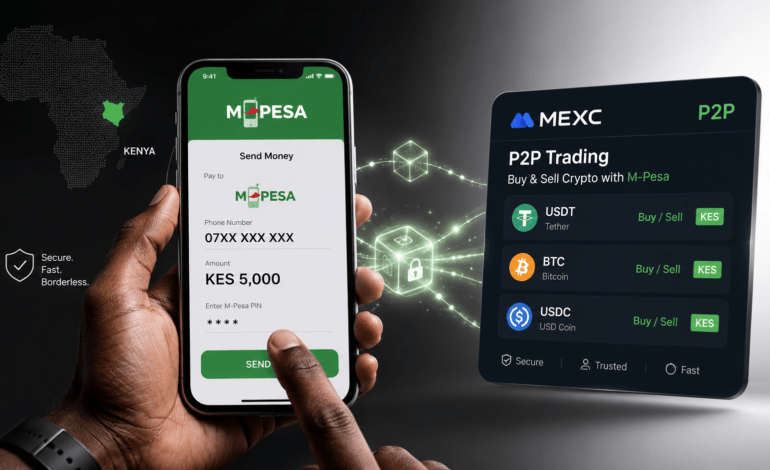
- Kenya ranks high in transactional stablecoin use, leveraging its strong mobile money infrastructure (M-Pesa) for seamless integration. South Africa, Ghana, Ethiopia, and others also show strong growth.
- Continent-wide, Africa has over 54 million digital asset users, with Sub-Saharan Africa posting the world’s highest stablecoin adoption rate at 9.3%.
Structural position remains peripheral. Despite this explosive utility, African users and economies sit at the outer edge of the monetary hierarchy:
- Far from the Layer 1 creation of base dollars by the Federal Reserve and US institutions.
- Far from Layer 2 stablecoin issuance and early distribution by issuers like Tether and Circle.
- Excluded from the earliest liquidity advantages and arbitrage opportunities that institutions and market makers capture.
- Excluded from the substantial yield generated by the US Treasuries and reserves backing these stablecoins (private seigniorage that accrues to issuers, not token holders).
Africans gain reliable access to dollar stability, speed, and global connectivity,often the most rational choice amid local monetary challenges. Yet they remain largely excluded from monetary power and sovereignty, the ability to influence issuance, capture value from reserves, or shape the rules of this digital dollar layer.
This creates a complex reality: stablecoins deliver immediate relief and economic resilience for millions, while quietly reinforcing Africa’s position in a global financial hierarchy. The deeper policy question for African governments, regulators, and innovators is how to move beyond being primary users toward becoming active co-creators or competitors in digital money infrastructure.
For the African startup founder storing value in USDT tonight, the stablecoin revolution feels empowering.Yet the infrastructure quietly reinforcing that empowerment still sits thousands of miles away.