








ERC-20 Tokens Explained

An ERC-20 token is a digital token created on the Ethereum blockchain using a common technical standard called ERC-20.
In simple terms, ERC-20 is a rulebook that tells developers how a token should behave so that wallets, exchanges, decentralized apps, and smart contracts can understand it.
That is why many Ethereum-based tokens work smoothly across MetaMask, Uniswap, Etherscan, Ledger, centralized exchanges, and many DeFi apps. They follow the same basic language.
The official Ethereum proposal says ERC-20 provides basic functionality to transfer tokens and allows tokens to be approved so another on-chain party can spend them. It also explains that the standard makes tokens reusable across wallets, exchanges, and other applications.
The easiest way to understand ERC-20 is this:
Ethereum is the blockchain. ETH is Ethereum’s native coin. ERC-20 tokens are tokens built on top of Ethereum.
Examples of well-known ERC-20 tokens include stablecoins, governance tokens, utility tokens, wrapped assets, and DeFi tokens.
What Does ERC-20 Stand For?
ERC-20 stands for Ethereum Request for Comments 20.
It started as a proposal for a common token interface on Ethereum. The standard was proposed in 2015 and became one of the most important application-level standards in Ethereum’s history. The Ethereum documentation describes ERC-20 as a standard interface for fungible, interchangeable tokens such as voting tokens, staking tokens, and virtual currencies.
The “20” simply refers to the proposal number.
Why Was ERC-20 Created?
Before ERC-20, developers could still create tokens on Ethereum, but each token could behave differently.
That was a problem.
A wallet might support one token but fail to support another. An exchange might need custom code for every token. A smart contract might not know how to interact with different tokens safely.
ERC-20 solved this by creating a shared standard.
Once a token follows ERC-20 rules, other apps can know what to expect. They can check balances, transfer tokens, approve spending, and listen for transfer events in a predictable way.
This is one of the biggest reasons Ethereum became the home of token creation.
ERC-20 Tokens Are Fungible
ERC-20 tokens are fungible.
Fungible means each unit is equal to another unit of the same token.
For example, if you own 1 USDC and I own 1 USDC, both tokens are equal in value and function. Your 1 USDC is not unique. Mine is not special. They are interchangeable.
OpenZeppelin explains ERC-20 tokens as fungible tokens where each unit is exactly equal to another, making them useful for currencies, voting rights, staking, and similar use cases.
This is different from NFTs. An NFT is unique. One NFT may be more valuable than another, even if both are part of the same collection.
ERC-20 Token vs ETH: What Is the Difference?
This is where many beginners get confused.
ETH is Ethereum’s native cryptocurrency. It is used to pay gas fees on the Ethereum network.
ERC-20 tokens are smart contract tokens created on Ethereum.
Think of Ethereum like a country.
ETH is the country’s native money used to pay transaction costs.
ERC-20 tokens are assets issued inside that country by different projects, companies, DAOs, and protocols.
When you send an ERC-20 token, you still need ETH to pay the gas fee. The token itself does not pay the Ethereum network fee unless a special system is built around it.
How ERC-20 Tokens Work
ERC-20 tokens are controlled by smart contracts.
A smart contract is code stored on the blockchain. For ERC-20 tokens, the contract keeps track of important things such as:
- Who owns how many tokens.
- How many tokens exist.
- Who is allowed to spend tokens on behalf of someone else.
- When tokens are transferred.
- When spending approvals are created.
Unlike physical money, the token does not move like a file from one wallet to another. Instead, the smart contract updates balances.
For example:
- Alice has 100 tokens.
- Alice sends Bob 20 tokens.
- The smart contract reduces Alice’s balance to 80.
- The smart contract increases Bob’s balance to 20.
- The blockchain records the transaction.
That is the basic idea.
The Main ERC-20 Functions
ERC-20 defines a set of common functions and events that token contracts should support.
The most important ones are:
totalSupply
This shows the total number of tokens that exist.
For example, if a project creates 1 billion tokens, totalSupply helps apps read that number from the contract.
balanceOf
This checks how many tokens a wallet owns.
Wallets use this function to show your token balance.
transfer
This sends tokens from your wallet to another wallet.
If you send 50 tokens to another address, the transfer function is usually involved.
approve
This gives another address or smart contract permission to spend a certain amount of your tokens.
For example, when you use a decentralized exchange, you may first approve the exchange contract to spend your tokens.
allowance
This checks how much a spender is still allowed to spend from your wallet.
transferFrom
This allows an approved spender to move tokens from one wallet to another.
This is common in DeFi apps, trading platforms, staking contracts, and payment systems.
Transfer event
This event is emitted when tokens move.
Block explorers and apps use this event to track token transfers.
Approval event
This event is emitted when a wallet gives spending permission to another address.
This is very important for DeFi, but it is also where many users make dangerous mistakes by approving malicious contracts.
How Are ERC-20 Tokens Created?
ERC-20 tokens are created by deploying a smart contract on Ethereum or an Ethereum-compatible blockchain.
A developer usually writes the token contract in Solidity, Ethereum’s most common smart contract programming language.
A basic ERC-20 creation process looks like this:
- Decide the token name, symbol, and decimals.
- Decide the supply model.
- Write or import an ERC-20 smart contract.
- Add optional features such as minting, burning, pausing, or access control.
- Test the contract on a testnet.
- Audit or review the code.
- Deploy the contract to Ethereum mainnet or another compatible chain.
- Verify the contract on a block explorer.
- Add liquidity or distribute tokens if needed.
Many developers do not write ERC-20 contracts from scratch. They use trusted libraries such as OpenZeppelin. OpenZeppelin’s documentation shows how developers can create an ERC-20 token by importing its ERC20 contract and defining a token name and symbol.
A very simple ERC-20 contract can look like this:
// SPDX-License-Identifier: MIT
pragma solidity ^0.8.20;

import "@openzeppelin/contracts/token/ERC20/ERC20.sol";

contract BlockwiselyToken is ERC20 {
    constructor(uint256 initialSupply) ERC20("Blockwisely Token", "BWT") {
        _mint(msg.sender, initialSupply);
    }
}
This example creates a token called Blockwisely Token with the symbol BWT. The _mint line creates the initial supply and gives it to the deployer.
In real life, a serious token contract needs much more planning, testing, security review, and legal consideration.
What Are Token Name, Symbol, and Decimals?
Most ERC-20 tokens have three common metadata fields.
Token name
This is the full name of the token.
Example: USD Coin
Token symbol
This is the short ticker-like name.
Example: USDC
Decimals
This defines how divisible the token is.
Many ERC-20 tokens use 18 decimals, similar to ETH. But some tokens use fewer. USDC, for example, commonly uses 6 decimals.
Decimals do not change the total economic value by themselves. They only control how the token is displayed and divided.
What Can ERC-20 Tokens Do?
ERC-20 tokens can do many things because they are programmable assets.
Here are the most common uses.
1. Stablecoins
Stablecoins are one of the biggest ERC-20 use cases.
A stablecoin is designed to track the value of another asset, usually the U.S. dollar.
Examples include tokens such as USDT and USDC on Ethereum.
Stablecoins are used for trading, payments, DeFi, remittances, savings, and moving value across exchanges.
2. Governance Tokens
A governance token gives holders voting power in a protocol or DAO.
For example, a DeFi protocol may allow token holders to vote on fees, upgrades, treasury spending, and risk parameters.
The token does not automatically make governance fair, but it gives communities a way to coordinate decisions on-chain or off-chain.
3. Utility Tokens
Utility tokens give access to a product, service, feature, or network function.
A project may use an ERC-20 token for fees, discounts, rewards, access rights, or internal app activity.
However, not every “utility token” has real utility. Some are just speculative assets with weak use cases.
4. DeFi Tokens
ERC-20 tokens power much of DeFi.
They can be deposited into lending protocols, traded on decentralized exchanges, staked in smart contracts, used as collateral, farmed for rewards, or placed in liquidity pools.
Without ERC-20, DeFi would be much harder to build because every token would need a custom integration.
5. Wrapped Assets
A wrapped token represents another asset on Ethereum.
For example, Wrapped Bitcoin represents Bitcoin in ERC-20 form. This allows BTC-like value to be used inside Ethereum DeFi apps.
Wrapped assets are useful, but they introduce extra risks because users may depend on custodians, bridges, or smart contracts.
6. Reward Points
An app can issue ERC-20 tokens as reward points.
These tokens can represent loyalty points, game currency, community rewards, or contribution points.
The advantage is that they can be transferred and integrated with other apps.
The disadvantage is that tradable reward tokens can become speculative very quickly.
7. Tokenized Real-World Assets
ERC-20 tokens can represent real-world assets, such as tokenized treasury products, commodities, or shares in an asset.
This is a growing area, but it requires strong legal, custody, and compliance structures. A token representing a real-world asset is only useful if the legal claim behind it is enforceable.
8. Payments and Transfers
ERC-20 tokens can be used for payments.
Stablecoins are especially useful here because they are less volatile than most crypto assets.
A user can send ERC-20 tokens across borders without needing a traditional bank transfer. However, they still need to understand gas fees, wallet addresses, network selection, and custody risks.
Can You Mine ERC-20 Tokens?
In most cases, no, you do not mine ERC-20 tokens the way Bitcoin is mined.
Bitcoin mining secures the Bitcoin network and creates new BTC according to Bitcoin’s rules.
ERC-20 tokens are different. They are usually created by smart contract functions.
A token may have:
- A fixed supply minted at launch.
- A minting function controlled by an owner or DAO.
- A reward system that distributes tokens to users.
- A staking or liquidity mining system.
- A burn mechanism that destroys tokens.
- But this is not the same as Bitcoin mining.
Some projects use the word “mining” loosely. For example, they may say users can “mine” tokens by staking, providing liquidity, using an app, or completing tasks. But technically, that is usually token distribution, rewards, or liquidity mining, not proof-of-work mining like Bitcoin.
So the best beginner answer is:
You usually cannot mine ERC-20 tokens. You can only receive them if the token contract or project distributes them through minting, rewards, airdrops, staking, liquidity mining, sales, or transfers.
Can Anyone Create an ERC-20 Token?
Technically, yes.
Anyone with basic Solidity knowledge and enough ETH for gas can deploy an ERC-20 token.
This is both powerful and dangerous.
It is powerful because it allows innovation. A small team can create a token for a real product, DAO, game, or financial application.
It is dangerous because scammers can also create tokens quickly. A token existing on Ethereum does not mean it is safe, valuable, audited, legal, or legitimate.
This is why beginners should never trust a token just because it has a contract address or appears in a wallet.
How Much Does It Cost to Create an ERC-20 Token?
The cost depends on the network and gas fees.
On Ethereum mainnet, deployment can be expensive when gas fees are high.
On Ethereum layer 2 networks such as Arbitrum, Optimism, Base, or Polygon-style ecosystems, deployment is often cheaper.
But the real cost of creating a serious token is not just deployment. It may include:
- Smart contract development.
- Security audits.
- Legal advice.
- Tokenomics design.
- Liquidity planning.
- Exchange listing costs.
- Marketing.
- Community management.
- Compliance.
- Security monitoring.
Many people can create a token cheaply. Very few can create a trustworthy token economy.
What Are the Benefits of ERC-20 Tokens?
ERC-20 became popular because it solves real problems.
1. Interoperability
ERC-20 tokens can work across many wallets, exchanges, DeFi apps, analytics tools, and block explorers.
This is the biggest advantage.
A new token does not need every app to learn a completely new system.
2. Easy Token Creation
Developers can create tokens faster using battle-tested libraries.
This lowers the barrier to building crypto apps.
3. DeFi Compatibility
ERC-20 tokens can be used in decentralized exchanges, lending markets, staking contracts, DAOs, bridges, and yield protocols.
This makes them highly composable.
4. Transparency
Token contracts and transactions can be viewed on-chain.
Users can inspect supply, holders, transfers, and contract activity.
However, transparency does not automatically mean safety. Scam contracts can also be visible.
5. Programmability
ERC-20 tokens are programmable.
Developers can add features like minting, burning, pausing, snapshots, permit approvals, fees, blacklists, and access controls.
Some features are useful. Others can create centralization or abuse risks.
6. Global Access
Anyone with a compatible wallet can hold and transfer ERC-20 tokens.
This makes ERC-20 useful for global finance, DeFi, payments, gaming, and digital communities.
What Are the Disadvantages of ERC-20 Tokens?
ERC-20 is useful, but it is not perfect.
1. Gas Fees
Sending ERC-20 tokens on Ethereum mainnet requires gas paid in ETH.
When the network is busy, fees can become expensive.
Layer 2 networks can reduce this cost, but users must choose the correct network.
2. Approval Risks
ERC-20 approvals are one of the biggest user risks.
When you approve a smart contract to spend your tokens, that contract may be able to move the approved amount. If you approve a malicious contract, your tokens can be stolen.
This is why users should be careful with unlimited approvals and regularly revoke permissions they no longer need.
3. Scam Tokens Are Easy to Create
Because ERC-20 tokens are easy to deploy, scammers can create fake tokens, honeypots, impersonation tokens, and pump-and-dump schemes.
A token’s existence does not prove legitimacy.
4. Smart Contract Bugs
ERC-20 tokens are smart contracts. If the code has a bug, users may lose money.
Even small mistakes can create serious problems.
5. Centralization Features
Some ERC-20 tokens have admin controls.
The owner may be able to mint new tokens, pause transfers, blacklist addresses, change fees, or upgrade the contract.
These features can be useful for compliance or security, but they can also reduce decentralization.
6. Wrong Network Mistakes
Many tokens exist on multiple networks.
A user may send a token using the wrong network and lose access if the receiving platform does not support that chain.
This is common with beginners.
7. Liquidity Problems
A token may exist but have no real market.
If there is no liquidity, users may not be able to sell without huge slippage.
8. Not All Tokens Have Real Value
ERC-20 is only a technical standard. It does not guarantee that the token has a useful product, revenue, community, demand, or legal rights.
A useless token can still be ERC-20 compliant.
ERC-20 and Tokenomics
Creating a token is easy. Designing a healthy token economy is hard.
Tokenomics refers to how a token supply, demand, distribution, incentives, and utility are structured.
Important tokenomics questions include:
- How many tokens will exist?
- Is the supply fixed or inflationary?
- Who receives tokens at launch?
- Are team and investor tokens locked?
- Can new tokens be minted?
- Can tokens be burned?
- What gives the token demand?
- Does the token have real utility?
- Can insiders dump on the public?
- Is governance fair?
Many bad projects fail not because their ERC-20 code is broken, but because their tokenomics are weak.
ERC-20 and Smart Contract Security
Security is one of the most important parts of ERC-20 creation.
A serious token project should consider:
- Using trusted libraries.
- Avoiding unnecessary custom code.
- Testing every function.
- Running testnet deployments.
- Using automated security tools.
- Getting independent audits.
- Setting up multisig admin wallets.
- Limiting dangerous owner permissions.
- Publishing clear documentation.
- Verifying the contract source code.
- Monitoring contract activity after launch.
A token contract can hold millions of dollars in value. Small mistakes can become expensive.
ERC-20 and DeFi Approvals: A Beginner Warning
One of the most important things every crypto user should understand is the difference between sending tokens and approving tokens.
When you send tokens, you move tokens once.
When you approve tokens, you give a smart contract permission to spend tokens from your wallet.
This is necessary for many DeFi apps. But it can also be dangerous.
A malicious site may trick users into approving unlimited token access. After approval, the attacker can drain tokens.
Beginner safety tips:
- Only approve trusted apps.
- Check the URL carefully.
- Avoid signing transactions you do not understand.
- Use a separate wallet for risky DeFi activity.
- Revoke old token approvals.
- Avoid unlimited approvals when possible.
- Never connect your main wallet to random sites.
How ERC-20 Tokens Relate to Other ERC Standards
ERC-20 is only one of many Ethereum token standards.
ERC stands for Ethereum Request for Comments. ERCs are application-level standards that help Ethereum apps and smart contracts work together. Ethereum explains that EIPs are standards for Ethereum features or processes and act as a source of truth for the community, while token standards are part of the broader Ethereum standards ecosystem.
Here are the main related standards beginners should know.
ERC-20 vs ERC-721
ERC-20 is for fungible tokens.
ERC-721 is for non-fungible tokens, commonly known as NFTs.
If every unit is the same, ERC-20 makes sense.
If every item is unique, ERC-721 makes sense.
Example:
A stablecoin should be ERC-20.
A one-of-one digital artwork should be ERC-721.
ERC-20 vs ERC-1155
ERC-1155 is a multi-token standard.
It can support fungible tokens, NFTs, and semi-fungible tokens inside one contract.
This is useful for gaming, collectibles, and apps that need many asset types.
For example, a game could use ERC-1155 for gold coins, swords, skins, tickets, and badges.
ERC-20 is simpler when you only need one fungible token.
ERC-1155 is more flexible when you need many token types.
ERC-20 vs ERC-777
ERC-777 was designed as a more advanced fungible token standard with extra features such as hooks.
Hooks allow contracts to react when tokens are received.
This can improve functionality, but it can also introduce complexity and security risks if not handled carefully.
ERC-20 remains more widely used because it is simpler and supported everywhere.
ERC-20 vs ERC-4626
ERC-4626 is a tokenized vault standard.
It is commonly used for yield-bearing vaults.
For example, a DeFi vault may accept deposits of an ERC-20 token and issue vault shares that represent a user’s claim.
ERC-4626 builds on ERC-20 ideas but adds standard behavior for deposits, withdrawals, shares, and assets.
ERC-20 vs ERC-2612
ERC-2612 adds permit functionality to ERC-20 tokens.
This allows approvals using signatures instead of a separate on-chain approval transaction.
In simple terms, it can make approvals cheaper and smoother because users can sign a message instead of sending a separate approval transaction.
Not all ERC-20 tokens support it.
ERC-20 vs Native Coins on Other Chains
Other blockchains have token standards that are similar to ERC-20.
Examples include BEP-20 on BNB Chain and SPL tokens on Solana.
These are not ERC-20 on Ethereum, but they serve a similar purpose: creating standard tokens that apps can support.
However, users must be careful. A USDT token on Ethereum, BNB Chain, Tron, or another chain may represent the same brand, but it exists on different networks. Sending it through the wrong network can cause problems.
ERC-20 on Layer 2 Networks
ERC-20 tokens are not limited to Ethereum mainnet.
Many Ethereum layer 2 networks support ERC-20-style tokens because they are EVM-compatible or closely integrated with Ethereum.
Examples include networks such as Arbitrum, Optimism, Base, and others.
Layer 2 networks help reduce transaction costs and improve speed. But they also introduce bridging risk, network confusion, and liquidity fragmentation.
A token on Ethereum mainnet and a token on a layer 2 may have different contract addresses. Users must always verify the correct token and network.
Can ERC-20 Tokens Be Burned?
Yes, if the token contract includes a burn function.
Burning means removing tokens from circulation.
A project may burn tokens to reduce supply, destroy unused tokens, or follow a specific tokenomics model.
However, burning does not automatically make a token valuable. If there is no real demand, reducing supply may not matter.
Can ERC-20 Tokens Be Minted?
Yes, if the contract includes minting functionality.
Minting means creating new tokens.
Some tokens have a fixed supply and cannot mint more.
Others allow minting by an owner, DAO, bridge, staking system, or protocol contract.
Minting can be useful, but it is also a risk. If one address can mint unlimited tokens, holders may be diluted.
Users should check whether a token supply is fixed or whether more tokens can be created.
Can ERC-20 Tokens Be Frozen or Blacklisted?
Some ERC-20 tokens include blacklist or freeze features.
This means certain addresses can be blocked from transferring tokens.
Stablecoins sometimes include this for regulatory compliance and law enforcement reasons.
But from a decentralization point of view, blacklisting gives power to an issuer or admin.
Users should understand whether a token is fully permissionless or controlled by a central party.
Can ERC-20 Tokens Pay Dividends?
Technically, smart contracts can distribute rewards to ERC-20 holders.
But whether this is legal depends on the jurisdiction and the token’s structure.
If a token promises profit from the work of others, regulators may treat it as a security in some countries.
This is why token design is not only a technical issue. It can also be a legal issue.
How to Check If a Token Is ERC-20
You can check whether a token is ERC-20 by looking at its contract on a block explorer such as Etherscan.
Things to check include:
- Contract address.
- Token name and symbol.
- Total supply.
- Decimals.
- Holder count.
- Transfers.
- Verified source code.
- Token functions.
- Owner permissions.
- Liquidity pools.
- Audit links.
- Official website and social links.
But be careful. Scammers often create fake tokens with names similar to popular tokens.
Always get the contract address from the official project website or trusted documentation.
Common ERC-20 Scams
ERC-20 tokens are often used in scams because they are easy to create.
Common scams include:
- Fake versions of popular tokens.
- Honeypot tokens that can be bought but not sold.
- Tokens with hidden transfer taxes.
- Tokens where the owner can block selling.
- Fake airdrops that require malicious approvals.
- Tokens promoted by fake influencers.
- Pump-and-dump tokens.
- Rug pulls where creators remove liquidity.
- Impersonation tokens using names of real companies.
A beginner should never buy a token just because it is trending on social media.
How to Stay Safe With ERC-20 Tokens
Here are simple safety rules:
- Verify the contract address.
- Check whether the token contract is verified.
- Look at liquidity and trading volume.
- Check whether the owner can mint more tokens.
- Check whether the token has blacklist or pause functions.
- Avoid random airdrops.
- Do not approve unknown contracts.
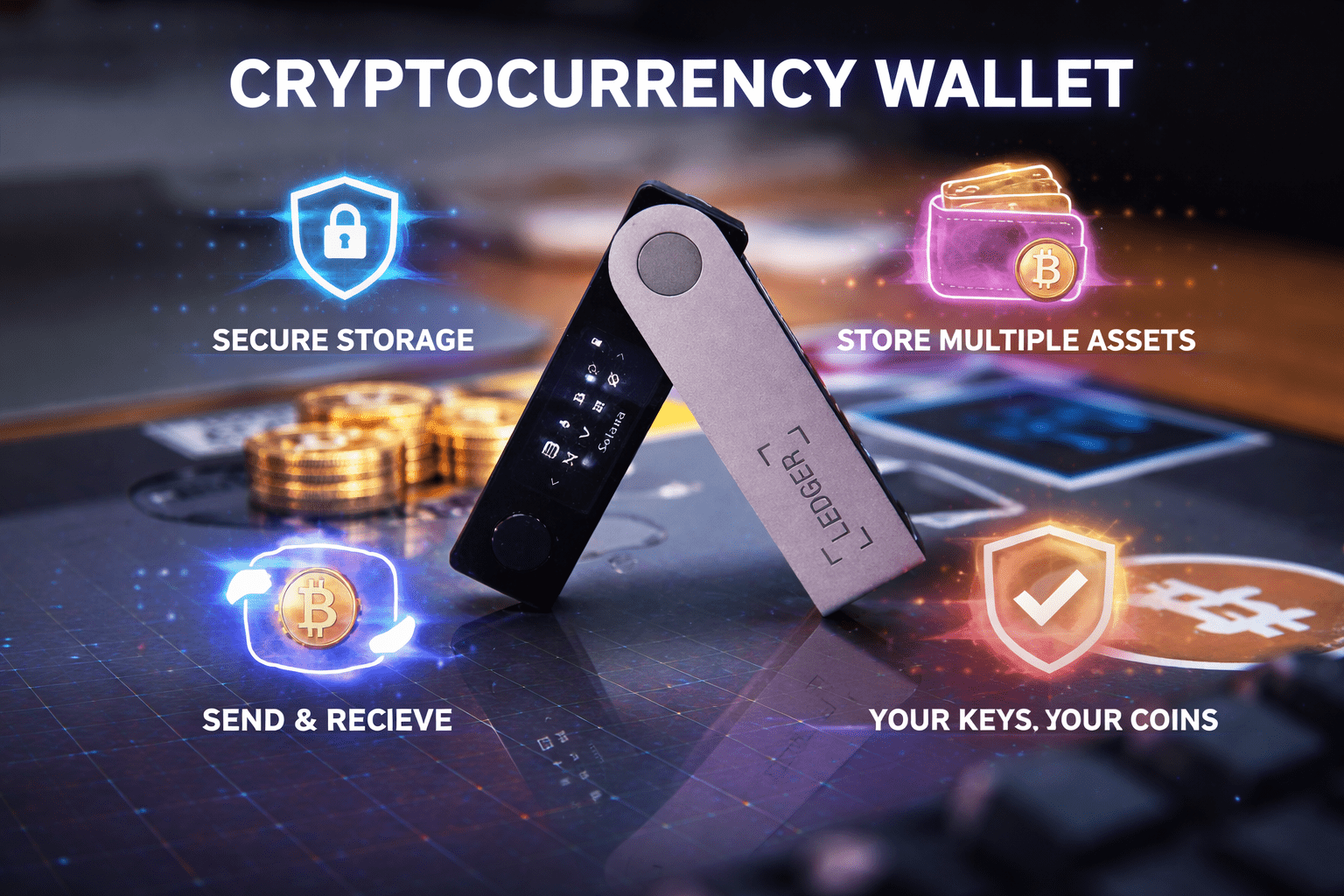
- Use a hardware wallet for serious funds.
- Use a separate wallet for risky trading.
- Avoid tokens promising guaranteed returns.
- Research the team, product, and community.
Remember that a token can be technically ERC-20 compliant and still be a scam.
ERC-20 Token Creation: Beginner Example
Let us imagine a project wants to create a learning reward token.
The project may decide:
- Name: Learn Token.
- Symbol: LEARN.
- Supply: 100 million.
- Decimals: 18.
- Use case: reward users for completing lessons.
- Minting: only the reward contract can mint.
- Burning: users can burn tokens to unlock premium resources.
- Governance: token holders vote on new topics.
- Security: admin controlled by a multisig wallet.
That token could be created as an ERC-20 contract.
But the project still needs to answer deeper questions:
- Why will people want the token?
- Can users sell it?
- Who receives the first tokens?
- Is there inflation?
- Can insiders dump?
- Is it legal?
- Can the rewards be gamed?
The smart contract is only the beginning.
ERC-20 for Businesses
Businesses can use ERC-20 tokens for several purposes:
- Loyalty rewards.
- Internal platform credits.
- Stablecoin payments.
- Tokenized assets.
- Community ownership.
- Crowdfunding-like models.
- Governance systems.
- Marketplace payments.
But businesses must be careful. Creating a transferable token can trigger financial, tax, consumer protection, or securities law obligations.
A business should not create a token only because it sounds modern. It should solve a real problem.
ERC-20 for Developers
For developers, ERC-20 is often the first token standard to learn because it is simple, widely supported, and well documented.
A developer should learn:
- Solidity basics.
- Smart contract deployment.
- OpenZeppelin libraries.
- Token supply models.
- Access control.
- Testing frameworks.
- Security risks.
- Gas optimization.
- Contract verification.
- DeFi integrations.
The best practice is to start with a simple testnet token before deploying anything valuable.
FAQ
What is an ERC-20 token?
An ERC-20 token is a fungible token built on Ethereum using the ERC-20 standard. It follows a common set of rules that wallets, exchanges, and smart contracts can understand.
Is ETH an ERC-20 token?
No. ETH is Ethereum’s native cryptocurrency. ERC-20 tokens are smart contract tokens built on Ethereum. Wrapped ETH, or WETH, is an ERC-20 version of ETH used in many DeFi apps.
Can ERC-20 tokens be mined?
Usually, no. ERC-20 tokens are normally minted or distributed by smart contracts, teams, DAOs, staking systems, airdrops, or reward programs. This is different from Bitcoin mining.
Can anyone create an ERC-20 token?
Yes. Anyone can deploy an ERC-20 token contract if they have the technical knowledge and enough ETH for gas. But creating a valuable and trustworthy token is much harder.
Are ERC-20 tokens safe?
Some are safer than others, but ERC-20 itself does not guarantee safety. Users must check the contract, team, liquidity, permissions, audits, and tokenomics.
What is the biggest ERC-20 risk for beginners?
One of the biggest risks is approving malicious smart contracts. A bad approval can allow attackers to steal tokens from your wallet.
What is the difference between ERC-20 and ERC-721?
ERC-20 is for fungible tokens where each unit is the same. ERC-721 is for NFTs where each token is unique.
What is the difference between ERC-20 and ERC-1155?
ERC-20 is mainly for one fungible token. ERC-1155 can support many token types, including fungible tokens, NFTs, and semi-fungible assets in one contract.
Can ERC-20 tokens be burned?
Yes, if the contract includes a burn function. Burning removes tokens from circulation.
Can ERC-20 tokens be used outside Ethereum?
ERC-20 is an Ethereum standard, but similar tokens exist on Ethereum-compatible networks and layer 2s. Users must always check the correct network and contract address.