









Africa Blockchain Festival 2026 Opens in Nairobi Tomorrow: What to Expect

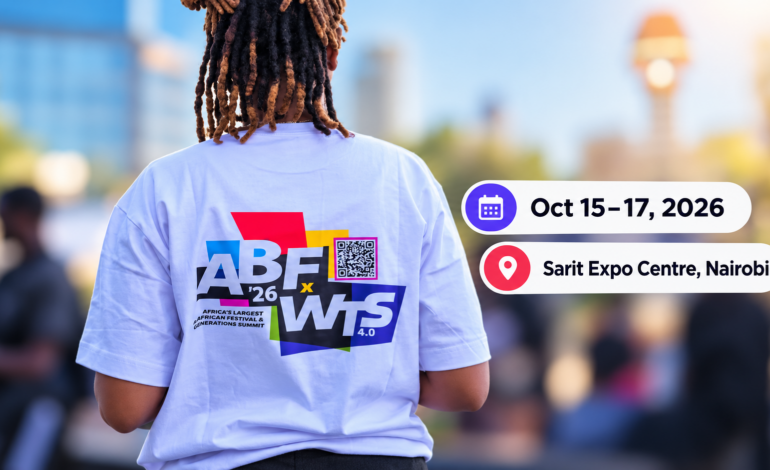
Africa Blockchain Festival 2026 officially opens in Nairobi tomorrow, October 15, bringing regulators, investors, founders, developers and financial-industry leaders together for three days of discussions around blockchain, stablecoins, artificial intelligence, tokenisation and Africa’s digital economy.
The main conference takes place at Sarit Expo Centre in Westlands on October 15 and 16, before the programme moves to networking, football and Nairobi experiences on October 17.
This year’s theme is “Capital, Code, and Continuity: Building Africa’s Permanent Digital Economy.” Organisers say more than 3,000 founders, investors and builders are expected to participate.
For anyone still deciding whether to attend, Blockwisely readers can get 15% off eligible tickets using the code BLKW26 at checkout.
And although the main conference starts tomorrow, ABF activities technically begin tonight with a welcome mixer at The Social House on James Gichuru Road.
The Festival Starts With a Nairobi Mixer Tonight
Before delegates head to Sarit Expo Centre tomorrow morning, the official programme includes an ABF 2026 Welcome Mixer tonight, October 14, from 6:00pm to 9:00pm.
The mixer is hosted by Passpoint at The Social House Nairobi, away from the main conference venue.
It’s the informal opening to a programme that becomes considerably more serious on Thursday morning. From regulation and institutional capital to stablecoins and tokenised assets, Day One is built around the financial and policy questions that are increasingly shaping Africa’s blockchain industry.
Day One: Regulation, Capital and the Money Conversation
Registration at Sarit Expo Centre begins at 8:00am on Thursday, followed by a cultural opening performance and the formal opening ceremony.
Nairobi International Financial Centre CEO Daniel Mainda gives the opening address at 9:00am, and at 9:30am veteran technology investor Tim Draper sits down for a fireside conversation with Africa Blockchain Festival founder Olubunmi Fabanwo.
But the session many Kenyan attendees will be watching most closely comes at 10:10am. Former Kenyan ambassador and technology policy figure Prof. Bitange Ndemo is scheduled to discuss “The State of African Blockchain 2026.”
It’s a useful framing moment. The African blockchain conversation has shifted noticeably from the trading-and-tokens era into something more concerned with regulation, payments, infrastructure and institutional adoption. Ndemo has been in the middle of that shift for years, and his read on where things stand is worth hearing.
The Regulator Everyone Will Be Listening To
One of the most closely watched sessions comes at 11:10am.
Dr. Emomotimi Agama, Director General of Nigeria’s Securities and Exchange Commission, is scheduled for a fireside discussion titled “Building Trusted Digital Asset Markets Regulation, Innovation and Africa’s Next Growth Era.”
His participation comes at an interesting moment. Nigeria has been moving deeper into formal regulation of exchanges, virtual-asset providers and digital investment products. That makes comments from the head of the country’s securities regulator particularly relevant to companies trying to understand where African crypto policy is heading.
What founders should listen for: what regulators expect from companies before they approach the market, how compliance can coexist with innovation, and whether African regulators are becoming more comfortable with digital assets as part of the formal financial system.
The value of the session will be in the details.
Where the Money Is Actually Going
At 11:40am, the focus shifts from regulators to capital.
A panel titled “Institutional Capital Comes to Africa” will include representatives from Antler, Launch Africa Ventures and Grand Stream, among others.
For startups attending ABF, this may be more useful than another general discussion about Africa’s technology potential. The practical question is whether investors are actually writing cheques into blockchain and digital-asset infrastructure and if so, what they’re funding.
Consumer crypto apps? Stablecoin infrastructure? Compliance technology? Payments? Tokenisation? Or companies where blockchain sits quietly in the background?
Those distinctions matter to founders deciding where to spend the next few years building.
Stablecoins Move to the Main Stage
At 2:00pm, stablecoins take over the main stage.
The session is titled “Stablecoins in Practice: Solving Africa’s Cross-Border Payment and Liquidity Gaps.” Scheduled speakers include Sitah Lang’o, Head of East and West Africa at Swift, Florence Githinji from Yellow Card, Mercy Emmanuel and Polytope Labs CEO Seun Lanlege. Nathaniel Ochuko Luz of the Africa Stablecoin Network moderates.
This could be one of the most important sessions for Blockwisely readers.
Stablecoins are increasingly being used for something far less dramatic than crypto speculation: moving money. Businesses are using them for cross-border settlement, supplier payments, treasury operations and access to dollar-denominated value.
But a credible stablecoin payment product needs more than a blockchain transfer. Someone still has to convert the money into local currency, handle foreign exchange, provide liquidity, and connect the transaction to local bank or mobile-money infrastructure.
Those are the details worth listening for.
Africa’s Regulatory Patchwork Gets Its Own Session
The programme includes a 1:30pm fireside conversation titled “Continental Regulatory Harmonisation – One Market, Fifty-Four Rulebooks.”
The title captures one of the industry’s biggest problems: a crypto or fintech company may build one technology platform but face different rules in Kenya, Nigeria, Ghana, South Africa and every other market it enters.
Later in the afternoon, ABF is hosting an invitation-only roundtable focused on implementing the AfCFTA Digital Trade Protocol. The participant list includes representatives from the AfCFTA Secretariat, Nigeria SEC, Kenya’s Capital Markets Authority, the Central Bank of Kenya, Nairobi International Financial Centre, UNECA and industry organisations.
That session is closed and held under the Chatham House Rule, so don’t expect a livestream or a public record of everything discussed. But the participants themselves show how closely digital assets are becoming connected to broader questions about African trade and financial integration.
Tokenisation: Three Sessions, One Hard Question
Another major Day One theme is real-world asset tokenisation.
At 1:00pm, a session examines the movement from traditional capital markets toward tokenised markets. At 2:40pm, another panel asks what legal infrastructure Africa needs for tokenisation. Then at 3:10pm, speakers from Rwanda, Ethiopia and elsewhere discuss tokenising African real-world assets.
This is an area where clear explanations matter. Putting an asset on a blockchain does not automatically tell an investor what they legally own. If a token represents property, a bond, gold, agricultural production or another real-world asset, buyers still need to understand custody, valuation, legal ownership, redemption, and what happens when something goes wrong.
If ABF’s tokenisation panels get into those issues rather than stopping at the technology, they could be some of the most useful sessions at the festival.
Founders Can Meet Investors Away From the Stage
Africa Blockchain Festival is also running an ABF Deal Room throughout Day One. The room is intended for scheduled meetings between investors, founders and potential business partners, with appointments organised through the festival app. It runs from 9:00am to 5:00pm.
For a founder trying to raise money, find a commercial partner, or enter a new market, a 20-minute private meeting may ultimately be more valuable than sitting through several hours of conference panels.
The important thing is to arrive with a specific ask.
Startups Will Pitch for Investor Attention
The ABF Startup Pitch qualifying rounds begin at 3:50pm on Thursday. Judges include Kosen Kenta of Antler, Michael Mutie of Launch Africa Ventures and Yvonne Kagondu of EthSafari. The strongest startups progress to the final round on Friday afternoon, judged by a panel that includes Daniel Mainda, Kosen Kenta, Michael Mutie and Richie Santosdiaz.
The festival’s startup focus also extends beyond blockchain. Its 2026 founder fellowship says companies working in AI, fintech, cloud, cybersecurity, healthtech, climate, mobility, media and developer tools can participate.
That reflects how much the boundaries between blockchain, fintech and the wider technology ecosystem are beginning to blur.
Friday Turns Toward Builders, AI and Payments
Day Two, October 16, shifts from capital toward technology and builders.
The morning programme includes a keynote titled “AI × Blockchain: The Convergence Africa Is Building First” from John Kamara of AICE Africa and Africa Blockchain Centre Nairobi. There’s also a session on responsible crypto adoption, followed later by discussions covering cross-border payments, what African developers actually need, AI and blockchain innovation, digital identity and KYC.
This makes Day Two particularly useful for developers and product teams.
Stablecoins Return on Friday
Stablecoins are important enough to appear again on Day Two.
At 1:40pm, a panel titled “Stablecoins at Work – Payroll, Commerce and Cross-Border Operations” will include Luno Kenya Country Manager Apollo Sande, Benjamin Ajibola of StatePay and other payments specialists.
That session moves the conversation beyond stablecoin theory. Payroll, commerce and cross-border operations are areas where businesses can measure whether blockchain infrastructure is actually improving something. Is it cheaper? Is it faster? Is settlement more reliable? Does the customer even need to know a stablecoin was used?
Those are better questions than simply asking whether stablecoins are “the future.”
Exchanges and P2P Trading Will Also Get Attention
At 2:00pm on Friday, the main stage turns toward “Exchanges, P2P and the Battle for African Liquidity.”
That’s particularly relevant in Africa, where peer-to-peer trading historically became important in markets where direct banking relationships with crypto exchanges were difficult or unavailable.
The industry is now changing. More countries are licensing crypto companies, stablecoin payment infrastructure is growing, and financial institutions are getting more comfortable interacting with digital assets.
The question is what role P2P will play as the regulated market matures.
AI Governance Is Now Part of the Blockchain Conversation
Another Friday panel asks “AI Governance and Blockchain – What Africa Should Do Differently.”
That might sound like two technology trends being placed together for the sake of a conference agenda. But there are real questions behind it. African organisations are adopting AI systems while regulators are still trying to understand issues involving data ownership, automated decisions, cybersecurity and accountability. At the same time, blockchain companies are experimenting with digital identity, payments and verifiable records.
The useful discussion is not whether AI and blockchain can be placed in the same product. It’s when combining them actually solves a problem.
Friday Ends With Startup Finals and Innovation Awards
The top five startup finalists are scheduled to pitch at 4:00pm on October 16. The ABF Innovation Awards 2026 follow at 5:00pm.
That effectively closes the main two-day conference programme at Sarit Expo Centre. The festival then changes format for Saturday.
Day Three Is More About Relationships Than Panels
October 17 is described by the organisers as “The Long Game.”
Instead of another full day of conference sessions, activities move to Arena One in Valley Arcade, where delegates will participate in the Africa Connect Unity Games football tournament. The programme then offers Nairobi experiences including Nairobi National Park, Karen Blixen Museum and Ngong Hills, or the Sheldrick Wildlife Trust and Giraffe Centre. A closing party is scheduled for the evening.
Some Day Three experiences depend on ticket level, so attendees should check what their pass actually includes.
There Is a KES 1,500 Option for Kenya-Based Attendees
For local attendees who mainly want to explore the exhibition floor, ABF currently offers an Exhibition Pass priced at KES 1,500. It provides access to exhibitor booths, startup demonstrations, sponsor activations and the exhibition floor on October 15 and 16.
It does not include keynotes, panels, workshops, meals, evening events or Day Three activities.
Full conference passes currently start at $49 for students and $99 for General Access, while Professional and VIP tiers add benefits including priority networking and some Day Three activities. A $29 virtual pass is also available for people who cannot attend physically.
Blockwisely readers can get 15% off eligible tickets with the code BLKW26.
Anyone buying a ticket this late should confirm availability and access conditions before paying.
What Should Attendees Watch Most Closely?
For Blockwisely, four themes stand out.
Regulation will matter because African governments are moving from policy discussions toward licensing and enforcement.
Stablecoins are worth watching because they are increasingly being built into real payment and settlement systems.
Tokenisation will be interesting if speakers move beyond blockchain terminology and explain exactly what investors legally own.
And AI deserves attention because it is becoming part of the same conversation about payments, identity, data and digital infrastructure.
The useful sessions will be the ones that provide specifics.
Blockwisely Take
Africa Blockchain Festival arrives in Nairobi at a point when the continent’s blockchain conversation is becoming more serious.
The early years were dominated by trading, token prices and promises about decentralisation. Those topics have not disappeared. But tomorrow’s agenda looks noticeably different.
Regulators will talk about market structure. Payment companies will discuss stablecoins. Investors will explain what they are willing to fund. Developers will discuss infrastructure. And lawyers will ask what token ownership actually means.
That is a healthier conversation for the industry.
The real measure of ABF 2026 will not be how many people fill Sarit Expo Centre tomorrow. It will be whether the conversations in those rooms turn into clearer rules, better products, stronger companies and useful financial infrastructure after everyone goes home.
Frequently Asked Questions
When does Africa Blockchain Festival 2026 start?
The main conference starts tomorrow, October 15, 2026, at Sarit Expo Centre in Nairobi. A welcome mixer is taking place tonight, October 14.
Where is Africa Blockchain Festival 2026 being held?
The main conference on October 15 and 16 is at Sarit Expo Centre in Westlands, Nairobi. Day Three activities take place at Arena One and other locations around Nairobi.
What time does registration start tomorrow?
Registration and the networking breakfast begin at 8:00am.
Who is speaking at ABF 2026?
Scheduled speakers include Nigeria SEC Director General Dr. Emomotimi Agama, Prof. Bitange Ndemo, Tim Draper, Daniel Mainda, Swift’s Sitah Lang’o and representatives from companies and organisations including Yellow Card, VALR, Luno, Antler and Launch Africa Ventures.
What are the main topics?
The programme covers crypto regulation, stablecoins, cross-border payments, tokenisation, AI, developer infrastructure, DeFi, digital identity, P2P trading and startup investment.
Is there a cheap ticket for people in Kenya?
Yes. Kenya-based attendees can currently buy an Exhibition Pass for KES 1,500, although it only provides exhibition-floor access and does not include conference sessions.
Is there a Blockwisely ticket discount?
Yes. Blockwisely readers can use BLKW26 for 15% off eligible tickets.
Can I attend online?
Yes. ABF currently offers a $29 Virtual Delegate Pass that includes the main-stage livestream for October 15 and 16.
Is the programme final?
The official agenda is live, but conference schedules can still change. Attendees should check the current programme before travelling to the venue.