








Binance Adds U.S. Stock Trading as Crypto Exchanges Push Into Traditional Finance

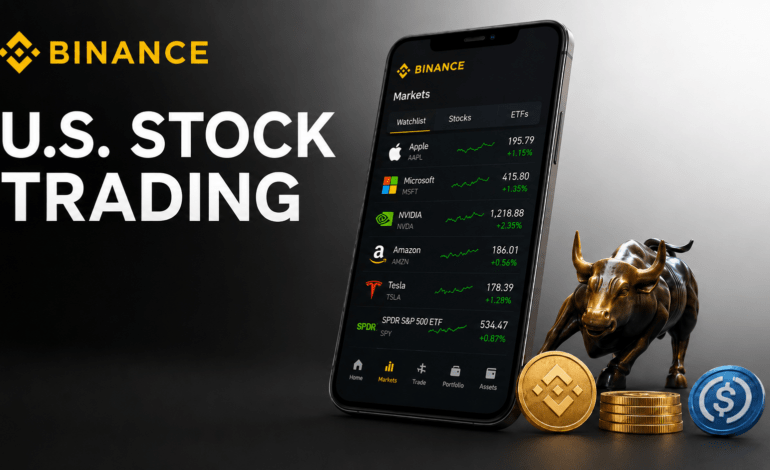
Binance is no longer trying to be just a crypto exchange.
The world’s largest crypto trading platform has launched U.S. stock and ETF trading for eligible users. This means some Binance users can now access thousands of U.S.-listed stocks and exchange-traded funds from the same platform they already use for crypto.
The launch is a major sign of where the financial world is heading. Crypto platforms want to become full investment apps. Traditional financial markets are becoming more digital. Stablecoins are becoming payment rails. And tokenized stocks are moving from a niche idea into a serious product category.
Binance is also preparing to launch bStocks, a tokenized U.S. stocks product. That could bring blockchain-based versions of stocks into the same ecosystem where users already trade crypto, stablecoins, and other digital assets.
For African users and emerging markets, this story matters because access to U.S. stocks has often been expensive, limited, or complicated. Binance is trying to make that access easier, but the product also comes with important regulatory and investor-protection questions.
What Has Binance Announced?
Binance has introduced U.S. equities trading for eligible users, giving them access to more than 7,000 U.S.-listed stocks and ETFs.
The company says users can buy fractional shares starting from $5, trade with zero commission, and access selected stocks on a 24/5 basis. This means trading is available 24 hours a day, five days a week, depending on the asset and market conditions.
Binance says the product is designed to bring crypto and traditional financial assets into one unified account. Instead of switching between a crypto exchange and a stock broker, eligible users can manage both from the same Binance platform.
This is a big shift. Binance built its name in crypto. Now it wants to compete in a much wider financial market.
Is This Real Stock Trading or Tokenized Stock Trading?
This is the most important question.
Binance’s current U.S. stock trading product is presented as access to traditional U.S.-listed stocks and ETFs for eligible users. According to Binance’s announcement, users will have direct ownership of the equities held by a U.S.-regulated clearing broker, including eligibility for applicable dividends and corporate actions.
That is different from a purely synthetic crypto token that only tracks a stock price.
However, Binance has also said it will soon introduce bStocks, a tokenized U.S. stocks product. This means Binance is planning a second layer where certain U.S. stocks can be represented as blockchain-based assets.
So the story has two parts:
- First, Binance is launching stock and ETF trading inside its app.
- Second, Binance is preparing to launch tokenized stocks through bStocks.
That distinction matters because traditional stock ownership and tokenized stock exposure may have different rules, rights, risks, and regulatory treatment.
What Are ETFs?
An ETF, or exchange-traded fund, is an investment product that trades like a stock but usually holds a basket of assets.
For example, one ETF can hold shares of many companies in the S&P 500. Another ETF can track technology companies, energy companies, bonds, or other asset classes.
ETFs are popular because they make diversification easier. Instead of buying many individual stocks one by one, an investor can buy one ETF that gives exposure to a wider market.
By adding ETFs, Binance is not only offering access to individual companies. It is also offering access to broader investment themes and markets.
How Will Users Pay for Stocks on Binance?
Binance says users can purchase stocks using supported balances on Binance, including select stablecoins and BNB.
According to Binance’s stock trading information, supported balances include assets such as USDC, USDT, BNB, USD1, and $U, while sale proceeds are mainly received in USDC.
This is important because it shows how stablecoins are becoming part of mainstream investing.
In the past, users usually needed a bank account, debit card, broker account, or wire transfer to buy U.S. stocks. Binance is now trying to make it possible for eligible users to move from crypto balances into U.S. stock exposure more easily.
That could be especially attractive in regions where international brokerage access is limited or expensive.
Why Binance Is Doing This
Binance wants to become more than a crypto trading platform.
The company says the launch supports its vision of becoming a multi-asset financial super app.
A financial super app is a platform where users can access many financial services in one place. That could include crypto trading, stablecoins, savings products, stock trading, payments, cards, tokenized assets, and more.
This is the same direction many fintech companies are moving toward. Users do not want ten different apps for every financial need. They want simple access, lower costs, and faster movement between asset classes.
Binance already has a massive crypto user base. By adding U.S. stocks and ETFs, it can keep users inside its ecosystem for more of their financial activity.
What Are Tokenized Stocks?
Tokenized stocks are blockchain-based representations of shares.
In simple terms, a tokenized stock is a digital token that represents exposure to a real-world stock. For example, a token could represent exposure to Apple, Tesla, Nvidia, or an ETF.
But not all tokenized stocks are the same.
Some tokenized stocks may be backed by real shares held by a regulated institution. Others may only track the price of a stock through a synthetic structure. Some may give users dividends or corporate-action benefits. Others may not give voting rights or full shareholder rights.
That is why users must be careful. A token that tracks a stock price is not always the same as directly owning the stock.
Binance’s upcoming bStocks product will be watched closely because the structure, custody, regulation, and investor rights will determine how safe and useful it is.
Why bStocks Could Be Important
bStocks could become important if Binance makes tokenized stocks easy to access and easy to use.
Tokenized stocks can make traditional assets more flexible. They can potentially trade for longer hours, move faster between platforms, and be integrated with blockchain-based wallets and financial products.
They could also make U.S. market exposure easier for users outside the United States.
For example, a user in Africa, Asia, or Latin America may want exposure to U.S. companies but may not have easy access to a traditional broker. A tokenized stock product could reduce some of that friction.
However, tokenized stocks also raise serious questions. Who holds the real shares? What rights does the token holder have? What happens if the issuer fails? What rules apply in the user’s country? Can the token be redeemed? Are dividends paid? Can users vote?
These questions will matter more as tokenized stock products grow.
Why Regulators Will Pay Attention
Stock trading is more heavily regulated than normal crypto trading.
When a platform offers stocks, ETFs, dividends, corporate actions, clearing, custody, and tokenized securities, regulators will want to know exactly how the product works.
This is especially true for tokenized stocks. Securities laws are strict because stocks represent ownership or economic exposure to companies. If a token behaves like a security, regulators may treat it as one.
Binance has faced regulatory pressure in different markets in the past, so its move into stocks and tokenized securities will likely attract strong attention.
The key issue is investor protection. Users need clear information about ownership, fees, rights, taxes, settlement, custody, and dispute resolution.
What Could Go Right
If Binance executes this product well, it could make investing easier for millions of users.
First, it could reduce access barriers. Users who already have Binance accounts may find it easier to start investing in U.S. stocks and ETFs.
Second, fractional shares could help smaller investors participate. Users can start with a small amount instead of waiting until they can afford a full share.
Third, stablecoin-based access could make cross-border investing more flexible. Users with crypto balances may be able to move into stocks without using a traditional bank transfer.
Fourth, tokenized stocks could create new financial products. In the future, users may be able to use tokenized assets in wallets, payment apps, or other blockchain-based services.
Fifth, Binance could push other platforms to improve their own global investing products.
What Could Go Wrong
The risks are also serious.
The first risk is regulation. Stock and ETF trading is not the same as crypto spot trading. Rules differ by country, and availability may change.
The second risk is misunderstanding. Some users may not know the difference between direct stock ownership, ETF exposure, and tokenized stock exposure.
The third risk is custody. Users need to understand who holds the shares, where they are held, and what happens if a broker, issuer, or platform has problems.
The fourth risk is fees. Even when commission is zero, there may still be platform fees, spreads, currency conversion costs, or withdrawal costs.
The fifth risk is market risk. U.S. stocks can rise or fall. Fractional access does not remove the risk of losing money.
The sixth risk is tax. Stock gains, dividends, and cross-border investment income may create tax obligations depending on where the user lives.
Binance Is Not Alone
Binance is not the only company trying to merge crypto and traditional finance.
Robinhood, Coinbase, Kraken, Nasdaq, and other major players have all explored or expanded products that connect digital assets with traditional financial markets. Reuters reported that Nasdaq has been working with regulators to introduce tokenized securities trading on its main market, which shows that the trend is not limited to crypto exchanges.
The direction is clear. Financial markets are becoming more digital, more global, and more integrated.
The question is who will control the user experience.
Will traditional brokers add crypto features? Will crypto exchanges become stock brokers? Or will new platforms combine everything into one financial app?
Binance is betting on the third option.
FAQ
Has Binance added U.S. stock trading?
Yes. Binance has launched U.S. stock and ETF trading for eligible users.
Can everyone use Binance stock trading?
No. Availability depends on eligibility, location, local regulations, and Binance’s product rules.
How many stocks and ETFs are available?
Binance says eligible users can access more than 7,000 U.S.-listed stocks and ETFs.
What is the minimum amount needed to buy stocks on Binance?
Binance says users can buy fractional shares starting from $5.
Can users buy stocks with crypto on Binance?
Yes. Binance says users can use supported balances, including select stablecoins and BNB.
What are bStocks?
bStocks are Binance’s upcoming tokenized U.S. stocks product. They are expected to bring stock exposure onto blockchain rails.
Are tokenized stocks the same as normal stocks?
Not always. Tokenized stocks can differ depending on how they are structured, backed, regulated, and what rights they give users.
Why does this matter?
It shows that crypto exchanges are moving beyond digital assets and becoming broader financial platforms that combine crypto, stocks, ETFs, stablecoins, and tokenized real-world assets.