








Inside Bitcoin Nairobi Conference 2026: Everyday Bitcoin Use Took Centre Stage

At the Bitcoin Nairobi Conference 2026, attendees did not only listen to people discuss Bitcoin. They were given satoshis and asked to use them.
Rather than distributing lunch, the organisers credited attendees with Bitcoin through a partnership with Paybee. To buy food, each person had to complete a Bitcoin transaction. Every vendor at the conference accepted Bitcoin, including food providers, cleaners and waste-management partners. According to conference organiser Brindon Mwiine, Bitcoin was the only money transacted at the venue. [1]
“You don’t learn Bitcoin from a keynote. You learn it the first time you buy your lunch with it,” Mwiine wrote after the event. [1]
That experience captured the main focus of the Bitcoin Nairobi Conference: moving the conversation away from price speculation and towards Bitcoin’s practical use as money.
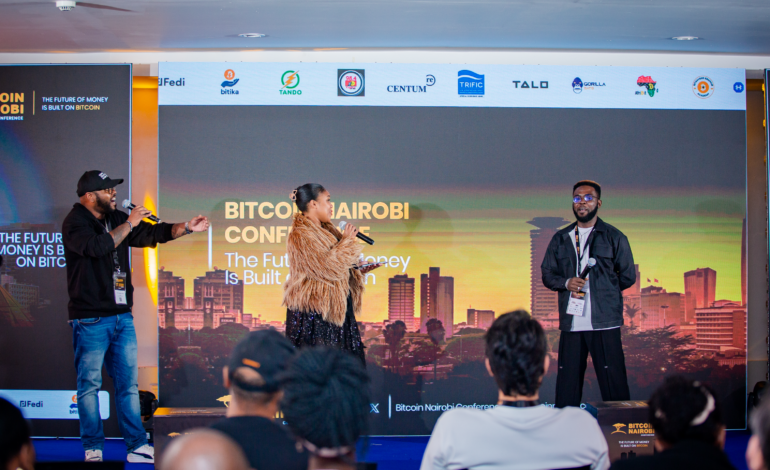
Held from 24 to 26 June 2026, the event brought together more than 330 attendees, 67 speakers and 53 organisations. The first two days at the A.S.K. Dome in Jamhuri Park featured 41 sessions across three stages. The final day took the conference into Kibera, where participants visited merchants already accepting Bitcoin. [2]
A Bitcoin Conference Built Around Practical Use
Bitcoin is often introduced through its price. New users hear about people who bought it early, traders trying to profit from market movements or investors holding it in anticipation of future gains.
Bitcoin Nairobi Conference took a different approach.
Its programme was organised around six main areas: understanding Bitcoin, money and value, financial systems, real-world applications, builders and innovation, and policy and regulation. [2]
The event positioned itself as a Bitcoin-first conference rather than a general cryptocurrency gathering. This meant less attention to new tokens and speculative projects and more attention to payments, savings, self-custody, remittances, merchant adoption and Bitcoin infrastructure.
Organiser Serah Mucha said ahead of the event that Africa should not simply witness Bitcoin’s future but should help shape it. [3]
That Africa-led approach could also be seen in the programme. Speakers and projects came from Kenya, Uganda, Tanzania, Burundi, Nigeria and South Africa, alongside participants from other parts of the world. [1]
Kibera Was Central to the Conference
The Kibera visit was not an additional tour placed at the end of an unrelated conference. It was central to why the event was organised in Nairobi.
Mwiine said the idea emerged after he visited Afribit Kibera in 2025 and walked through what the community calls Bitcoin Valley. During that visit, he encountered vegetable traders, shops, a boutique, a car wash and other businesses accepting Bitcoin.
He also observed one local merchant using Bitcoin to purchase shoes from another merchant. This merchant-to-merchant payment is important in a circular economy because it means Bitcoin does not always have to be converted into Kenyan shillings immediately after it is received. [1]
That experience led Mwiine and Afribit Kibera’s Ronnie Mdawida to consider how they could expose more people to what was happening in the community. Their discussions eventually developed into the Bitcoin Nairobi Conference. [1]
On 26 June, attendees retraced that idea through what organisers described as a walking conference. Participants saw people use Bitcoin to buy vegetables, bananas, food and services such as car washing. They also met merchants and community members involved in the local economy. [1][2]
The visit made Kibera more than a case study discussed on stage. It allowed attendees to observe the opportunities and complications of using Bitcoin in a real community.
Circular Economies Took Priority Over Trading
Several grassroots initiatives featured in the conference discussions, including Afribit Kibera, Bitcoin Babies, Bitcoin Chama and BitBiashara. [1]
These projects explore how Bitcoin can circulate within a community through a combination of earning, saving and spending.
For example, a resident may earn Bitcoin for completing work, spend some of it at a participating shop and save the rest. The shopkeeper may then use the Bitcoin to purchase goods or services from another participating merchant.
In practice, building such an economy is difficult. Merchants still need Kenyan shillings to pay suppliers, rent and other expenses. Bitcoin’s price can also change sharply, creating a risk for small businesses operating with narrow margins.
The available conference recap demonstrates that transactions occurred, but it does not provide detailed figures showing how much Bitcoin changed hands, how frequently merchants convert it to shillings or how many transactions involve repeat local customers.
These details will be important when assessing whether Bitcoin circular economies can continue growing without depending heavily on donations, incentives or visiting Bitcoin users.
Education and Self-Custody Remained Important
The conference also focused on helping people understand Bitcoin before using it.
Josef Tětek of Trezor Academy delivered the opening title-sponsor keynote, while South Africa’s Hermann Vivier discussed lessons from building Bitcoin Ekasi, another African Bitcoin circular-economy project. [1]
Communities including Bitcoin Dada, Satoshi Sister Circle and Bitcoin SheLeads also brought women’s participation into the programme. [1]
Education is particularly important when discussing self-custody. Self-custody allows someone to control their Bitcoin without leaving it with an exchange or another company. However, that control also comes with responsibility. Losing a recovery phrase or exposing it to someone else can lead to the permanent loss of funds.
For adoption to be sustainable, newcomers need to understand wallet security, scams, transaction fees, price volatility and the difference between Bitcoin and the wider crypto market.
The presence of talks, workshops, demonstrations and community-led sessions reflected an understanding that adoption cannot be separated from education.
African Bitcoin Builders Took the Stage
Bitcoin adoption requires more than people willing to buy and hold the asset. It also requires wallets, payment tools, developer infrastructure and services that work in local markets.
The conference featured developers and organisations working on Bitcoin infrastructure, including Btrust, BitDevs, Machankura and Fedimint. [1]
Their involvement highlighted an important change in Africa’s Bitcoin ecosystem. African users are not only consumers of products built elsewhere. Developers and entrepreneurs across the continent are building tools around local needs, including mobile-money integration, low-cost payments, community custody and access through basic mobile phones.
This matters because a product designed for someone with a credit card, reliable broadband and a recent smartphone may not work for a user relying on mobile money, intermittent internet or a feature phone.
Local builders are better positioned to understand those constraints. They can also help international Bitcoin companies with African market entry by providing local knowledge, partnerships and user insights rather than treating the continent as a single market.
Policy Questions Could Not Be Ignored
Policy and regulation formed one of the conference’s six pillars.
The discussion came at an important moment for Kenya. The country’s Virtual Asset Service Providers Act took effect on 4 November 2025, establishing a framework for licensing and regulating companies providing virtual-asset services. The Central Bank of Kenya and Capital Markets Authority are among the authorities responsible for implementing the law. [4]
The law is primarily directed at businesses providing services such as exchanges, custody and other commercial virtual-asset activities. However, the broader regulatory environment may still influence wallet providers, payment companies and organisations supporting Bitcoin adoption.
The challenge is finding a balance.
Authorities have legitimate reasons to address scams, misleading advertising, money laundering and the mishandling of customer funds. At the same time, rules designed for large exchanges may not always fit small community projects or open-source developers.
The conference placed policymakers, businesses, developers and everyday users within the same conversation. What is less clear from the available public recap is whether the event produced specific policy proposals or commitments. That is an area future editions could document more clearly.
From Nairobi to a Wider East African Network
Bitcoin Nairobi Conference was presented as an East African gathering rather than an event concerned only with Kenya.
Mwiine has proposed smaller national gatherings in places such as Arusha and Kampala that could feed into a larger annual regional conference. [1]
This model could allow communities to share practical lessons. A merchant project in Kibera may learn from Bitcoin Ekasi in South Africa. A payments provider in Kenya may help a community in Uganda understand mobile-money integration. Developers from different countries may also collaborate on tools that can operate across borders.
One attendee from Uganda said the Kibera experience made them consider applying a similar approach within their own community. [2]
That exchange of local knowledge may ultimately prove more valuable than the number of people who attended the Nairobi event.
Frequently Asked Questions
When was Bitcoin Nairobi Conference 2026 held?
Bitcoin Nairobi Conference 2026 was held from 24 to 26 June 2026. The first two days took place at the A.S.K. Dome in Jamhuri Park, while the final day included a walking conference in Kibera.
What did Bitcoin Nairobi Conference 2026 focus on?
The conference focused on Bitcoin education, payments, savings, circular economies, self-custody, infrastructure, African Bitcoin developers, regulation and practical adoption beyond trading.
What happened during the Kibera visit?
Attendees visited merchants participating in the Afribit Kibera circular economy. They saw Bitcoin being used to pay for everyday goods and services, including vegetables, food, bananas and car washing.
How many people attended Bitcoin Nairobi Conference 2026?
According to the official recap, the event attracted more than 330 attendees. It featured 67 speakers, 53 organisations and 41 sessions.
Will Bitcoin Nairobi Conference return in 2027?
Yes. The organisers have announced that Bitcoin Nairobi Conference will return in 2027, although the dates had not been published at the time of writing.
Sources
[1] Brindon Mwiine: Born in Kibera—The Story Behind the Bitcoin Nairobi Conference
[2] Bitcoin Nairobi Conference 2026 official recap
[3] CIO Africa: Kenya to Host the Bitcoin Nairobi Conference 2026
[4] Kenya Law: Virtual Asset Service Providers Act, 2025