








Kenyan Court Detains Suspect for 7 Days in Alleged KSh 58 Million Crypto App Fraud Probe

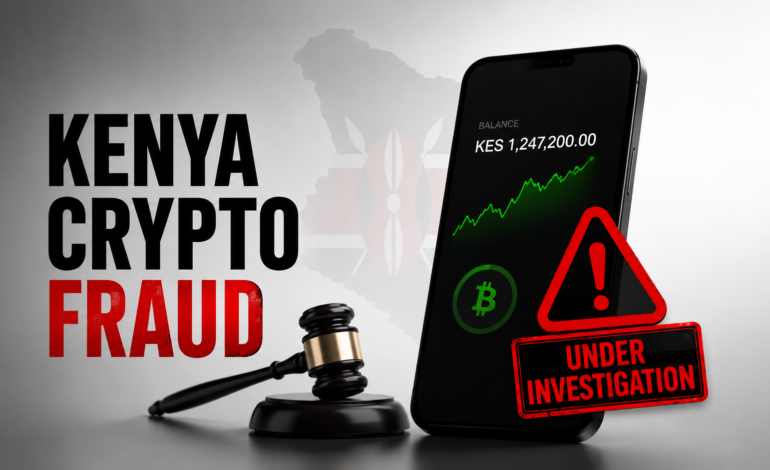
A Nairobi court has allowed police to detain a man for seven days as detectives investigate an alleged cryptocurrency investment fraud involving more than KSh 58 million, or about $440,000.
The suspect, identified in court reports as Dickson Ndege Nyakango, is being investigated over claims that he was linked to a crypto-themed investment platform that allegedly collected money from unsuspecting investors. The case is being handled by the Directorate of Criminal Investigations, through the Capital Markets Fraud Investigation Unit.
According to reports, the Milimani Law Courts allowed detectives to hold Nyakango at Kilimani Police Station for seven days while they continue tracing financial records, digital platforms, possible victims, and other people who may be connected to the case.
The case is still under investigation. Nyakango has not been convicted, and the claims remain allegations unless proven in court.
How the Alleged Crypto App Scheme Worked
Investigators reportedly told the court that the probe began after Kestrel Capital (EA) Ltd, a licensed stockbroker in Kenya, raised concerns about a suspicious investment app. The app was reportedly listed as KCLNL on Google Play and Apple’s App Store.
The app allegedly presented itself as an artificial intelligence-powered investment fund connected to Kestrel Capital and another entity known as Nathaniel Capital Partners Limited. However, investigators said Kestrel Capital denied any link to the platform or the named partner, raising concerns about possible impersonation and fraudulent misrepresentation.
Detectives also claimed the platform promised investors daily returns of up to 7%. Users were allegedly recruited through WhatsApp groups and instructed to send money through bank accounts, Paybill numbers, and mobile money channels.
This is a major red flag. In crypto, any platform promising fixed daily profits, especially as high as 7%, should be treated with extreme caution.
Suspect Arrested at Nairobi Bank Branch
Reports say Nyakango was arrested on May 4, 2026, at an I&M Bank branch along Kenyatta Avenue in Nairobi. Detectives alleged that he was attempting to withdraw funds from one of the accounts under investigation.
One account reportedly linked to the suspect is said to have received about KSh 33.67 million between April 8 and April 29, 2026. Investigators told the court that more accounts and digital trails still need to be examined.
The prosecution argued that releasing the suspect too early could interfere with the investigation. Detectives also said they were looking into other possible platforms, including another app identified as GSIWEA.
Kenya Is Moving Toward Tougher Crypto Regulation
The case also comes at a time when Kenya is trying to tighten oversight of the digital asset sector. Reports note that Kenya passed the Virtual Asset Service Providers Act in October 2025, with the law expected to introduce clearer licensing, anti-money laundering, and consumer protection rules for crypto businesses.
This matters because Kenya has had many crypto users for years, but regulation has often lagged behind adoption. Without clear rules, scammers can take advantage of beginners who do not know how to verify whether a crypto company is real, licensed, or safe.
Stronger regulation may help, but it will not replace personal caution. Users still need to check platforms carefully before sending money.
Red Flags Kenyans Should Watch Out For
The biggest warning sign in this case is the alleged promise of up to 7% daily returns. A platform that promises guaranteed daily profit is usually not a serious investment product.
Kenyans should be careful when a crypto platform:
- Promises guaranteed returns.
- Claims you can earn daily profits with no risk.
- Asks you to join through WhatsApp or Telegram groups.
- Uses the name of a known company but cannot prove the partnership.
- Requires deposits through personal bank accounts, Paybill numbers, or mobile money channels.
- Blocks withdrawals or asks for extra “unlocking” fees.
- Has no clear company registration, physical office, or licensed leadership.
A real investment platform should be transparent. It should clearly show who owns it, how it is regulated, what risks are involved, and how users can withdraw their funds.
FAQ
Who is the suspect in the alleged Kenya crypto fraud case?
The suspect has been identified in court reports as Dickson Ndege Nyakango. He is under investigation and has not been convicted.
How much money is involved?
Reports say the alleged fraud involved more than KSh 58 million, or about $440,000.
Which app was involved?
Reports identify one suspicious app as KCLNL. Investigators are also reportedly looking into another app called GSIWEA.
Was Kestrel Capital involved?
According to investigators, Kestrel Capital denied any connection to the suspicious app or the alleged partner named by the platform.
What is the biggest warning sign in this case?
The alleged promise of up to 7% daily returns is a major red flag. Legitimate investments do not guarantee such high daily profits.
Is crypto illegal in Kenya?
Crypto itself is not banned in Kenya, but users should be careful. The country is moving toward stronger regulation of virtual asset service providers, and unlicensed investment schemes remain risky.