








BitMEX Is Shutting Down: What Traders Need to Know Before September 2026

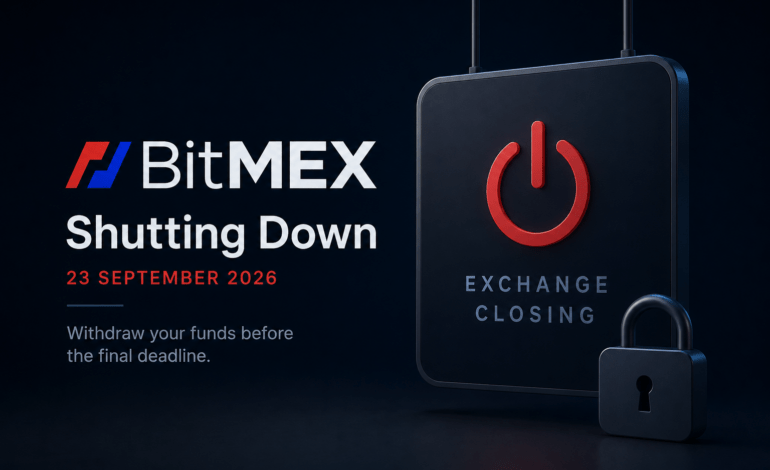
BitMEX shutting down marks the end of one of the most influential chapters in cryptocurrency trading. After more than a decade as one of the industry’s best-known derivatives exchanges, BitMEX has officially announced that it will cease exchange operations on 23 September 2026.
For many experienced traders, BitMEX was where crypto derivatives truly went mainstream. The platform pioneered the perpetual futures contract and introduced high-leverage Bitcoin trading to millions of users worldwide.
Now, that chapter is coming to an end.
If you still have funds, open positions, or account data on BitMEX, this is the time to act, not later.
Why Is BitMEX Shutting Down?
BitMEX’s parent company, HDR Global Trading, announced that the decision followed a strategic review of the business and the broader crypto industry. As part of the wind-down, the exchange has already stopped accepting new account registrations and has published a timeline for closing trading activities.
Founded in 2014, BitMEX helped transform crypto trading by introducing the 100x leveraged perpetual swap, a product that later became an industry standard across many major exchanges. During its peak years, it attracted millions of users and was considered one of the most important derivatives platforms in the crypto market.
However, the crypto industry has changed dramatically.
Growing competition from newer exchanges, evolving regulations, and changing market conditions have reshaped the derivatives landscape. While BitMEX remains historically significant, its market share has declined considerably in recent years.
What Happens Next?
BitMEX will officially stop exchange operations on 23 September 2026 at 04:00 UTC.
Before then, the company will gradually reduce trading activity.
Beginning 26 August 2026, users will no longer be able to open new positions. Instead, they will only be able to reduce or close existing positions. BitMEX has also stated that it may begin force-closing positions before the final shutdown date to ensure an orderly wind-down.
Although the exchange says users will still be able to log in after the closure to view balances and withdraw remaining assets, it strongly recommends withdrawing funds well before the deadline to avoid delays or complications.
What Should BitMEX Users Do Now?
If you still have an active BitMEX account, consider taking these steps as soon as possible.
Check Your Account
Log in and verify:
- Your wallet balances.
- Open trading positions.
- Outstanding orders.
- Any staked or platform-specific assets.
Don’t assume everything will remain unchanged as the shutdown date approaches.
Close Open Positions Early
Avoid waiting until the final days.
As trading activity declines, liquidity may decrease and some contracts may be settled early or force-closed according to the exchange’s wind-down plan.
Withdraw Your Funds
Transfer your assets to:
- A trusted non-custodial wallet.
- A hardware wallet for long-term storage.
- Another reputable exchange if you still intend to trade.
Waiting until the last minute could expose you to network congestion, withdrawal delays, or increased operational restrictions.
Download Your Records
Before the platform closes, save:
- Trade history.
- Deposit and withdrawal records.
- Tax reports.
- Account statements.
These documents may prove valuable for future accounting, compliance, or personal record keeping.
Lessons for African Crypto Users
Across Nigeria, Kenya, Ghana, South Africa, and many other African countries, thousands of traders have relied on offshore exchanges like BitMEX for years.
This announcement reinforces an important lesson:
No centralized exchange lasts forever.
Whether an exchange closes because of regulation, changing business conditions, security issues, or declining market share, users should never assume their trading platform will always be available.
That is why experienced crypto investors often follow one simple principle:
Only keep on an exchange what you actively need for trading.
Everything else should be stored securely under your own control.
Why Self-Custody Matters
Self-custody means you, not an exchange, control your private keys.
When you hold crypto in a non-custodial wallet, you are not dependent on the financial health or business decisions of a centralized platform.
Popular self-custody options include:
- Hardware wallets for long-term storage.
- Trust Wallet.
- MetaMask.
- Rabby Wallet.
- Other reputable wallets where users control their own recovery phrases.
Remember one of crypto’s oldest sayings:
“Not your keys, not your coins.”
The Bigger Picture
BitMEX’s closure is more than the end of one exchange.
It reflects how quickly the cryptocurrency industry evolves.
Platforms that once dominated the market can lose relevance as technology advances, regulations change, and user preferences shift.
At the same time, innovation continues.
New exchanges, decentralized trading platforms, and blockchain-based financial services continue to emerge, offering users more choices than ever before.
For traders, adaptability is becoming just as important as technical knowledge.
Final Thoughts
BitMEX helped shape modern cryptocurrency trading and introduced innovations that continue to influence the market today.
Its closure marks the end of an important era, but it also serves as a reminder that no centralized platform should ever be considered permanent.
If you still have assets on BitMEX, review your account, close your positions where appropriate, withdraw your funds, and keep secure copies of your transaction history.
In crypto, opportunities come and go.
Good security habits should never change.
Have you ever traded on BitMEX? Which exchange do you currently trust, and how do you protect your digital assets? Share your experience in the comments and help others stay informed.