








Big Money Is Moving On-Chain: Mubadala, Ondo & the Solana Tokenization Boom

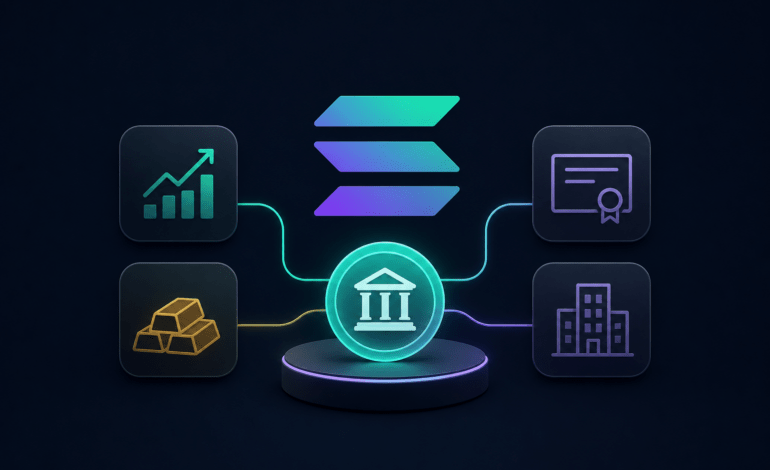
Real-world asset tokenization is no longer a concept reserved for blockchain enthusiasts, it’s becoming one of the biggest trends in global finance.
Over the past few years, financial institutions have explored ways to bring traditional assets onto blockchain networks. Now, that vision is quickly becoming reality.
Two recent developments have captured the attention of the crypto industry.
First, Mubadala Capital, the investment arm backed by Abu Dhabi’s sovereign wealth fund, launched a $75 million tokenized fund on Solana. Around the same time, Ondo Finance expanded its tokenized asset offerings by introducing access to traditional financial products including stocks, ETFs, bonds, and gold on blockchain infrastructure.
Meanwhile, trading activity for tokenized equities on Solana has surged dramatically, reflecting growing interest from both institutions and retail investors.
Together, these developments suggest that major financial players are becoming increasingly comfortable bringing real-world financial products on-chain.
What Is Real-World Asset Tokenization?
Real-world asset tokenization is the process of representing ownership of a physical or traditional financial asset as a digital token on a blockchain.
Instead of owning an asset only through traditional financial systems, investors hold blockchain-based tokens that represent their interest in that asset.
Almost any asset can potentially be tokenized, including:
- Company shares.
- Exchange-traded funds (ETFs).
- Government and corporate bonds.
- Gold and other commodities.
- Real estate.
- Private investment funds.
- Treasury securities.
The blockchain doesn’t replace the asset itself. Instead, it creates a digital representation that can be transferred, tracked, and managed more efficiently.
Why Tokenization Is Generating So Much Interest
Traditional financial markets often involve multiple intermediaries, limited trading hours, and lengthy settlement processes.
Tokenization introduces several potential advantages.
24/7 Market Access
Unlike many traditional exchanges, blockchain networks operate continuously.
This creates opportunities for markets where eligible tokenized assets can be transferred or traded beyond conventional market hours, subject to the rules governing each product.
Fractional Ownership
High-value assets can be divided into much smaller portions.
Instead of needing enough capital to purchase an entire asset, investors may be able to own a fraction of it, making certain investment opportunities more accessible.
Faster Settlement
Traditional securities transactions can take time to settle.
Blockchain technology has the potential to reduce settlement times significantly by recording transactions directly on-chain.
Greater Transparency
Every blockchain transaction creates an auditable record, making ownership transfers easier to verify while improving transparency across financial markets.
Integration with Decentralized Finance
Some tokenized assets may eventually interact with decentralized finance (DeFi) applications, opening possibilities such as collateralized lending or other blockchain-based financial services where regulations permit.
Why Solana?
Several blockchain networks support tokenization, but Solana has emerged as one of the fastest-growing ecosystems for real-world assets.
Its appeal largely comes from its technical capabilities.
Solana offers:
- High transaction throughput.
- Low transaction costs.
- Fast settlement speeds.
- A growing ecosystem of financial applications.
For institutions managing large transaction volumes, these characteristics can help reduce operational costs while improving user experience.
As more institutional products launch on Solana, the network continues to strengthen its position as a destination for tokenized financial assets.
Mubadala Capital’s Move Signals Institutional Confidence
Mubadala Capital’s decision to launch a $75 million tokenized fund represents more than another blockchain announcement.
As the investment arm associated with one of the world’s largest sovereign wealth funds, Mubadala manages significant global investments across multiple industries.
Its participation demonstrates that institutional investors are increasingly willing to explore blockchain infrastructure for managing traditional financial products.
Rather than treating tokenization as an experiment, many institutions now see it as a practical tool for improving financial operations.
Ondo Finance Is Expanding On-Chain Access
Ondo Finance has become one of the leading companies building bridges between traditional finance and blockchain.
By expanding access to tokenized stocks, ETFs, bonds, and gold, the company is helping demonstrate how familiar investment products can exist within blockchain ecosystems.
Instead of creating entirely new financial instruments, tokenization focuses on making existing assets more efficient, more accessible, and easier to move across digital infrastructure.
This approach could significantly influence how global capital markets evolve over the coming years.
Why This Matters for Africa
For African investors and businesses, real-world asset tokenization could create opportunities that have historically been difficult to access.
Greater Access to Global Investments
In the future, eligible investors across Nigeria, Kenya, Ghana, South Africa, and other African countries may find it easier to gain exposure to global financial products through regulated tokenized assets.
Fractional ownership could lower investment barriers while improving accessibility.
Tokenizing African Assets
The opportunity extends beyond accessing foreign investments.
Blockchain technology could also help bring African assets to global markets.
Potential examples include:
- Commercial real estate.
- Agricultural commodities.
- Government bonds.
- Infrastructure projects.
- Carbon credits.
- Business invoices.
- Precious minerals.
Making these assets available through tokenization could improve liquidity while attracting a broader pool of international investors.
Faster Cross-Border Investment
Cross-border capital movement across Africa often remains expensive and slow.
Blockchain-based settlement has the potential to reduce costs and improve efficiency, making regional investment more seamless.
Important Risks to Understand
Although real-world asset tokenization presents exciting opportunities, it also carries important risks.
Regulations continue to evolve across different countries.
Some tokenized products may not be available in every jurisdiction.
Smart contracts, blockchain infrastructure, and platform providers can also introduce operational risks.
Investors should always:
- Research the issuing platform.
- Understand how the underlying assets are managed.
- Review applicable regulations.
- Invest only what they can afford to lose.
Responsible investing remains just as important in tokenized markets as it is in traditional finance.
Looking Ahead
The participation of institutions like Mubadala Capital and the continued expansion of platforms such as Ondo Finance suggest that tokenization is entering a new phase of maturity.
What began as a blockchain experiment is steadily evolving into practical financial infrastructure.
For Africa, this could represent an opportunity not only to access global investment products but also to showcase local assets on international blockchain networks.
Builders, regulators, entrepreneurs, and investors who understand this trend today may be well positioned for the next stage of digital finance.
Final Thoughts
Real-world asset tokenization is transforming the conversation around blockchain.
Instead of focusing only on cryptocurrencies, attention is increasingly shifting toward bringing traditional financial products on-chain in ways that improve accessibility, efficiency, and transparency.
As institutional participation continues to grow, tokenization may become one of the defining trends shaping the future of global finance.
The question is no longer whether tokenization will happen.
It’s how quickly the rest of the financial world will embrace it.
If tokenized stocks, bonds, or investment funds became widely available in Africa, would you invest? And which African assets do you think should be tokenized first? Share your thoughts in the comments.