






Blockchain Protocol Upgrades: Ethereum, Solana and Bitcoin Advance in August 2026

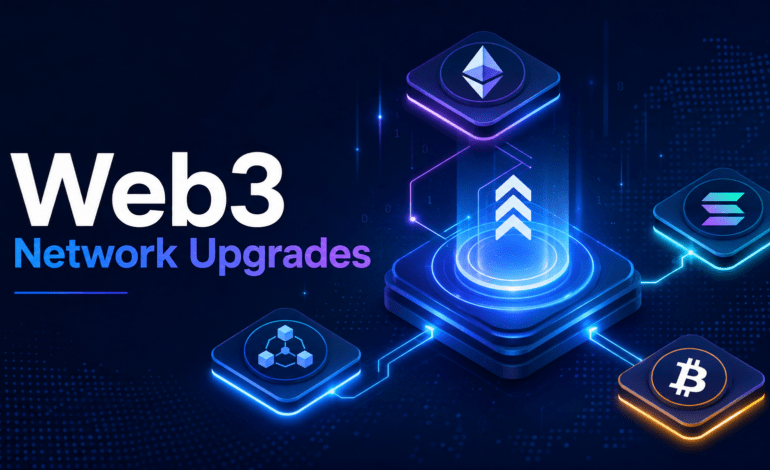
Blockchain protocol upgrades are moving quickly across major Web3 networks in August 2026. Ethereum has started public testing for Glamsterdam. Solana has shipped Agave 4.2 while keeping its biggest features behind controlled activation gates.
Bitcoin Core is also approaching its v32 feature freeze. Elsewhere, Harmony is preparing a rollback after a major security incident. World Chain, meanwhile, has deployed technology that Ethereum plans to use for future Layer 1 scaling.
The developments point to a common trend. Blockchain networks want more speed and capacity, but developers are increasingly choosing staged rollouts over rushed launches.
Blockchain protocol upgrades push Ethereum toward Glamsterdam
Ethereum’s next major upgrade, Glamsterdam, is currently planned for the fourth quarter of 2026.
The upgrade combines changes to Ethereum’s execution and consensus layers. Its main goals include higher Layer 1 capacity, better block production and more efficient management of Ethereum’s growing state.
Two proposals sit at the centre of the upgrade.
EIP-7732, also known as Enshrined Proposer-Builder Separation, moves more of Ethereum’s block-building process directly into the protocol. The design aims to reduce reliance on external relay infrastructure.
It also gives the network more time to distribute execution payloads. That could help Ethereum support larger blocks without creating the same pressure on validators.
The second major proposal is EIP-7928, or Block-Level Access Lists.
Access lists tell nodes which accounts and storage locations a block will use. Clients can then identify transactions that do not depend on each other and process them more efficiently.
Developers can review the wider upgrade roadmap on the official Ethereum Glamsterdam page.
For more on how artificial intelligence is changing blockchain code review, see our AI crypto security analysis.
Ethereum opens Platåberget for public testing
The Ethereum Foundation announced the Platåberget public testnet on August 17.
Its Glamsterdam fork is scheduled for August 20. The temporary network gives client teams, wallet developers, staking operators and infrastructure providers an early environment for testing the upgrade.
The Ethereum Foundation’s Platåberget announcement also highlights changes that could affect wallets, indexers and gas-estimation tools.
Ethereum developers are testing a path toward much larger gas limits. They are also working on new pricing rules for state creation.
One proposal, EIP-8037, aims to make the cost of creating state better reflect the long-term burden on Ethereum nodes.
Other proposed changes include larger contract limits, new gas-accounting rules and improvements to validator operations.
Regular ETH holders do not need to convert or migrate their tokens. Infrastructure providers, however, will need compatible software before the upgrade reaches mainnet.
Ethereum is already planning Hegotá
Ethereum developers are also working on the upgrade that will follow Glamsterdam.
The next fork is known as Hegotá. Its proposal list remains under active review.
One major candidate is Fork-Choice Enforced Inclusion Lists, or FOCIL. The proposal aims to make transaction censorship more difficult by giving multiple validators a role in determining which transactions a block should include.
Other ideas under discussion involve privacy, scaling and improvements to Ethereum’s execution model.
This overlap shows how Ethereum’s development process has changed. Core teams now plan future upgrades while testing the current one instead of waiting for each fork to finish first.
Solana ships Agave 4.2 with features still gated
Solana’s Agave 4.2 validator software has reached mainnet.
However, the network has not immediately activated all of its headline changes. Solana still lists reduced rent, larger transactions and shorter slot times behind feature gates.
The first major change could cut the network’s storage-related rent parameter by 90%.
Rather than applying the reduction all at once, developers divided it into several stages. That allows the network to pause the rollout if lower costs cause unexpected growth in on-chain state.
The second upgrade raises the maximum transaction size from 1,232 bytes to 4,096 bytes through a new transaction format.
That extra capacity could benefit zero-knowledge applications, large multisignature transactions and complex operations that currently require several transactions.
Solana explains the current rollout status on its official Network Upgrades page.
Solana targets shorter slot times
Another important Solana change aims to reduce slot times.
The network currently targets roughly 400 milliseconds. The new proposal moves toward 200 milliseconds through several stages:
- 400 ms to 350 ms
- 350 ms to 300 ms
- 300 ms to 250 ms
- 250 ms to 200 ms
Developers can pause each stage if network health deteriorates.
Shorter slots could improve confirmation times and make trading activity respond faster. However, validators must still keep up with the increased pace.
The staged rollout reduces the risk of forcing the network into a performance target before enough validators can handle it.
For a broader look at how traditional finance is adopting blockchain rails, read our institutional tokenization coverage.
Alpenglow prepares Solana for a new consensus model
Agave 4.2 also contains code related to Alpenglow, Solana’s planned consensus upgrade.
Alpenglow aims to replace TowerBFT with a new voting system called Votor.
The design targets significantly faster finality. It also removes the need for validators to place every consensus vote directly on-chain.
Solana does not plan to activate Alpenglow through Agave 4.2. The project currently expects the transition through a later Agave release.
This approach gives developers and validators more time to test the new consensus design before it controls production activity.
Bitcoin Core approaches its v32 feature freeze
Bitcoin Core is also approaching an important development milestone.
The project’s v32 release schedule places the feature freeze on August 20, 2026. After that point, contributors will focus mainly on fixing bugs and stabilising the release.
The current schedule targets a first release candidate in September and the final Bitcoin Core v32 release in October.
Developers track the release process in the Bitcoin Core v32 milestone.
A Bitcoin Core release is different from an Ethereum or Solana network upgrade. Installing a new Bitcoin Core version does not automatically create a consensus hard fork.
Instead, the release updates one of the main software implementations that Bitcoin node operators use.
Harmony prepares a rollback after unauthorized ONE minting
Harmony faces a very different type of network change.
The project is preparing a coordinated rollback after an attacker created a massive amount of unauthorized ONE tokens.
Harmony plans to return the network to clean blocks from before the exploit. Validators would then resume production using replacement databases and updated software.
A rollback has major consequences. It can also remove legitimate transactions that happened after the selected checkpoint.
The incident therefore raises difficult questions about blockchain governance and immutability.
When a network suffers a severe protocol failure, developers must decide whether preserving transaction history matters more than restoring a clean ledger.
The case also reinforces the importance of crypto security and defensive engineering.
World Chain deploys Block-Level Access Lists early
World Chain has taken another approach to network development.
The Ethereum Layer 2 activated Block-Level Access Lists on its production network on August 17.
The technology follows the same EIP-7928 concept planned for Ethereum’s Glamsterdam upgrade.
World Chain produces blocks in smaller streamed pieces known as flashblocks. Access-list information can travel with those pieces while the full block is still forming.
Validators can begin checking independent transactions earlier instead of waiting for the entire block.
World explains the implementation in its Block-Level Access Lists engineering update.
The deployment gives Ethereum developers a live example of technology that could later support higher Layer 1 throughput.
What these blockchain protocol upgrades mean for Web3
The latest blockchain protocol upgrades reveal a shift in how major networks approach scaling.
Ethereum is changing core block-production and state-management systems before pushing Layer 1 capacity much higher.
Solana has already shipped software for faster and cheaper operations, but it is activating major changes gradually.
Bitcoin continues its conservative release process. Developers are moving from new features toward stabilisation ahead of Bitcoin Core v32.
World Chain is testing future Ethereum technology in production. Harmony, meanwhile, shows what networks face when security failures force developers to consider rewriting recent chain history.
The common theme is controlled change.
Major blockchain networks still compete on speed, cost and throughput. However, they increasingly treat reliability as part of performance rather than an obstacle to it.
For developers, validators and infrastructure providers, August 2026 is therefore about more than one major release.
Web3’s underlying networks are being rebuilt for greater scale. The success of those changes will depend on how well developers balance performance, decentralisation and security.