









Stablecoins and Africa Search for Stability, At What Cost?

Humans are always in search of stability.
We look for it in governance, in food systems, in relationships. But nowhere is stability more psychologically and economically important than in money.
Money is stored human effort. It represents hours worked, risks taken, value created. When a currency collapses or depreciates sharply, it is not abstract numbers that fall, it is purchasing power, savings, dignity, and long-term planning.
Across Africa, this instability is a lived reality; it wreaks havoc on families and businesses overnight.
Zimbabwe’s hyperinflation in the late 2000s erased lifetime savings. Nigeria’s naira has experienced repeated devaluations, particularly following FX reforms in 2023–2024. The Kenyan shilling depreciated significantly between 2022 and early 2024, pushing up the cost of imported fuel, machinery, and consumer goods. Similar volatility patterns exist across Ghana and parts of North Africa.
For businesses and households alike, exchange rate swings create economic anxiety. When an importer in Uganda, Kenya or Malawi agrees to purchase machinery priced in U.S. dollars, any depreciation in the local currency between quotation and settlement directly raises the final cost. Currency volatility becomes a hidden tax on productivity.
In that context, the appeal of stablecoins is obvious.
But the search for stable money in Africa did not begin with crypto.
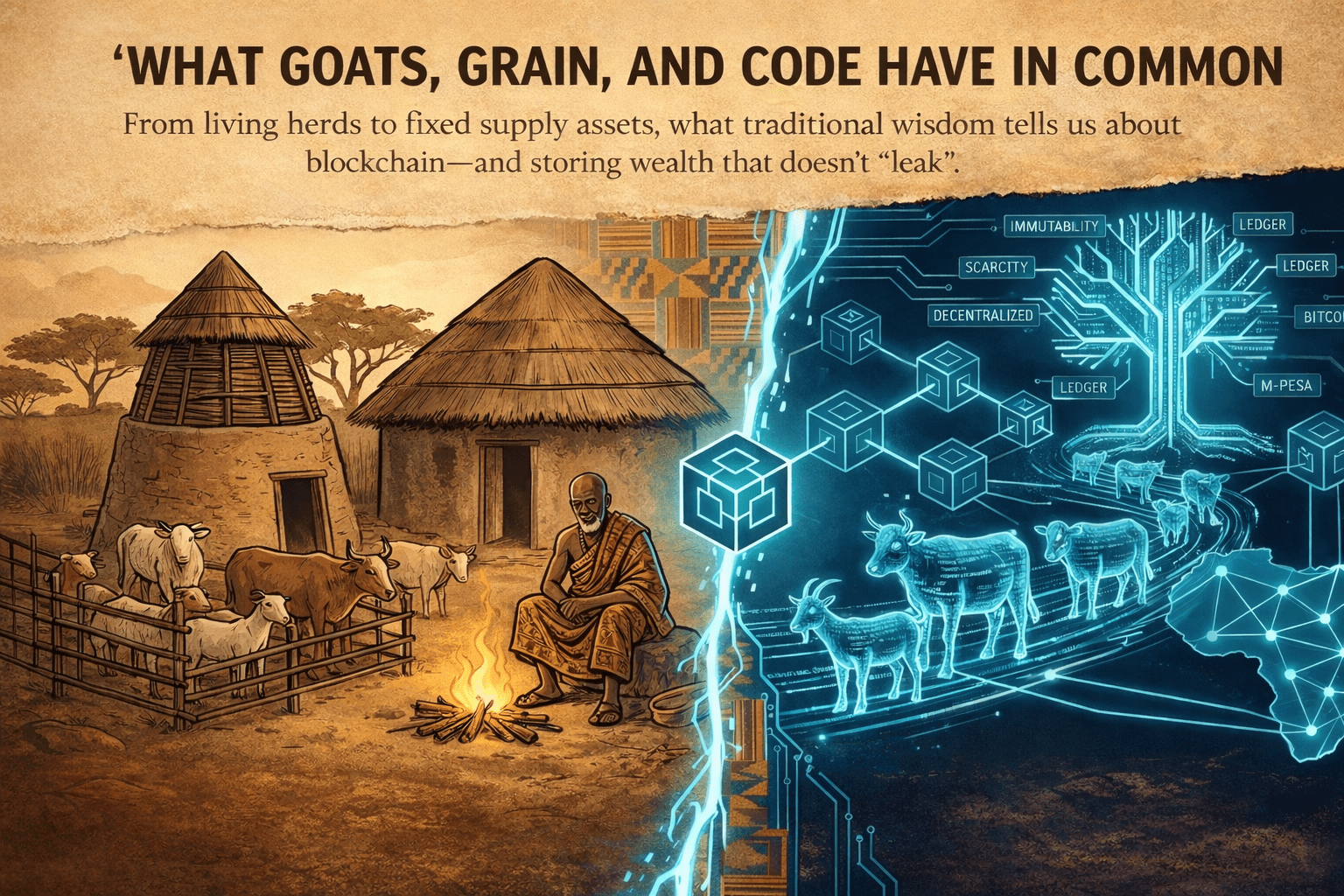
Africa Has Always Adapted Its Money
Long before central banks, African societies experimented with monetary systems designed to preserve value and facilitate trade.
Gold dust circulated in West African and Sudanic empires, measured in standardized units. It was scarce, durable, and internationally recognized.
Cowrie shells, imported from the Maldives, were widely adopted across West and parts of East Africa. Their durability and external sourcing limited local over-supply, reinforcing perceived stability.
These were not primitive currencies. They were rational responses to the limitations of barter and local volatility. African societies repeatedly adapted to monetary instruments that improved predictability and exchange efficiency.
Stablecoins are simply the latest chapter in this long historical pattern.
The Modern Problem: Volatility and Friction
Today, the structural pressures are different but familiar.
African economies face:
• Currency depreciation pressures
• Limited access to hard currency reserves
• High remittance costs
• Slow cross-border settlements
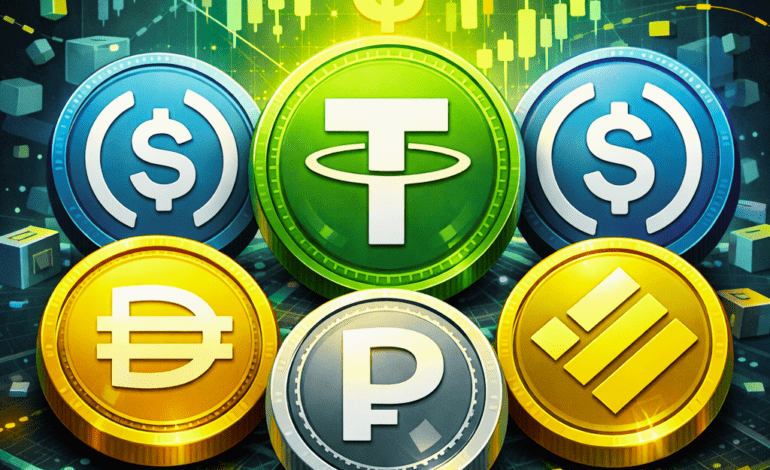
USD-backed stablecoins, particularly USDT and USDC, have emerged as digital instruments that promise:
• Dollar-denominated stability
• Faster settlement
• Lower cross-border friction
• Access to global liquidity
• Protection from domestic currency depreciation
For freelancers paid by international clients, traders importing goods, and SMEs managing working capital, stablecoins provide predictability that local currencies sometimes fail to offer.
This is not speculative mania. It is risk management.
However, stability always has structural consequences.
Digital Dollarization: The Sovereignty Question
Widespread adoption of USD-backed stablecoins effectively represents digital dollarization.
If savings and transactional balances shift into dollar-pegged assets:
1. Central banks lose influence over domestic liquidity.
2. Monetary policy transmission weakens.
3. Seigniorage revenue, income earned from issuing national currency, declines.
4. Financial data migrates outside regulated banking systems.
While stablecoins can protect individuals from depreciation, they may simultaneously reduce state-level monetary control.
This tension is not hypothetical. It mirrors historical episodes of physical dollarization in economies experiencing volatility. Currently, Lebanon,is a good example
The difference is speed and scale.
Stablecoins move at internet velocity.
The Hidden Costs of Stability
The narrative of stablecoins as frictionless solutions is incomplete.
Off-ramping , converting stablecoins into local fiat , often carries significant costs. In certain African corridors, spreads and fees can range between 3% and as high as 10–19% depending on liquidity conditions, informal OTC markets, and regulatory constraints.
This creates what could be described as a digital stability premium.
For users seeking protection from volatility, they may end up paying substantial conversion costs , effectively a new form of transaction tax.
There is also systemic concentration risk. A large portion of stablecoin usage in Africa relies on USD-pegged instruments issued by foreign entities. Monetary stability becomes dependent on external governance, regulatory decisions, and reserve management practices.
Even the U.S. dollar itself is not immune to inflation. Over the long term, the dollar has lost substantial purchasing power(since 1913 it has lost 90% of its purchasing power). Digital dollarization does not eliminate inflation risk , it reallocates it.
Stability Is a Human Need :But Strategy Matters
The search for stable value storage is rational. It is embedded in human psychology.
But Africa faces a strategic decision:
Will the continent remain a consumer of imported monetary stability, or participate in designing alternatives?
Given Africa’s resource base , from gold and critical minerals to agricultural output and renewable energy potential , there is room to explore broader monetary experimentation:
• Commodity-backed digital assets
• Regional settlement stablecoins
• Hybrid public-private digital currency frameworks
• On-chain models
• Intra-African trade-denominated digital instruments
As AfCFTA trade integration expands, the need for efficient cross-border settlement will grow. Stablecoins may play a role , but they need not be exclusively USD-pegged.
The debate should not be framed as anti-stablecoin.
It should be framed as a pro-strategy.
The Deeper Reality
The search for stable money has always accompanied uncertainty.
From gold dust to cowrie shells to national currencies to digital tokens, Africans have repeatedly adapted to better monetary technologies when they emerged.
Stablecoins are another iteration in that evolutionary cycle.
The critical question is not whether Africans will use them.
They already are.
The real question is whether Africa will shape the next phase of monetary innovation , or simply integrate into systems designed elsewhere.
Stability is a universal human need in a chaotic world.
But sovereignty, and strategic participation, remain choices.