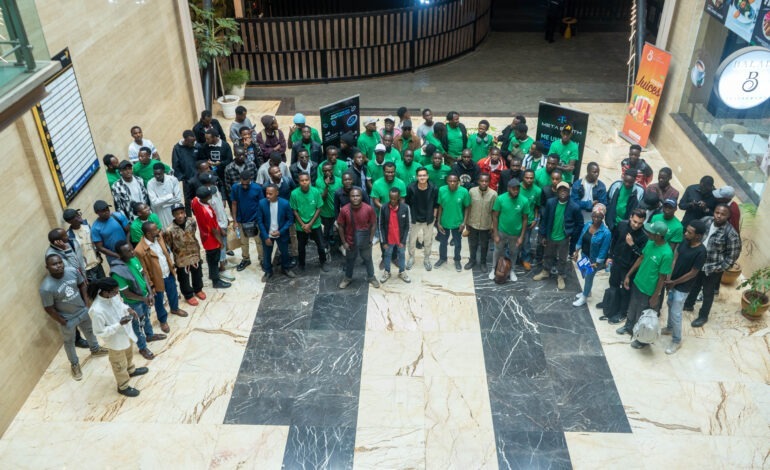









Crypto in Kenya isn’t What you Think: Here’s How People Really Use it


It’s the early 2000s to be precise 2007CE, and the internet is in transition. The world is moving swiftly from Web 1.0 to Web 2.0, as static websites give way to more interactive platforms. Social media networks like Facebook are gaining wider acceptance, heralding the inception of new beginnings of digital creativity and online participation.
In Kenya, a different kind of revolution is quietly taking shape. For the first time, money can be sent through a simple text message. It is a first on multiple fronts: the mobile phone is no longer just a communication device ,it has become a financial tool.
Globally,Kenyans have always ranked highly as early adopters of digital finance. Long before the rest of the world embraced mobile payments, Kenya was already sending money by phone, paying bills digitally, and building entire businesses around mobile money.
Crypto, often misunderstood as a tool for speculation or quick wealth, is quietly finding its place in this ecosystem. Not loudly. Not everywhere. But slowly in very real,and practical everyday use.
Today, crypto in Kenya is less about ‘get rich quick schemes’ and more about solving everyday financial problems.
Kenya’s Digital Money Culture
To understand crypto adoption in Kenya, you must have a historical perspective of Kenyans experimenting with digital value transfer and embracing it.
From M-Pesa to mobile banking, Kenyans have been comfortably storing, sending, and receiving money digitally.
Crypto does not arrive as an ambiguous concept ,it arrives as an extension of what people already have experienced.
What changes is who controls the money, how fast it moves, the cost implications and how far it can travel.
Freelancers and Remote Workers Getting Paid
One of the clearest and most established crypto use cases in Kenya is cross-border payments for online work.
Thousands of Kenyans earn income from:
- Software development
- Graphic design
- Content writing
- Digital marketing
- Virtual assistance… etc
For many of them, traditional payment platforms come with delays, restrictions, or high fees. Crypto offers an alternative that is convenient to both parties.
Clients are now preferring to pay using:
- USDT or USDC (stablecoins)
- Bitcoin or Ethereum
The appeal is simple:
- Faster settlement
- Fewer payment barriers
- Easier access to dollar-denominated value
Funds can later be converted locally through peer-to-peer platforms or crypto exchanges. While not perfect, this method gives freelancers more control over their earnings.
Crypto as a Store of Value
Another growing use case is value preservation.
Kenyans, particularly tech-savvy youth and professionals, use stablecoins as a way to hold value in dollars. Not to speculate, but to protect savings.
In practice, this looks like:
- Saving in USDT or USDC instead of holding cash
- Treating crypto wallets like informal dollar accounts
- Using crypto as a hedge against currency fluctuations
For many, this is less about investment and more about financial stability.
Diaspora Transfers and Emergency Remittances
Kenya receives billions in remittances every year. During emergencies , medical bills, school fees, family crises ,speed matters.
Crypto is sometimes used as a bridge:
- Funds sent instantly from abroad
- Converted locally through trusted channels
- Accessed faster than traditional remittance routes
This method is still niche, but it highlights crypto’s strength where urgency and borderless transfer matter most.
Trading and Speculation
Crypto trading exists in Kenya, particularly among young people.
For many Kenyan youth:
- Traditional investment options are limited
- Entry barriers to stocks or real estate are high
- Economic pressure is real
Crypto trading often fills a gap left by lack of accessible financial tools. This does not remove the risks ,scams, volatility, and misinformation that comes with crypto trading, but it has offered a livelihood for many youths to meet their daily needs.
Small Businesses and Online Commerce
Some Kenyan businesses are experimenting with crypto ,especially those that serve international clients.
Examples include:
- Online service providers
- Digital product sellers
- Tech-forward SMEs
Crypto is not replacing mobile money for local transactions. Instead, it is used selectively where it makes sense , mostly in cross-border commerce.
Adoption here remains early, but the direction is clear.
What Crypto Is Not Doing in Kenya (Yet)
Despite growing interest, it’s important to be clear about limitations.
Crypto is not:
- Widely used for everyday retail payments
- Fully understood by the majority of Kenyans
Infrastructure, regulation, education, and trust still shape adoption. And that’s okay.
Real transformation rarely happens overnight.
Crypto in Kenya is moving rapidly and quietly.
The next phase will likely focus on:
- Stablecoins over volatile assets
- Clearer regulation
- Integration with existing financial systems
- Education over speculation
- Real World Assets Tokenization
The future of crypto in Kenya and Africa as a whole will be practical, selective, and shaped by real needs.