








What Happens When All 21 Million Bitcoin Are Mined?

Many beginners ask this question.
What happens when all 21 million Bitcoin are mined?
Does Bitcoin stop working?
Do miners disappear?
Does the network collapse?
At first, it sounds like a serious problem. However, the reality is much calmer than most people think.
Let’s walk through it step by step.
Why Does Bitcoin Have a 21 Million Limit?
Satoshi Nakamoto designed Bitcoin with a fixed supply. He explained this system in the original document, Bitcoin: A Peer-to-Peer Electronic Cash System.
Unlike traditional money, no central authority can create more Bitcoin. The system follows strict mathematical rules.
Miners release new Bitcoin into circulation when they add blocks to the blockchain. In return, they receive a block reward.
However, that reward does not stay the same forever.
Every four years, the network cuts the reward in half. People call this event the halving.
For example, miners earned 50 BTC per block in 2009. Later, they earned 25 BTC. Then 12.5 BTC. Then 6.25 BTC.
As a result, fewer new coins enter circulation over time.
Eventually, around the year 2140, miners will produce the final Bitcoin.
Does Mining Stop After 21 Million?
No. Mining continues.
Miners will still verify transactions. They will still build new blocks. They will still secure the network.
The only difference is this. They will no longer receive newly created Bitcoin.
Instead, they will earn transaction fees only.
So the network does not shut down. It simply changes how it pays miners.
How Do Miners Earn Money Today?
Right now, miners earn income in two ways.
First, they receive block rewards.
Second, they collect transaction fees from users.
At the moment, block rewards make up most of their income. Transaction fees usually account for a smaller portion.
Therefore, many people worry about the future. They ask if fees alone can support miners once block rewards disappear.
That is the real debate.
Will Transaction Fees Be Enough?
No one knows for sure. However, several important factors matter.
First, Bitcoin’s price could be much higher in the future. If Bitcoin becomes widely used as a store of value or settlement asset, even small transaction fees could become meaningful in dollar terms.
Second, Bitcoin may function mainly as a settlement layer. In that model, the base layer handles large and important transactions. Meanwhile, smaller payments move to secondary systems like the Lightning Network.
As a result, the base layer could process fewer but more valuable transactions. That may keep fees strong enough to support miners.
Third, mining adjusts automatically. If mining becomes less profitable, some miners shut down. When that happens, the network lowers the difficulty. Consequently, the remaining miners earn more per block. This process keeps the system balanced.
Bitcoin does not require every miner to survive. It only needs enough miners to secure the network.
Could Security Weaken?
This concern is reasonable.
If transaction fees remain extremely low, fewer miners might participate. A lower hash rate could reduce security.
However, history shows that Bitcoin adapts.
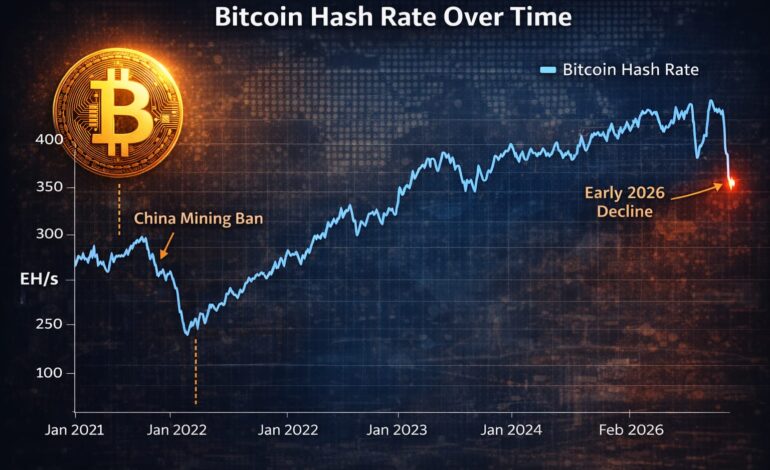
For example, when China restricted mining in 2021 under policies influenced by the People’s Bank of China, hash rate dropped sharply. Nevertheless, mining operations relocated to other countries. Over time, the network recovered.
Short term disruptions did not destroy the system.
Does Bitcoin Become Deflationary?
Yes.
Once miners produce the final Bitcoin, supply becomes permanently fixed.
At the same time, people lose some Bitcoin due to forgotten passwords and damaged wallets.
Because of this, effective circulating supply may slowly decrease.
This built in scarcity forms one of Bitcoin’s strongest features.
Will Miners Eventually Quit?
As long as Bitcoin holds value and users pay transaction fees, miners will have incentives to participate.
Competition will continue. Inefficient miners may exit. Efficient operators will remain.
That dynamic will not disappear in 2140.
The Bigger Perspective
The last Bitcoin will likely be mined around the year 2140. That is more than a century away.
Between now and then, technology will evolve. Energy markets will change. Bitcoin’s role in the global economy may expand.
In other words, we are discussing something far in the future.
That gives the system plenty of time to adapt.
So What Happens When All 21 Million Bitcoin Are Mined?
Let’s summarize clearly.
When the final Bitcoin is mined, no new coins will enter circulation. Miners will earn only transaction fees. The network will continue producing blocks. Bitcoin will remain operational.
The system does not collapse. It transitions from inflation based rewards to fee based incentives.
Satoshi designed Bitcoin with this long term shift in mind. He outlined the supply limit and reward schedule in Bitcoin: A Peer-to-Peer Electronic Cash System.
Bitcoin was built for the long game.
And when 21 million is finally reached, the network will not end. It will simply enter its next phase.