









Success stories often look simple from the outside.
People see the title. They see the company. They see the numbers. They see the big milestones.
But behind every big achievement, there is usually a long road filled with confusion, failure, risk, sacrifice, and quiet moments where giving up feels easier than continuing.
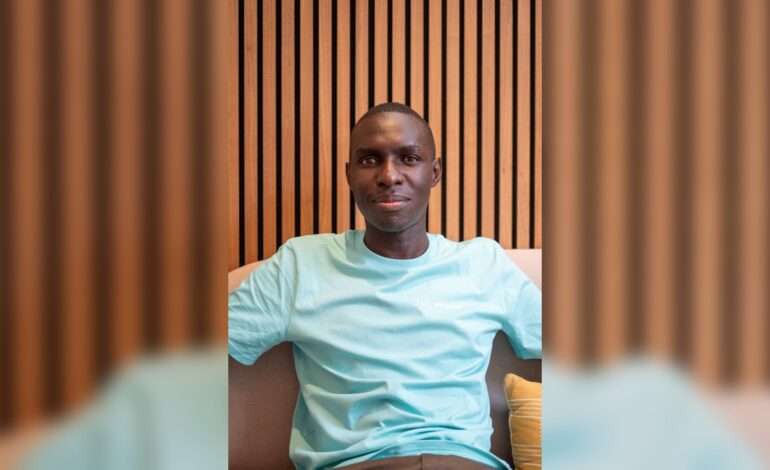
Allan Okoth’s story is one of those stories.
Today, Allan is the Chief Technology Officer of Hurupay, a fast-growing fintech company helping Africans receive and move money across borders. Hurupay is building payment solutions for students, freelancers, and everyday users who need better access to global financial systems.
The company is now moving toward about $50 million in cumulative transaction volume.
But Allan’s journey did not begin with fintech. It did not even begin with a clear love for coding.
His path moved through many unexpected places.
At different points in his life, Allan wanted to become a neurosurgeon, became a house music DJ, struggled as a freelance developer, built failed startups, moved to Rwanda with no clear safety net, and even spent a night sleeping at a bus station in Kigali while chasing a dream.
His story is not just about technology.
It is about courage.
It is about learning.
It is about refusing to allow one difficult season to define the rest of your life.
Growing Up in Gilgil and Dreaming of Medicine
Allan grew up in Gilgil, near Kariandusi in Nakuru County, Kenya.
Like many young people, his early dreams were shaped by the people he admired. One of his biggest inspirations was Ben Carson, the world-renowned neurosurgeon known for performing complex brain surgeries.
Allan admired Carson’s discipline, intelligence, and dedication. For a long time, he believed medicine was the path he was meant to follow.
He saw himself becoming a neurosurgeon.
To him, medicine represented impact. It was a way to help people, solve serious problems, and build a meaningful life.
But life has a way of introducing us to new possibilities when we least expect it.
For Allan, one television show changed everything.
The TV Show That Made Technology Look Powerful
In 2006, Allan watched the action thriller series 24, starring the fictional intelligence officer Jack Bauer.
The show featured hackers, cybersecurity experts, and computer specialists solving complex problems through technology. To Allan, it looked exciting and almost magical.
He saw people using computers not just for typing documents or browsing the internet, but for solving serious problems, breaking into systems, protecting information, and changing outcomes.
That planted a new idea in his mind.
Maybe the future was not in the operating room.
Maybe it was in software.
Slowly, Allan’s interest began shifting from medicine to technology. He started imagining himself as a software engineer, even though he did not yet fully understand what that life would look like.
That small spark would later become important, but the road was still far from clear.
The Difficult Road to University
After high school, Allan applied for several competitive university courses. He was interested in fields such as engineering and actuarial science.
But things did not go as planned.
He did not qualify for those programs in the early rounds of government university placement. By the time the third selection round came, many of the popular courses were already full.
At that point, his options were limited.
A friend advised him to apply for Computer Science at Karatina University. It was not the original plan, but Allan accepted the advice and joined the program.
You might expect that this was the moment everything became clear.
But it was not.
When Allan started studying Computer Science, he quickly discovered something surprising.
He found coding boring.
The idea of sitting behind a computer all day did not excite him. Allan was naturally social and energetic. He enjoyed people, movement, conversation, and lively environments.
Coding felt lonely. It felt slow. It did not match the kind of life he thought he wanted.
So while he was studying technology, another passion began pulling him in a completely different direction.
Finding Energy in House Music
During his university years, Allan discovered house music.
The sound, the crowds, the nightlife, and the energy of DJ culture attracted him strongly. It gave him something that coding did not seem to offer at the time: connection with people. Here are some of his music.
Soon, Allan began performing as a house music DJ in clubs around Karatina and Nyeri.
For nearly three years, he balanced university studies with DJ performances. During the day, he was a student. At night, he was part of a music scene that gave him joy and excitement.
The DJ life helped him express himself. It allowed him to meet people, entertain crowds, and enjoy the energy of live audiences.
For a young man who loved social spaces, it felt natural.
But every path has a cost.
And for Allan, the cost became serious.
The Health Warning That Changed His Life
After years of playing loud music in clubs, Allan began experiencing serious ear problems.
He developed severe tinnitus and constant ear pain. The ringing in his ears became difficult to ignore.
Doctors warned him that if he continued exposing himself to loud music for long hours, he risked permanent hearing loss.
That warning was painful.
DJing was not just an activity. It was part of his identity at the time. It gave him confidence, community, and income.
But now he had to face a difficult reality.
If he continued, he could lose his hearing.
Many people would have seen that as the end of the road. Allan chose to treat it as a new beginning.
Instead of only being afraid, he started asking a powerful question:
What can I build from this fear?
Building Beacon Chat From a Personal Fear
In 2017, Allan built an application called Beacon Chat.
The idea came from his fear of possibly losing his hearing. He wanted to create something that could help people communicate even in difficult situations.
Beacon Chat allowed nearby devices to communicate using Bluetooth instead of the internet. It was similar in spirit to Bluetooth mesh communication tools. The goal was to help people share messages even when there was no normal internet connection.
But for Allan, the idea was deeper than just offline messaging.
He imagined a tool that could help people with hearing difficulties access services and communicate more easily, especially in places where sign language interpreters were not available.
The app included sign language translation features to support communication between deaf users and hearing individuals.
This became Allan’s first serious technical project.
At the time, he did not think of it as a startup. He saw it more like a safety net for his own future.
If he ever lost his hearing, he wanted to make sure he still had a way to communicate.
That project marked an important turning point.
For the first time, coding was not just a boring university subject.
It became a way to solve a real human problem.
Moving to Nairobi and Entering the Startup World
After university, Allan moved to Nairobi hoping to find work in the technology sector.
Like many fresh graduates, he quickly discovered that finding a job was not easy.
He attended interviews. Some interview processes stretched across several stages and lasted for almost a full week. He put in the effort, but opportunities were still difficult to secure.
During this period, Allan heard about a place where developers, founders, and innovators gathered to build and discuss ideas.
The place was called iHub.
Even finding iHub was not simple at first. Matatu drivers were not familiar with the destination along Lenana Road, so Allan eventually had to take a taxi.
When he finally arrived, he entered a completely new world.
Inside iHub, people were talking about startups, apps, funding, product ideas, business models, and technology.
It was different from the traditional job-search environment.
There were people building things before they had permission. There were founders experimenting with ideas. There were developers solving problems and trying to create companies from scratch.
The energy of that place made a deep impression on Allan.
It helped him see that technology was not only about employment.
Technology could also be a path to entrepreneurship.
Soon after, Allan secured a role at My Ride Africa as an innovation officer. The job exposed him more deeply to the startup world and allowed him to interact with entrepreneurs.
This experience strengthened his desire to build something of his own.
Beacon Inclusive and the Pain of a First Startup Failure
Allan’s first serious attempt at entrepreneurship came from the Beacon Chat idea.
He created a startup called Beacon Inclusive.
The goal was to provide communication tools for deaf individuals. He believed the Bluetooth messaging and sign language translation features could help deaf people access services more easily, especially in communities where support systems were limited.
The idea had heart.
It was built from a real concern.
But the startup failed within a year.
The painful part was that the failure was not because the technology was useless. The problem was the market.
Many of the people Allan wanted to help did not have smartphones. Others did not have enough money to pay for the service. Some communities needed the solution, but they did not have the economic ability to support it as a business.
That was a hard lesson.
Allan realized he had built the product mainly from his own fear and personal experience, not from a full understanding of the users’ daily realities.
It taught him something every founder must learn:
A good idea is not enough.
A product must solve a real problem for people who can access it, use it, and support it in a sustainable way.
Failure hurt, but it also gave Allan better judgment.
Trying Again With Bonding Circles
In 2019, Allan tried again.
This time, he worked on a social networking platform called Bonding Circles after a trip to Canada.
At this point, he was still not fully confident in his own software engineering ability. So instead of building the product himself, he outsourced the development work to a team in the Philippines.
The result was disappointing.
The product that came back did not match the vision he had in mind.
For Allan, this was another important lesson.
He realized that when you are the person carrying the vision, you must understand how the product is built. You do not have to do everything alone forever, but you need enough technical understanding to guide the direction, judge quality, and make decisions.
That experience pushed him to take engineering more seriously.
He understood that if he wanted to build meaningful products, he could not keep standing outside the technical process.
He had to become better.
He had to learn deeply.
He had to build.
Surviving Through Freelancing During COVID-19
When the COVID-19 pandemic hit, the world slowed down.
Businesses closed. Movement reduced. Opportunities became uncertain.
Allan returned home and entered a season of survival and self-improvement.
He began building small applications for local businesses, including movie shops and liquor stores.
This was not glamorous work.
It did not come with big headlines, major investors, or startup awards.
But it mattered.
It helped him survive. It helped him sharpen his skills. It helped him understand how real businesses operate and what ordinary users actually need from software.
During this time, Allan also built a radio streaming application and pitched it to Capital FM Kenya and its parent company, Radio Africa Group.
The idea was received positively, and the station even used the app briefly. However, the project did not become a paying contract.
For many people, that would have been discouraging.
But Allan kept building.
This season taught him patience. It taught him how to create without waiting for perfect conditions. It helped him grow from someone who had once found coding boring into someone who could use software to solve real problems.
Sometimes, the seasons that look small are the seasons that prepare us for bigger opportunities.
Winning a Hackathon and Building Civic Voices
In late 2021, Allan participated in a digital democracy hackathon.
He won third place.
That win gave him more than recognition. It gave him some financial breathing room and the confidence to move out of his parents’ house.
It also opened the door for another project.
Together with Omadon Collins, Allan co-founded Civic Voices, a civic technology platform focused on improving public participation.
The platform worked on digital tools that allowed citizens to participate in governance and public consultation. It engaged with county governments such as Nairobi and Kakamega.
Civic Voices was meaningful because it connected technology with public service.
It showed Allan another side of innovation: using digital tools to give people a voice in decisions that affect their lives.
But even as Civic Voices was growing, Allan began noticing another opportunity forming across Africa.
That opportunity was blockchain.
Seeing an Opportunity in Blockchain
Around this period, blockchain technology was becoming a major topic across the world.
Many people only saw crypto prices and online hype. But Allan saw something deeper.
He saw infrastructure.
He saw a chance to build new payment systems.
He saw a technology that could help people across Africa access financial tools that were not always available through traditional systems.
He believed blockchain could become important across the continent, especially for cross-border payments, digital wallets, and financial inclusion.
Allan did not want to wait until the opportunity was obvious to everyone.
He wanted to position himself early.
That decision led him to one of the boldest moves of his life.
Moving to Rwanda With No Clear Plan
In April 2022, Allan decided to move to Rwanda.
His reasoning was strategic. Rwanda was positioning itself as a technology and innovation hub. Allan believed that if he placed himself in the right environment early enough, he could find opportunities in blockchain before the space became too crowded.
The move was risky.
He traveled overnight by bus and arrived in Kigali at around two in the morning.
He had no strong network waiting for him.
He had no guaranteed job.
He had no comfortable landing.
With nowhere to go that night, Allan slept at the bus station.
That moment says a lot about the kind of journey he was on.
It was not polished. It was not easy. It was not romantic.
It was uncomfortable.
But sometimes, the difference between those who build something and those who only dream is the willingness to enter uncomfortable rooms, unfamiliar cities, and uncertain seasons.
The next morning, Allan began searching for opportunities.
He had taken the risk.
Now he had to make it work.
Becoming a Blockchain Instructor
After arriving in Rwanda, Allan found work teaching blockchain development.
This was an important step in his growth.
Teaching forced him to understand the subject more clearly. It also placed him inside the blockchain community, where he could meet developers, students, founders, and people exploring new ideas.
While teaching, Allan continued learning.
He did not pretend to know everything. He kept improving his skills and exposing himself to new tools.
One day, he attended a Sankore Near Developer Program event.
At that event, he met Philip, a student who was looking for an engineer to help build a crypto startup called Easy Crypto.
That meeting would become one of the most important moments in Allan’s career.
Joining the Startup That Became Hurupay
At first, Allan joined the project as a freelancer.
He did not want to overcommit before understanding the opportunity fully. But within a few months, it became clear that his role was critical to the team.
Philip asked Allan to become the company’s Chief Technology Officer.
Allan accepted.
This was not because he already knew everything required for the role. In fact, at the time, he did not yet know the tools needed to build their mobile application.
So he learned React Native while actively building the product.
That is one of the most powerful parts of Allan’s story.
He did not wait until he felt perfectly ready.
He learned while doing.
He grew into the responsibility by taking action.
The team built a prototype, and that prototype helped the company secure a grant from Celo. The grant gave them more room to continue developing the product.
The startup would later evolve into Hurupay.
Building a Company Across Three Countries
Hurupay’s founding team was spread across different countries.
Philip was in Ghana. Allan was in Rwanda. Another co-founder, James, was based in Kenya.
For a long time, they built the company remotely.
They communicated online. They made decisions across borders. They trusted one another before they had even met physically.
In fact, the founders did not meet in person until 2024.
That is not easy.
Building a startup is already difficult when everyone is in the same room. Doing it across countries requires trust, discipline, patience, and strong communication.
But the team kept going.
They were united by a shared belief that Africa needed better cross-border financial tools.
Early Challenges and Important Pivots
In the beginning, the team believed they could integrate easily with M-Pesa in Kenya.
But they quickly discovered that financial technology is not only about writing code. It also involves regulation, licensing, compliance, and partnerships.
Strict requirements made direct integration difficult.
Instead of giving up, the team pivoted.
They moved toward peer-to-peer crypto payments.
Hurupay began helping international students move money between Ghana and Kenya. This was especially useful for tuition payments, upkeep, and pocket money.
The solution worked.
It solved a real problem.
But the transaction volumes were still relatively small.
The team had found value, but they needed a bigger market.
So they made another bold decision.
Expanding to the United States
The team realized that the African student payment corridor had limits.
If Hurupay wanted to grow, it needed to solve a larger financial problem.
That led them to explore opportunities in the United States.
They sponsored Philip to travel there, even though there were no guaranteed partnerships waiting.
It was a gamble.
But like many moments in Allan’s journey, it was a calculated risk.
Philip networked, met people, followed leads, and pushed the company’s vision forward.
The gamble paid off.
Through persistence and relationship-building, Hurupay secured partnerships that allowed it to provide virtual accounts for African freelancers.
This became a major turning point.
Many African freelancers struggle to receive payments from global clients and platforms. Some face delays. Others deal with restrictions. In some cases, platforms such as PayPal may withhold funds, creating serious cash-flow problems for people who depend on online work.
Hurupay offered a solution.
It helped freelancers access their earnings more easily and participate more fully in the global digital economy.
This shift unlocked stronger growth for the company.
Moving From Small Transactions to a $50 Million Milestone
In the early days, Hurupay processed only about $5,000 in monthly transactions.
That number was small, but it was a beginning.
Every major company starts somewhere.
The team kept improving the product. They kept listening to users. They kept adjusting their direction when the market taught them something new.
Over time, Hurupay expanded its services and partnerships.
The platform grew from a small startup experiment into a fintech company moving toward approximately $50 million in cumulative transaction volume.
For Allan, this milestone means a lot.
It represents the first venture that has reached serious, sustainable scale.
But it also represents all the lessons that came before it: the failed ideas, the freelance projects, the unpaid pitches, the difficult nights, and the risky move to Rwanda.
Nothing was wasted.
Every stage prepared him for the next one.
Allan’s Philosophy on Risk and Success
Looking back, Allan believes one of the biggest barriers to success is what he calls the victim mindset.
To him, blaming circumstances can become a trap.
Yes, life can be unfair. Yes, opportunities are not equal. Yes, some people start with more support than others.
But Allan believes that waiting for perfect conditions can stop people from taking action.
He sees the internet as one of the greatest tools available to this generation. A person who is willing to learn can access tutorials, communities, documentation, courses, and examples from anywhere.
That does not mean the journey will be easy.
It means there is a starting point.
Allan also believes in taking calculated risks.
When he moved to Rwanda, he did not simply jump blindly. He set aside part of his savings as a safety net. He gave himself room to try without completely destroying his foundation.
That balance is important.
Take bold steps, but think carefully.
Move forward, but prepare yourself.
Dream big, but build discipline around the dream.
From DJ Booths to Fintech Leadership
Allan Okoth’s story is powerful because it does not follow a perfect path.
He did not start as a young coding genius who always knew he would become a CTO.
He was once a student who found coding boring.
He was once a DJ who almost lost his hearing.
He was once a founder whose startup failed.
He was once a freelancer building small apps to survive.
He was once a young man sleeping at a bus station in a foreign country because he believed there was something bigger ahead.
Today, he is helping build a fintech platform solving real financial problems for Africans across borders.
That journey matters.
It reminds us that success does not always come from having a perfect plan. Sometimes it comes from staying curious, learning from failure, and being brave enough to change direction when life demands it.
Allan’s life shows that your first dream may not be your final destination.