








Bitcoin Falls Below $80K as Inflation and Iran Tensions Shake Markets

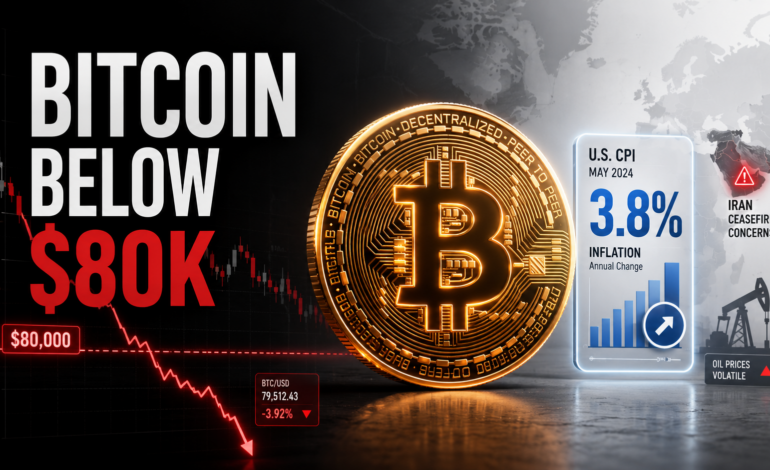
Bitcoin briefly slipped below $80,000 on Tuesday as global markets reacted to two major risks at the same time: hotter U.S. inflation and rising geopolitical tension around Iran.
The move showed how sensitive Bitcoin remains to the wider economy, even as the asset continues to attract long-term interest from institutions and retail investors.
Bitcoin fell below $80,000 on May 12 after U.S. inflation came in at 3.8% and President Donald Trump warned that the U.S.-Iran ceasefire was under serious pressure. The broader crypto market also weakened, with leveraged long positions taking a heavy hit.
Why Did Bitcoin Drop Below $80K?
Bitcoin’s latest decline was not caused by one crypto-specific event.
It was mainly driven by macro pressure.
The first trigger was the latest U.S. inflation report. U.S. consumer prices rose 3.8% in April, the highest annual increase in about three years, according to reports from AP and other major outlets. Energy costs were a major driver, with gasoline prices rising sharply because of the Iran conflict and oil supply fears.
The second trigger was the fading hope of near-term Federal Reserve rate cuts.
When inflation is high, the Federal Reserve is less likely to cut interest rates. In some cases, it may even keep rates high for longer to slow price increases.
That matters for Bitcoin because lower interest rates usually support risk assets. Higher rates make investors more defensive.
How Inflation Affects Bitcoin
Many new investors ask why Bitcoin reacts to U.S. inflation data.
After all, Bitcoin was created as an alternative to traditional money.
But in the real market, Bitcoin often trades like a high-risk asset in the short term. When traders expect cheaper money, they are more willing to buy crypto, growth stocks and other risky assets. When they expect tighter money, they reduce exposure.
Hot inflation reduces the chance of rate cuts.
That means less easy liquidity in the market.
And when liquidity expectations fall, Bitcoin can fall too.
This is why a U.S. inflation report can move the crypto market within minutes.
The Iran Tension Factor
The second pressure point is geopolitics.
Markets are watching the U.S.-Iran situation closely because any serious escalation could affect oil prices. If oil prices rise, energy costs rise. If energy costs rise, inflation can remain high for longer.
AP reported that the Iran conflict has disrupted oil flows and pushed gasoline prices higher, contributing strongly to the 3.8% inflation reading.
That creates a difficult chain reaction:
- Iran tensions can push oil prices higher.
- Higher oil prices can push inflation higher.
- Higher inflation can delay rate cuts.
- Delayed rate cuts can pressure Bitcoin.
So even though Bitcoin is not directly linked to oil, it can still be affected by oil-driven inflation fears.
Rate Cut Hopes Are Fading
Before the inflation report, many traders were hoping the Federal Reserve would cut interest rates later in the year.
Those hopes are now weaker.
A 3.8% inflation reading makes it harder for the Fed to justify cutting rates quickly. The Fed’s job is to keep inflation under control. If price growth is still hot, policymakers may prefer to wait.
This is bad for Bitcoin in the short term because crypto markets usually perform better when investors expect looser financial conditions.
If the Fed stays cautious, Bitcoin may struggle to regain momentum unless buyers return strongly at lower levels.
Leveraged Traders Took a Hit
The move below $80,000 also affected leveraged traders.
News reported that the broader crypto market fell by about 1.6%, wiping out around $232 million in long positions.
A long position is a bet that prices will rise.
When Bitcoin falls sharply, leveraged long traders can be forced out of their positions. This is called liquidation.
Liquidations can make price drops worse because forced selling adds more pressure to the market.
That is why Bitcoin can sometimes fall quickly after breaking an important level like $80,000.
Is This a Bitcoin Problem or a Market Problem?
This looks more like a market problem than a Bitcoin-only problem.
The latest drop came from a combination of inflation fears, rate cut uncertainty and geopolitical risk.
That means Bitcoin is reacting to the same forces affecting stocks, bonds, oil, and currencies.
This does not mean Bitcoin’s long-term story has changed. It means traders are currently focused on short-term risk.
In simple terms, Bitcoin may still have strong long-term demand, but short-term traders are nervous.
What Could Happen Next?
The next major thing investors will watch is whether inflation pressure continues.
If future inflation data cools down, rate cut hopes may return. That could support Bitcoin.
But if inflation stays high, especially because of energy prices, Bitcoin could remain under pressure.
Markets will also watch the U.S.-Iran situation. A stable ceasefire or diplomatic progress could calm investors. More conflict could increase oil prices and keep inflation fears alive.
For Bitcoin, the key levels to watch are psychological. The $80,000 level is important because traders often react strongly to big round numbers. If Bitcoin quickly recovers above it, confidence may improve. If it stays below it, sellers may try to push the price lower.
What This Means for Beginners
For new crypto investors, this is a useful lesson.
Bitcoin does not move only because of crypto news.
It also moves because of:
- interest rates
- inflation
- oil prices
- geopolitical tensions
- Federal Reserve expectations
- liquidations in the futures market
This is why Bitcoin can fall even when there is no hack, no exchange collapse and no bad blockchain news.
Sometimes the biggest driver is the global economy.
Should Investors Be Worried?
Investors should be careful, not panicked.
Bitcoin falling below $80,000 is important, but it does not automatically mean the bull market is over. It shows that the market is sensitive to macro shocks.
The bigger question is whether inflation remains high and whether the Fed stays hawkish.
If inflation cools and rate cut hopes return, Bitcoin could recover. If inflation keeps rising and geopolitical risks worsen, Bitcoin could face more selling pressure.
For long-term investors, this kind of move is a reminder to manage risk and avoid overleveraging.
For short-term traders, the market remains volatile.
Key Takeaways
Bitcoin briefly slipped below $80,000 after U.S. inflation rose to 3.8%.
The inflation jump reduced hopes for quick Federal Reserve rate cuts.
Iran-related tensions added more pressure by raising fears of higher oil and energy prices.
Leveraged long traders were hit as the broader crypto market weakened.
Bitcoin’s latest drop appears to be driven more by macro risk than by a crypto-specific failure.
FAQ
Why did Bitcoin fall below $80K?
Bitcoin fell because investors reacted to hotter U.S. inflation, fading rate cut hopes and renewed concern around Iran-related geopolitical risk.
How does inflation affect Bitcoin?
High inflation can reduce the chance of interest rate cuts. That can hurt Bitcoin because crypto usually performs better when liquidity is loose and investors are willing to take more risk.
What does the Iran conflict have to do with Bitcoin?
Iran tensions can affect oil supply and energy prices. Higher energy prices can push inflation higher, which can delay rate cuts and pressure Bitcoin.
Is Bitcoin still a hedge against inflation?
Bitcoin is often described as a long-term hedge against currency weakness, but in the short term it can still behave like a risk asset and fall when markets become nervous.
What should investors watch next?
Investors should watch upcoming U.S. inflation data, Federal Reserve comments, oil prices, Iran-related developments and whether Bitcoin can reclaim the $80,000 level.