









KBCC 2026: Kenya’s Crypto Conference Puts Stablecoins in Focus

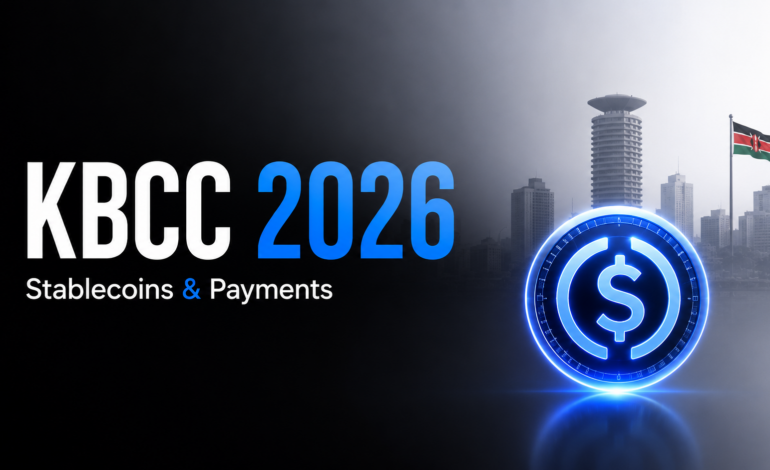
Kenya is preparing to host one of East Africa’s most important blockchain events as the Kenya Blockchain and Crypto Conference 2026, also known as KBCC 2026, returns to Nairobi.
The event is scheduled for May 14–15, 2026, at the A.S.K Dome in Nairobi. It will be the fourth edition of the conference, with the theme “Stablecoins, Payments & the Next Phase of Africa’s Digital Economy.”
That theme says a lot about where crypto is heading in Kenya.
For years, the public conversation around crypto was mostly about trading, Bitcoin prices, scams, regulation and speculation. But KBCC 2026 is pointing to something more practical: how blockchain can improve payments, remittances, settlement and financial access.
This is why the conference matters. It is not just another crypto event. It reflects a bigger shift in Africa’s digital finance story.
What Is KBCC 2026?
KBCC stands for Kenya Blockchain and Crypto Conference.
It is a gathering of blockchain builders, crypto companies, fintech firms, banks, regulators, investors, developers and digital finance leaders.
According to the official event website, KBCC 2026 returns for its fourth edition after building momentum and credibility over the past three years.
Citizen Digital reported that the conference is expected to bring together more than 1,500 participants from Africa and beyond, including fintech executives, banking leaders, telecom firms, regulators and blockchain innovators.
This makes KBCC one of the key places where Kenya’s blockchain industry can discuss policy, adoption, business models and real-world use cases.
Why This Year’s Theme Matters
The 2026 theme focuses on stablecoins and payments.
That is important because stablecoins have become one of the most practical uses of crypto globally. Unlike many volatile crypto assets, stablecoins are usually designed to track the value of a stable asset such as the U.S. dollar.
In Africa, this matters because many people and businesses face high remittance fees, slow cross-border payments and currency instability.
Stablecoins can help with:
- faster cross-border transfers
- lower payment costs
- digital dollar access
- merchant settlement
- remittances
- business-to-business payments
- crypto exchange liquidity
KBC reported that KBCC 2026 will bring together fintech leaders, banking executives, telecoms, regulators and industry players to explore how stablecoins can enter the mainstream payment ecosystem.
That is a major shift from crypto as a speculative asset to crypto as financial infrastructure.
Why Kenya Is an Important Host for This Conversation
Kenya is one of Africa’s most important digital finance markets.
The country has a strong mobile money culture, an active fintech sector and a growing crypto user base. This makes Kenya a natural place to discuss the future of blockchain payments.
The timing also matters.
Kenya has been moving toward more formal crypto regulation. At the same time, stablecoins are gaining attention from banks, fintechs, regulators and payment companies.
This means KBCC 2026 is happening at a moment when the industry is moving from informal adoption to structured integration.
The big question is no longer whether Kenyans use crypto. They already do.
The bigger question is how crypto, stablecoins and blockchain payment rails can fit safely into the formal financial system.
Stablecoins Could Become Africa’s Payment Bridge
Stablecoins are gaining momentum because they solve a simple problem.
Moving money across borders is still too slow and too expensive for many Africans.
A Kenyan freelancer working with a client abroad may wait days for a bank transfer. A small business importing goods may lose money through foreign exchange spreads and transfer costs. A family receiving remittances may pay high fees to access funds.
Stablecoins offer a different model.
They can move across borders quickly, often at lower cost, and they can be accessed through digital wallets.
This does not mean stablecoins are perfect. Users still face risks around regulation, custody, scams, reserve transparency and platform reliability.
But their practical value is becoming harder to ignore.
That is why a conference focused on stablecoins and payments is highly relevant for Africa’s next phase of digital finance.
What Will Industry Players Discuss at KBCC 2026?
Based on the conference theme and public reporting, KBCC 2026 is likely to focus on several major areas.
The first is regulation. Kenya needs clear rules that protect consumers without killing innovation.
The second is payments integration. Stablecoins only become useful at scale when they connect with wallets, merchants, banks, mobile money systems and cross-border platforms.
The third is institutional adoption. Banks and fintechs are no longer just watching crypto from the sidelines. Many are studying how blockchain can reduce settlement costs and open new revenue models.
The fourth is Africa’s role in global digital finance. If stablecoins become a major payment layer, African markets could benefit from faster and cheaper financial rails.
Why Regulators Will Be Watching Closely
Stablecoins bring both opportunity and risk.
On one hand, they can reduce payment costs and improve financial inclusion. On the other hand, they raise concerns around money laundering, capital controls, consumer protection and monetary policy.
This is why regulators matter.
A stablecoin payment system cannot grow sustainably if users, banks and businesses do not trust the rules around it.
The challenge for Kenya will be to create regulation that supports innovation while reducing abuse.
That balance will likely be one of the most important discussions at KBCC 2026.
What This Means for Kenyan Startups
For Kenyan fintech and Web3 startups, KBCC 2026 could be a major networking and business opportunity.
Startups building in payments, wallets, compliance, merchant services, stablecoin infrastructure, remittances, blockchain analytics or digital identity could find partners, investors and customers at the event.
The conference also gives local builders a chance to position Kenya as a serious blockchain innovation hub.
This matters because Africa should not only consume crypto products built elsewhere. It should also build infrastructure designed for local realities.
The Bigger Picture
KBCC 2026 shows that Kenya’s blockchain industry is entering a more mature phase.
The conversation is shifting from “Can people make money trading crypto?” to “Can blockchain improve how money moves?”
That is a more serious and long-term question.
Stablecoins, payments and regulation may not sound as exciting as meme coins or bull market rallies. But they are the areas most likely to bring blockchain into everyday economic activity.
If Kenya gets this right, the country could play a leading role in Africa’s digital asset future.
Key Takeaways
KBCC 2026 will take place on May 14–15, 2026, at the A.S.K Dome in Nairobi.
The event’s theme is “Stablecoins, Payments & the Next Phase of Africa’s Digital Economy.”
The conference is expected to bring together fintech firms, banks, regulators, telecoms, blockchain companies, developers and investors.
This year’s focus shows that Kenya’s crypto conversation is moving toward real-world payment use cases.
Stablecoins could become one of the most important bridges between crypto and everyday finance in Africa.
FAQ
What does KBCC stand for?
KBCC stands for Kenya Blockchain and Crypto Conference.
When is KBCC 2026?
KBCC 2026 is scheduled for May 14–15, 2026.
Where will KBCC 2026 be held?
The event will be held at the A.S.K Dome in Nairobi, Kenya.
What is the theme of KBCC 2026?
The theme is “Stablecoins, Payments & the Next Phase of Africa’s Digital Economy.”
Why is KBCC 2026 important?
It brings together key players in Kenya’s blockchain, fintech, banking and regulatory ecosystem to discuss how stablecoins and blockchain payments can shape Africa’s digital economy.
Why are stablecoins important in Africa?
Stablecoins can support faster, cheaper and more accessible cross-border payments, especially in markets where remittance costs and currency instability remain major challenges.