








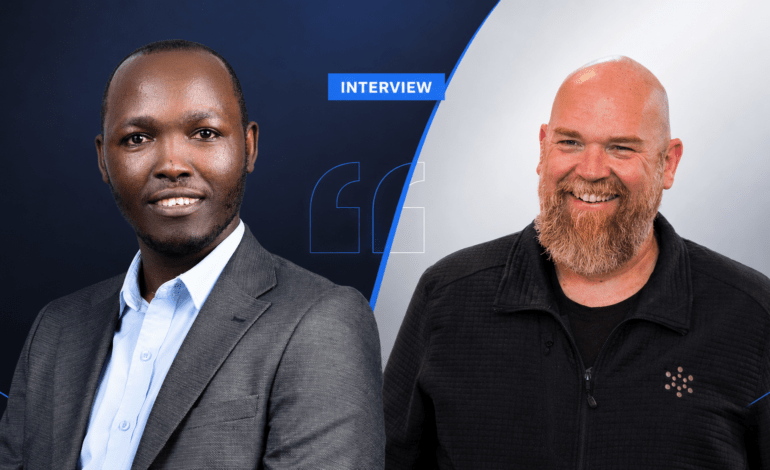
Gridless CEO Erik Hersman: How Bitcoin Mining Could Help Power Rural Africa

Imagine a small renewable-energy plant serving a rural community. It can produce enough electricity for homes, lights, water pumps and a posho mill, but local demand is still low for much of the day. The available capacity has no paying customer, making it harder for the energy operator to recover its investment or expand the mini-grid.
Gridless believes Bitcoin mining can fill that gap.
The company places mining computers next to renewable-energy sites and uses electricity that would otherwise remain unsold. When households or businesses need more power, the miners reduce their consumption or switch off so that community demand comes first.
Gridless describes itself as a buyer of last resort and an anchor tenant for rural renewable-energy generators. Its real-time optimisation system is designed to adjust mining demand to conditions on each mini-grid. The company says this approach can improve the financial sustainability of mini-grids while supporting more reliable and affordable electricity for surrounding communities.
Blockwisely spoke with Gridless co-founder and CEO Erik Hersman about the company’s operations in Kenya, Malawi and Zambia, the economics of Bitcoin mining, its open-source Jua Kali miner and the role flexible computing could play in rural electrification.
Factual context added by Blockwisely is identified separately.
What exactly does Gridless do?
Erik Hersman: Gridless does off-grid Bitcoin mining in several African countries. We currently operate in Kenya, Malawi and Zambia.
We look for stranded power, meaning electricity that is available but does not have a buyer. This is often found at energy sites in rural areas where there is no connection to the national grid. A renewable-energy plant may already have been built, but the surrounding community might initially use only 20% or 30% of its available capacity.
We enter into an agreement with the energy producer and use the remaining capacity for Bitcoin mining. If someone in the community needs to run a posho mill, switch on a water pump or use more electricity at home, we reduce or turn off the Bitcoin miners. Community electricity demand takes priority.
Blockwisely context: Gridless says its operating system monitors mini-grid conditions and manages mining demand in real time. Its published model similarly states that miners reduce their load when a higher-paying community customer needs electricity.
Bitcoin mining profits have been under pressure. How does that affect Gridless?
Erik Hersman: The past few years have brought a low hash price. Hash price is the revenue a miner earns from a given amount of computing power. When hash price is low and a miner pays a high fixed price for electricity, the profit margin becomes very small.
That has made it difficult for miners around the world unless they have access to low-cost power.
Gridless uses a revenue-sharing model with its energy partners instead of paying a fixed electricity bill. That means a decline in mining revenue affects both sides proportionally. It gives us the ability to continue mining under conditions that may force operators with high fixed electricity costs to shut down.
Blockwisely context: Gridless has publicly said that it gives an energy partner 30% of the mining revenue generated at a site. The company also acknowledges the trade-off: a revenue-sharing agreement protects margins when hash price is low, but it gives the energy producer a larger payment when mining revenue rises. Gridless explains the economics of this model here.
Where do you think the Bitcoin mining industry is heading?
Erik Hersman: AI computing is competing for data-centre space and electricity in North America and Europe. That is likely to push more Bitcoin miners towards regions with abundant, inexpensive power, including parts of Africa, Latin America and Asia.
In the past, the industry focused heavily on building standalone mining facilities that could consume 100 megawatts or more. I think that model will evolve. Mining will increasingly move to where the energy producer is, and energy companies may integrate Bitcoin mining into their own operations.
That would allow them to earn revenue from electricity that would otherwise be curtailed or left unsold. Bitcoin miners can act as a flexible load, increasing consumption when there is excess supply and reducing it when other customers need the power.
Can someone profitably mine Bitcoin using ordinary Kenya Power electricity?
Erik Hersman: It generally does not make economic sense. Grid electricity in Kenya is too expensive for a competitive Bitcoin mining operation. Mining is a numbers game, and paying more than roughly US$0.04 per kilowatt-hour can make the margins difficult under current conditions.
Blockwisely context: Electricity in Kenya does not have a single KSh 24-per-kilowatt-hour price. EPRA’s 2025/26 data shows that the total retail tariff for commercial and industrial customers varied by connection voltage and month.
From July to December 2025, the reported rates ranged from KSh 17.32 to KSh 26.07 per kilowatt-hour. The tariff for a 415-volt commercial or industrial customer was KSh 24.90 per kilowatt-hour in December 2025. See EPRA’s biannual statistics report.
The US$0.04 figure should also be treated as a rule of thumb rather than a universal break-even point. Mining profitability changes with the Bitcoin price, network difficulty, transaction fees, hash price, machine efficiency, cooling, maintenance and financing costs.
Is there a smaller-scale option for individuals, farmers or small businesses?
Erik Hersman: Gridless developed an open-source project called the Jua Kali Miner. It is designed to help people use surplus solar power for small-scale Bitcoin mining.
For example, someone installing solar for a farm, workshop, small factory or home could use excess generation that is not needed for normal operations. Because the project is open source, people can obtain the design information, source the parts and assemble a system themselves.
It can be used anywhere with sufficient sunlight and the right equipment. A person could be in Marsabit, Tsavo or another suitable location. They do not have to be in Nairobi.
Blockwisely context: Gridless announced the Jua Kali Miner developer release in December 2025. Its public hardware repository includes a bill of materials, electrical diagram and assembly instructions.
The list covers salvaged mining components, parts available through AliExpress and items that can be sourced locally. View the Jua Kali hardware documentation on GitHub.
Building such a system involves potentially dangerous electrical work. Anyone attempting it should have the necessary technical knowledge and follow appropriate electrical, fire and equipment-safety standards.
Does Gridless mine cryptocurrencies other than Bitcoin?
Erik Hersman: No. We only mine Bitcoin.
How can Bitcoin mining support electricity access in Africa?
Erik Hersman: Bitcoin mining can be an enabler for electricity infrastructure. It consumes a large amount of power, but that demand can also create a paying customer for new energy projects.
Many people without electricity live in places that national grids may not reach for a long time. If we want power plants and mini-grids to be built in those locations, Bitcoin mining can serve as the anchor load while community demand is still developing.
As more households and businesses connect and use electricity, the miners can reduce their consumption. In that sense, they act as both an anchor tenant and a shock absorber for the system.
Blockwisely context: The latest Tracking SDG 7 update, published in June 2026, says more than 560 million people in sub-Saharan Africa still lack electricity.
It therefore remains reasonable to describe Africa’s electricity-access gap as roughly 600 million people, although the exact figure depends on the year and geographic definition used. Read the 2026 SDG 7 update.
What should people expect from Gridless over the next few years?
Erik Hersman: You will see us investing more directly in electricity and energy assets while continuing to expand into additional countries. Our target is to operate in five countries by the end of 2026, and we expect that expansion to continue in the years ahead.
We are not planning to stop mining because of a market decline. Everything we do is based on the numbers. As long as we can maintain a healthy margin, we will continue.
Blockwisely context: The five-country figure is a forward-looking company target stated during the interview, not a completed expansion milestone.
What is the biggest operational challenge for Gridless?
Erik Hersman: Repair and maintenance are major challenges.
An operator in Asia may be able to ship faulty equipment back to China. In the United States, there are specialist repair shops. We have had to build that repair and maintenance capability inside Gridless.
Our team needs the skills to operate, diagnose and repair mining machines at remote sites. Some locations may be ten hours from the nearest airport or around 2,000 kilometres away.
We have developed the internal capacity to handle much of that work, but logistics and technical maintenance remain difficult.
Has Gridless faced legal problems while mining in Kenya?
Erik Hersman: No. We treat Bitcoin mining as a data-centre operation and work within the rules that apply to data centres.
Blockwisely context: Kenya’s Virtual Asset Service Providers Act took effect in November 2025. Its list of regulated virtual-asset services includes exchanges, custodial wallets, payment processors, brokers, investment advisers, asset managers, tokenisation platforms and stablecoin issuers. Bitcoin mining is not listed. See the First Schedule of the Act on Kenya Law.
However, the absence of mining from the VASP licensing schedule should not be interpreted as a blanket exemption from Kenyan law. A mining or data-centre operator may still have obligations involving company registration, taxation, electricity, construction, environmental approvals, data protection, workplace safety and county permits, depending on how and where it operates.
The Blockwisely Take
Gridless is best understood as an energy business that uses Bitcoin mining as a flexible revenue layer.
Its strongest argument is not simply that mining can consume unused renewable electricity. It is that a predictable buyer can improve the early economics of a mini-grid while local demand is still growing.
Unlike many industrial customers, mining computers can be installed in remote locations and reduce their electricity use quickly when a community needs more power.
That does not mean Bitcoin mining can solve Africa’s electricity-access problem on its own. Mini-grids still require financing, competent operators, suitable regulation, affordable connections and customers who can pay for electricity.
Mining revenue also depends on volatile variables, including Bitcoin’s price, network difficulty, machine efficiency and equipment reliability.
The most important measure of the Gridless model will therefore be its results beyond the Bitcoin produced. As the company expands, the industry should track whether partner mini-grids become more financially stable, connect more households and businesses, improve reliability and lower the long-term cost of electricity.
Frequently Asked Questions
What is stranded energy?
Stranded energy is electricity that could be produced or is already available but cannot reach a paying customer. This can happen when an energy site is remote, local demand is still low or transmission infrastructure is unavailable.
Does Gridless use electricity needed by local communities?
Gridless says community demand takes priority. Its mining computers use available surplus capacity and can reduce or stop consumption when households and local businesses require more power.
Can Bitcoin mining be profitable using Kenya Power electricity?
It is generally difficult because ordinary grid tariffs are high relative to the electricity prices sought by competitive miners. Profitability nevertheless depends on the tariff category, mining-machine efficiency, hash price, Bitcoin price and other operating costs.
What is the Gridless Jua Kali Miner?
The Jua Kali Miner is an open-source Gridless project intended to help farmers, workshops, small industries and other solar users convert excess off-grid electricity into Bitcoin mining revenue. Gridless has published hardware documents and assembly instructions on GitHub.
Where does Gridless operate?
At the time of the interview, Hersman said Gridless operated in Kenya, Malawi and Zambia. He also said the company was targeting expansion into two additional countries by the end of 2026.