


IMF Urges Kenya to Rethink Stablecoin Reserve Rules as Crypto Regulation Takes Shape

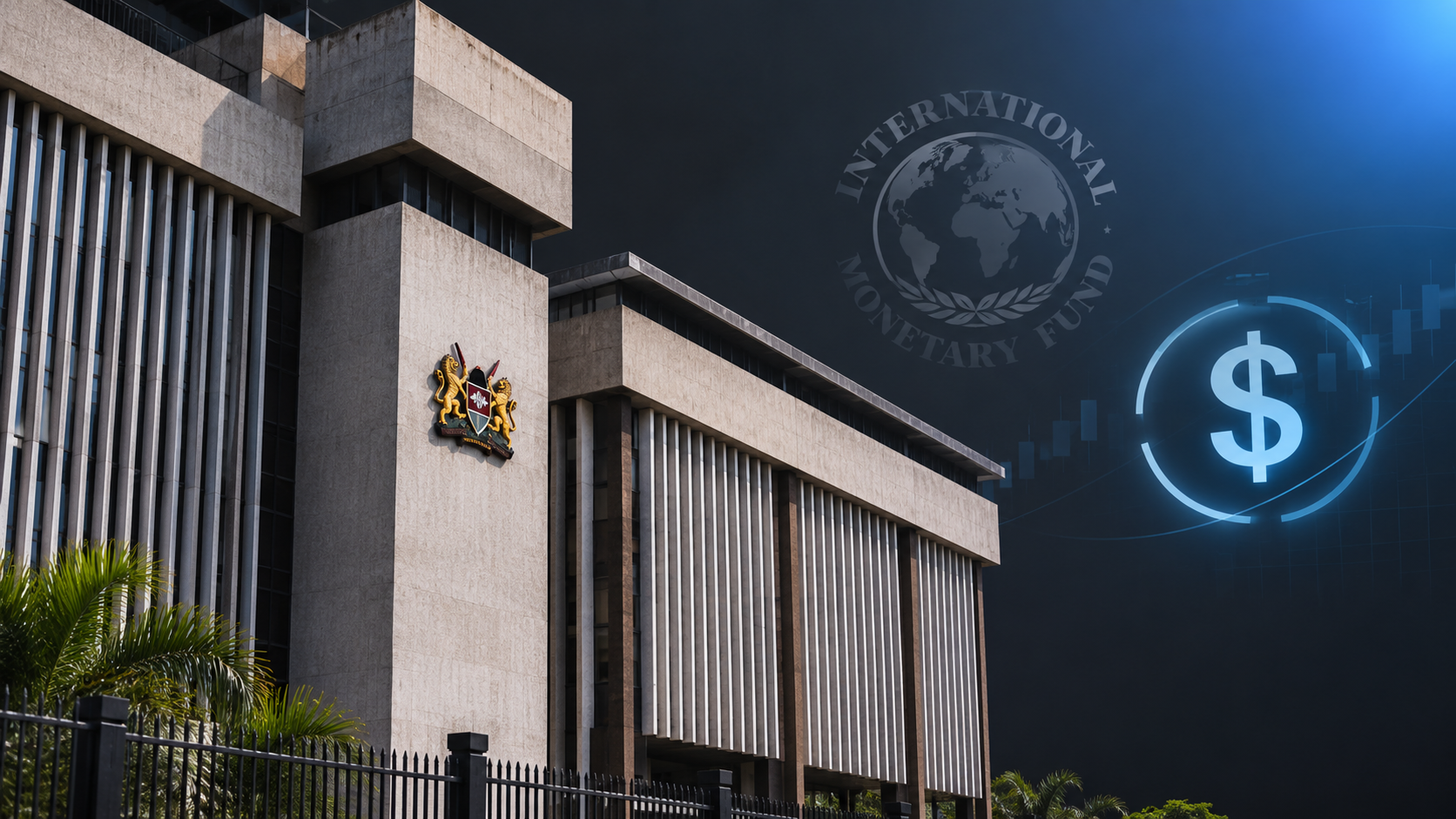
The International Monetary Fund (IMF) wants Kenya to review parts of its cryptocurrency regulatory framework, including rules affecting stablecoin reserves and capital requirements for virtual asset businesses, according to new reporting. The recommendations come as Kenya begins implementing its first comprehensive licensing system for the cryptocurrency industry.
The developments follow an IMF technical assistance assessment published on November 6, 2026, titled Kenya: Technical Assistance Report, Regulation and Supervision of Crypto Markets and Activities.
The assessment was prepared following consultations involving the Central Bank of Kenya (CBK), Capital Markets Authority (CMA), and Financial Reporting Centre (FRC).
The IMF’s published assessment found that Kenya’s proposed regulatory arrangements are broadly aligned with international standards but still require improvements, particularly around stablecoins and financial integrity.
Separately, Business Daily reported on November 12 that the IMF recommends reconsidering local reserve requirements for foreign-currency stablecoins and reviewing capital obligations for cryptocurrency businesses.
The recommendations are not changes to Kenyan law. They would need to be considered by Kenyan policymakers and, where necessary, implemented through the appropriate legal process.
What Does the IMF Want Kenya to Change?
The IMF has been working with Kenyan authorities as the country develops regulations for cryptocurrency exchanges, stablecoin issuers, custodians, payment processors and other virtual asset businesses.
Its November assessment identifies areas where Kenya could strengthen its emerging framework.
The publicly accessible IMF summary confirms that the review covered prudential regulation, financial integrity, licensing, supervision and stablecoins.
It also confirms that the IMF supplied licensing and supervisory tools to help Kenyan regulators.
Business Daily’s November 12 report identifies two additional recommendations of particular interest to the industry.
First, the IMF reportedly wants Kenya to reconsider requiring foreign-currency stablecoin issuers to maintain some of their reserve assets within the country.
Second, it reportedly recommends reviewing capital requirements that could make compliance difficult for certain cryptocurrency businesses.
The complete technical basis and exact conditions attached to those two recommendations have not been independently confirmed from the full report for this article.
They should therefore be understood as reported IMF recommendations, not finalized government decisions.
Why Are Stablecoin Reserves Becoming a Regulatory Issue?
A stablecoin is a cryptocurrency designed to maintain a relatively stable value by tracking another asset.
USDT and USDC, for example, are intended to maintain a value close to one US dollar.
Unlike Bitcoin, whose price can change significantly, dollar-backed stablecoins are designed to provide a more predictable unit of value.
Many issuers maintain reserves made up of cash, short-term government securities and other eligible assets.
Those reserves are important because they support the issuer’s ability to redeem outstanding tokens.
For example, if a company issues one million stablecoins worth $1 each, it needs sufficient backing and liquidity to honour valid redemption requests.
A central question for regulators is where those reserves should be held.
Should a company issuing dollar-backed stablecoins internationally be required to move part of its reserves into every country where customers use the tokens?
Or should regulators permit reserves to remain in another jurisdiction if there are strong safeguards and reliable supervision?
That is one of the issues highlighted by the current Kenyan debate.
What Is Kenya’s 30% Stablecoin Reserve Rule?
Kenya’s draft Virtual Asset Service Providers Regulations, 2026, included a requirement for stablecoin issuers to hold at least 30% of funds received from stablecoin issuance in segregated accounts at commercial banks in Kenya.
The draft also proposed that remaining funds be invested in approved low-risk assets held locally.
These provisions were outlined in the Central Bank of Kenya’s draft regulations.
Why was this controversial?
For locally issued Kenyan-shilling stablecoins, domestic custody arrangements may make sense because the issuer and its customers are closely connected to Kenya’s banking system.
Foreign-currency stablecoins are different.
A major international issuer may already hold its reserves under regulatory requirements in another country.
Requiring the same issuer to establish a separate reserve arrangement in Kenya could create additional operational and compliance costs.
For example, a dollar-backed stablecoin issuer might already hold its reserves in US Treasury bills and regulated financial institutions overseas.
A rule requiring it to move part of those assets into Kenya could create complications involving custody, foreign exchange, redemption and regulatory coordination.
Industry representatives raised these concerns during earlier consultations.
In July, Business Daily reported that industry groups had asked Kenya to distinguish foreign-issued stablecoins from locally issued ones.
That earlier debate provides context for the IMF’s newly reported recommendation.
Does the IMF want Kenya to remove stablecoin protections?
The reported recommendation should not be interpreted as a call to abandon stablecoin safeguards.
There is an important difference between allowing reserves to be held overseas and allowing a stablecoin to operate without adequate reserves.
An issuer could potentially hold high-quality backing assets in another jurisdiction while remaining subject to requirements concerning redemption, transparency, custody and supervision.
The key question is whether Kenyan regulators can obtain sufficient information and ensure that customers are protected if problems occur.
What Does the IMF Say About Stablecoins More Broadly?
In a separate October 2026 IMF paper on foreign-currency stablecoins, the Fund examined how stablecoins issued abroad could affect countries where they circulate.
The paper discusses risks involving foreign exchange markets, financial stability, capital flows and the availability of local currency.
It also examines different approaches to regulating stablecoin backing and redemption.
A country may require local reserve arrangements, recognize safeguards imposed by another regulator, or adopt a combination of requirements.
The appropriate approach depends on the country’s financial system and the risks involved.
The IMF has repeatedly emphasized the need for international cooperation because stablecoins can move across borders while financial regulation is generally implemented country by country.
This broader policy position helps explain why local reserve requirements are receiving increased attention.
However, it should not be confused with the precise recommendations made in the November Kenya assessment.
Why Are Crypto Capital Requirements Under Review?
Capital requirements determine the minimum financial resources a regulated company must maintain.
They are intended to help businesses absorb losses, manage operational risks and continue meeting obligations.
Kenya’s virtual asset regulatory proposals have included different capital thresholds for exchanges, wallet providers, stablecoin issuers and other businesses.
Earlier drafts proposed substantial requirements for certain categories.
For example, stablecoin issuers were initially associated with a proposed minimum paid-up capital requirement of KSh500 million.
Subsequent changes reduced some proposed thresholds.
Business Daily reported in August that the stablecoin issuer minimum had been lowered to KSh300 million in the regulations then published.
The exact requirement applicable to a business depends on its licence category and the operative legal text.
Why does capital matter?
Consider two companies.
The first is a large international cryptocurrency exchange with substantial financial resources.
The second is a small Kenyan startup building software to help businesses process cryptocurrency payments.
If both face similarly high minimum capital requirements despite performing different activities, the smaller business may struggle to qualify.
On the other hand, companies holding customer funds or issuing money-like tokens may create greater financial risks than businesses providing technical services alone.
The challenge is designing rules that reflect those differences.
A risk-based approach could apply stricter financial requirements to higher-risk activities while avoiding unnecessarily high barriers for lower-risk businesses.
That could protect customers without preventing smaller legitimate companies from entering the market.
However, any actual changes to Kenya’s thresholds remain decisions for the appropriate authorities.
What Is the Current Legal Position in Kenya?
Kenya’s Virtual Asset Service Providers Act, 2025, took effect on November 4, 2025.
The law established a framework for regulating covered cryptocurrency businesses.
It assigns supervisory responsibilities to the Central Bank of Kenya and Capital Markets Authority.
The law also included a one-year transition provision for businesses operating when the Act commenced.
That period reached its first anniversary on November 4, 2026.
The CMA’s published regulatory framework lists the Virtual Asset Service Providers Regulations, 2026.
However, the end of the transition period should not be confused with proof that every business has received a licence or that every existing operator has been ordered to close.
The position of an individual business depends on the law, applicable regulations, any relevant regulatory directions, and its authorization status.
This article does not establish the number of licences granted by the CBK or CMA as of November 12.
Could These Changes Affect USDT and USDC in Kenya?
Potentially.
USDT and USDC are widely used international stablecoins, and the way foreign-currency stablecoins are regulated could influence the services available to Kenyan businesses.
For example, a local payment provider may depend on an international stablecoin for settling transactions with overseas partners.
If the foreign issuer faces additional reserve or authorization requirements, the payment provider may need to adjust its arrangements.
But a recommendation to review regulatory requirements is not evidence that either stablecoin has been banned or approved.
Kenya’s regulators would need to determine how individual issuers and service providers fit into the framework.
What About the Cryptocurrency Travel Rule?
The IMF assessment also identifies financial integrity as an important area for improvement.
One of the issues is the cryptocurrency Travel Rule.
The Travel Rule requires certain regulated financial businesses to collect and securely share identifying information about parties involved in qualifying transfers.
For cryptocurrency exchanges and other virtual asset service providers, this can include information about the sender and recipient.
The objective is to make it harder to use regulated financial services for money laundering and terrorist financing.
This does not necessarily mean every blockchain transaction publicly reveals the name of its sender.
Instead, the requirements concern information collected and transmitted by covered service providers under applicable rules.
The Travel Rule and stablecoin reserve requirements address different regulatory problems.
One concerns financial crime controls.
The other concerns the safety and financial backing of stablecoin arrangements.
Both are important parts of Kenya’s emerging cryptocurrency regulatory system.
What Could This Mean for Kenyan Crypto Businesses?
If Kenya adopts a more flexible approach to foreign-currency stablecoin reserves, it could reduce duplication for some international issuers.
That might make it easier for certain regulated businesses to offer stablecoin-related services in Kenya.
Reviewing capital requirements could also influence the ability of smaller firms to enter the market.
However, lower compliance costs would not automatically lead to lower customer fees.
Businesses would still face costs involving technology, cybersecurity, liquidity, banking relationships and other regulatory obligations.
Kenya would also need to maintain strong oversight of international providers.
For users, the most useful outcome would be a framework that supports safe services, clear customer rights and reliable access to funds.
Blockwisely Take: Kenya Needs Crypto Rules That Protect Users Without Blocking Innovation
Kenya has reached an important stage in its cryptocurrency regulatory journey.
For years, cryptocurrency businesses operated in an environment where the legal position was often unclear.
The Virtual Asset Service Providers Act was intended to bring more structure and accountability to the sector.
But creating regulations is only the beginning.
The difficult part is making sure the requirements work in practice.
Stablecoins are international by design. A dollar-backed token may be issued abroad, held by a Kenyan user, transferred through a blockchain and redeemed through another financial institution.
Trying to regulate every part of that process entirely within Kenya could create unnecessary duplication.
At the same time, allowing foreign providers to operate without meaningful safeguards would expose customers to serious risks.
Kenya needs a workable balance.
The same applies to capital requirements.
A company holding substantial customer assets should face strong financial and operational obligations.
But a smaller business providing lower-risk technical services should not necessarily be treated like a large exchange or stablecoin issuer.
The IMF’s assessment gives Kenya another opportunity to examine these questions.
The goal should not simply be to make regulation stricter or easier.
It should be to make it more effective.
Frequently Asked Questions
Has the IMF told Kenya to change its stablecoin regulations?
The IMF has published a technical assistance assessment identifying areas for improvement. Business Daily reports that its recommendations include reviewing local reserve and capital requirements.
Has Kenya removed the 30% reserve requirement?
This article does not establish that the requirement has been removed. The 30% arrangement appeared in Kenya’s draft regulations, and the reported IMF recommendation is not itself a legal amendment.
What is a stablecoin reserve?
It is a pool of assets intended to support the value and redemption of stablecoins issued by a company.
Does this mean USDT and USDC are approved in Kenya?
No. The IMF’s recommendations do not constitute approval of any particular stablecoin issuer or token.
Why does the IMF care about cryptocurrency regulation?
Cryptocurrency services can affect consumer protection, financial stability, payments and efforts to prevent financial crime.
What is the cryptocurrency Travel Rule?
It is an anti-money laundering standard requiring covered service providers to obtain and transmit specified information about senders and recipients of qualifying transfers.
Has Kenya’s crypto licensing transition period ended?
The Act took effect on November 4, 2025, and included a one-year transition provision. The exact regulatory position of businesses depends on applicable legislation and regulator directions.
Could lower capital requirements help Kenyan startups?
Potentially, but any benefit would depend on the final rules, business models and other operational costs.
Key Takeaways
- The IMF published a Kenya cryptocurrency regulatory assessment on November 6, 2026.
- The assessment found general alignment with international standards but identified gaps requiring attention.
- Business Daily reports that the IMF wants Kenya to review stablecoin reserve and capital requirements.
- Kenya’s draft regulations included requirements for holding stablecoin reserves locally.
- Regulatory recommendations are not automatically changes to Kenyan law.
- Kenya’s VASP Act has established a framework for licensing covered cryptocurrency businesses.
- The final impact will depend on decisions by Kenyan regulators and policymakers.
Editor’s note: The IMF’s publication and broad conclusions are verified. The precise foreign-reserve and capital recommendations are attributed to Business Daily because their detailed wording could not be independently checked from the complete IMF technical report.