








TerraPay Alipay: African Wallets Go Global Through QR Payments

TerraPay Alipay integration could become one of the biggest digital-wallet stories for Africa this year.
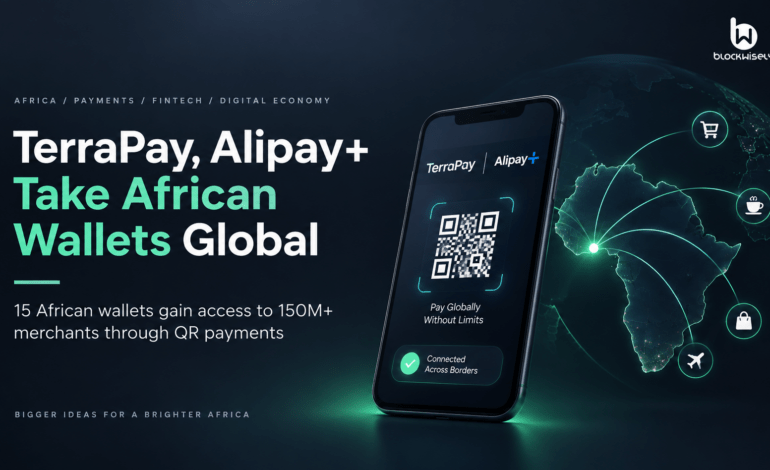
TerraPay and Alipay+ announced a strategic partnership that will connect TerraPay’s wallet interoperability network, Xend, to Alipay+’s global merchant ecosystem. In the first phase, 15 African digital wallets connected to Xend will be able to make QR payments at more than 150 million merchants across the Alipay+ network.
That means African wallet users may soon be able to pay abroad with the same wallet they already use at home. They would not need to switch apps, carry a card, or depend only on cash when travelling.
For Africa’s digital economy, this is more than a convenience story. It is about turning local wallets into globally useful payment accounts.
What TerraPay and Alipay+ Announced
TerraPay, a global money movement company, has connected Xend to Alipay+, Ant International’s unified wallet gateway. The partnership is designed to enable cross-border QR payments for digital wallets across Africa, Latin America and the Middle East.
The first phase focuses strongly on Africa. TerraPay says 15 African digital wallets connected to Xend will gain access to Alipay+’s global merchant acceptance ecosystem.
Alipay+ has grown into one of the world’s largest QR payment networks. Reuters recently described Alipay+ as a system operated by Singapore-based Ant International, with access to more than 150 million merchants in its network.
This is the key change: African wallets are no longer being treated only as local payment tools. Through partnerships like this, they can become cross-border spending tools.
Why This Matters for African Wallet Users
Mobile wallets are already powerful in Africa. They help users send money, receive payments, pay bills and transact without a full bank account.
But many wallets remain trapped inside local or regional networks. A user may rely on a wallet every day in Kenya, Ghana, Nigeria, Rwanda or Uganda, but lose that convenience once they travel.
The TerraPay Alipay partnership aims to reduce that gap.
With QR payment access, users can scan and pay at participating merchants abroad using their preferred wallet. That creates a simpler experience for travellers, students, business owners and diaspora communities.
It also changes how people think about wallets. A wallet is no longer just where money sits. It becomes a passport for digital spending.
Xend: The Infrastructure Behind the Deal
The important technology layer here is Xend, TerraPay’s wallet interoperability network.
TerraPay describes Xend as a network that connects fragmented wallet, bank and card systems into one payment layer. It supports cross-border QR-based payments across participating wallets and merchants, while also managing multi-wallet and multi-currency flows through a single infrastructure layer.
In simple terms, Xend is trying to do for wallets what roaming did for mobile networks.
A mobile phone user does not need a new SIM card in every country if roaming works. In the same way, a wallet user should not need a new payment app in every market if wallet interoperability works.
That is the bigger idea behind this announcement.
Why QR Payments Are Important
QR payments are simple, cheap and familiar in many emerging markets.
A merchant shows a code. A customer scans it. The payment moves through the connected wallet or payment network.
That simplicity matters for Africa because many users already understand wallet-based transactions. QR payments can extend that behaviour into international spending without forcing users into card-first systems.
This is why Alipay+ is valuable as a partner. It already connects wallets and merchants across many markets. By connecting to Alipay+, TerraPay can give African wallet providers a wider acceptance network without each wallet company building separate merchant relationships country by country.
For wallet providers, that is a big shortcut.
Why This Is Bigger Than Travel Payments
The first use case may look like travel spending, but the long-term story is bigger.
Once wallets become globally accepted, they can support more types of cross-border commerce. African consumers can pay merchants abroad. African business owners can travel and spend more easily. Diaspora communities can use familiar payment systems across borders.
Over time, this can also support small businesses that sell internationally.
A Nigerian entrepreneur attending a trade fair in Dubai, a Kenyan founder travelling to Singapore, or a Ghanaian student in Malaysia could use a familiar African wallet in places where that wallet was previously useless.
That kind of interoperability makes African financial accounts more valuable.
The Fintech Opportunity for Africa
This partnership gives African fintechs a new kind of distribution opportunity.
Instead of only competing locally, wallet providers can offer users international utility. That can improve customer retention and create new revenue streams from cross-border merchant payments.
It also shows how African fintech infrastructure is changing.
The first wave of fintech focused on solving local problems: transfers, bill payments, airtime, merchant collections and agent banking. The next wave is about interoperability.
Can wallets talk to banks? Can mobile money talk to cards? Can local wallets work abroad? Can African payment accounts become useful across continents?
TerraPay and Alipay+ are trying to answer yes.
The Web3 Angle: Wallets Without Crypto
This story also matters for Web3 because it shows that “wallet” does not always mean crypto.
In Web3, wallets usually mean private keys, tokens and blockchain transactions. In fintech, wallets usually mean regulated accounts tied to mobile money, bank balances or stored value.
But both worlds are moving toward the same user expectation: money should move instantly, across borders, from one digital interface.
Stablecoins are already popular because they offer fast cross-border settlement. But wallet interoperability offers a regulated alternative for everyday users who may not want to manage crypto.
That creates an interesting future.
Africa may not choose one rail. It may use many. Stablecoins may serve traders, freelancers and crypto-native users. Wallet networks like Xend may serve regulated payment apps and mainstream consumers.
The result could be a multi-rail African payment system.
What Could Slow Adoption
The opportunity is large, but adoption is not automatic.
First, users need to know the feature exists. Wallet providers must clearly explain where and how customers can use QR payments abroad.
Second, pricing must be transparent. Cross-border payments often hide costs inside FX spreads or service fees. If users do not understand the exchange rate, trust can fall quickly.
Third, merchant acceptance must feel reliable. A payment option that works in one country but fails in another will frustrate users.
Fourth, regulators may pay close attention. India recently stalled an Alipay+ payments link over concerns related to security, data handling, fraud and money laundering.
That does not mean Africa should avoid the model. It means payment interoperability must come with strong compliance, data protection and fraud controls.
Why Blockwisely Readers Should Care
This announcement is important because it shows how African payments are moving from local success to global integration.
For years, Africa has been praised for mobile money adoption. But adoption alone is not enough. The next challenge is making those wallets usable everywhere people and businesses need to transact.
TerraPay’s Xend already presents itself as infrastructure for wallet, bank and merchant interoperability. It is designed to connect fragmented payment systems and support real-time payments at scale.
If the Alipay+ connection works well, African wallet users could gain access to a global payment network through apps they already trust.
That is a major shift.
Bottom Line
The TerraPay Alipay partnership is not just another fintech integration. It is a sign that African mobile wallets are becoming global payment tools.
In the first phase, 15 African digital wallets connected to TerraPay’s Xend network will be able to access more than 150 million merchants in the Alipay+ ecosystem.
For users, this could mean easier payments abroad. For wallet providers, it creates a path to global acceptance. For Africa’s digital economy, it shows that local wallets can become part of international commerce.
The bigger story is simple.
African wallets are no longer just for local transfers. They are becoming financial passports for a more connected world.
FAQ
What did TerraPay and Alipay+ announce?
TerraPay and Alipay+ announced a partnership connecting TerraPay’s Xend wallet interoperability network to Alipay+’s global QR payment merchant ecosystem.
How many African wallets are included?
In the first phase, 15 African digital wallets connected to Xend will be able to use the Alipay+ merchant network.
How many merchants can users access?
The partnership gives connected wallet users access to more than 150 million merchants across the Alipay+ global merchant ecosystem.
What is Xend?
Xend is TerraPay’s wallet interoperability network. It connects wallets, banks and payment systems into a unified payment layer that supports cross-border QR payments and multi-currency flows.
Why does this matter for Africa?
It could make African digital wallets useful outside their home markets, giving users easier access to global QR payments while helping wallet providers expand beyond local transactions.