








Africa’s Next Payment Leap Will Be Built on Settlement, Not Just Apps : What Ivorypay CEO Oluwatobi Ajayi Means

African payment settlement is becoming one of the most important topics in the continent’s fintech industry. While new payment apps continue to launch across Africa, industry leaders argue that the real breakthrough will come from improving the infrastructure that settles payments quickly, securely, and affordably. According to Ivorypay CEO Oluwatobi Ajayi, Africa’s next payment revolution will be built on stronger settlement rails rather than simply creating more financial apps.gital financial services, with new payment apps launching almost every month.
However, beneath these sleek mobile applications lies a much bigger challenge that most users never see.
According to Ivorypay CEO Oluwatobi Ajayi, Africa’s next major leap in financial technology will not come from building more payment apps. Instead, it will come from improving the settlement infrastructure that moves money quickly, securely, and efficiently across borders.
In a recent interview, Ajayi captured this vision with a simple statement:
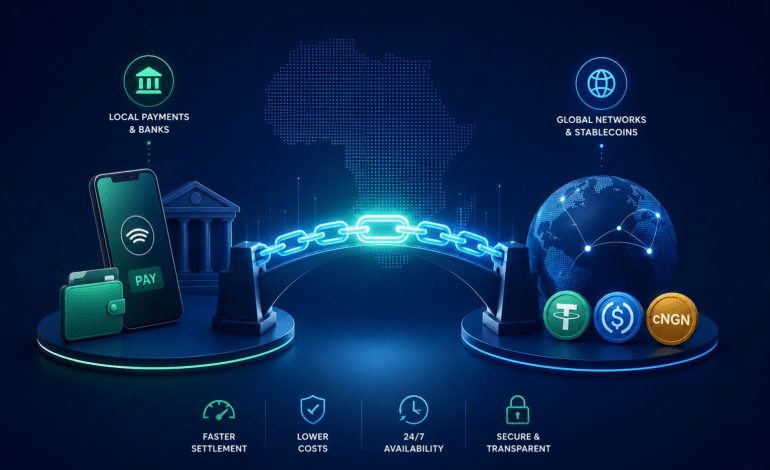
“The future of African payments will not be one rail. It will be a bridge.”
While that may sound technical, it highlights one of the biggest opportunities for fintech and blockchain across the continent.
What Is African Payment Settlement?
Whenever you send money using a payment app, the transaction doesn’t instantly reach the recipient’s bank.
Behind the scenes, several financial institutions communicate with one another to verify the payment, move funds, update balances, and complete the transfer. This entire process is known as payment settlement.
Think of a payment app as the front door of a house. It looks attractive, is easy to use, and welcomes visitors. However, the plumbing, electricity, and foundation hidden behind the walls are what make the house function.
Settlement infrastructure works the same way. Users may only see the app, but the real work happens underneath.
The stronger the settlement infrastructure, the faster and more reliable every payment becomes.
Why Africa Still Faces Payment Challenges
African fintech has made remarkable progress, yet cross-border payments remain one of the continent’s biggest financial obstacles.
Many international transfers still depend on traditional correspondent banking systems that involve multiple intermediary banks before money reaches its destination.
As a result, businesses and individuals often experience:
- High transaction fees.
- Delays that can take several days.
- Currency conversion costs.
- Limited transparency while payments are in transit.
- Difficulty sending money between African countries.
Ironically, transferring money from Nigeria to another African country can sometimes be more difficult than sending funds outside the continent.
This is the problem companies like Ivorypay are trying to solve.
Why African Payment Settlement Matters More Than Another Payment App
Consumers naturally focus on convenience. We compare payment apps based on how simple they are to use, how attractive the interface looks, or how quickly we can complete a transaction.
Yet the true performance of any payment platform depends on what happens after we tap the Send button.
If settlement systems are slow, every payment becomes slower.
If settlement costs are high, businesses pass those costs on to customers.
If settlement infrastructure is fragmented, cross-border commerce becomes more difficult.
Improving settlement infrastructure means improving the financial system for everyone—not just building another app with new features.
How Blockchain Is Improving African Payment Settlement
Blockchain technology offers an entirely different way to move value across borders.
Instead of relying on multiple intermediary banks, transactions can be verified on decentralized networks that operate around the clock.
This creates several important advantages.
Payments can settle within minutes rather than days.
Transactions remain available 24 hours a day, seven days a week, including weekends and public holidays.
Businesses gain greater visibility into payment status through transparent blockchain records.
Smart contracts can even automate business processes by releasing payments only after agreed conditions have been met.
These capabilities make blockchain an attractive settlement layer for modern financial systems.
Why Stablecoins Are Becoming Important
Stablecoins are one of the fastest-growing applications of blockchain technology because they combine the speed of digital assets with the price stability of traditional currencies.
Unlike cryptocurrencies whose prices fluctuate significantly, stablecoins are designed to maintain a stable value by being linked to assets such as the US dollar or the Nigerian naira.
Some of the most widely used examples include:
- USDT (Tether), the world’s largest stablecoin by market capitalization, widely used for international transfers and crypto trading.
- USDC (USD Coin), a regulated stablecoin increasingly adopted by businesses for global payments.
- cNGN, Nigeria’s regulated naira-backed stablecoin initiative, developed to support compliant digital payments within the country’s evolving financial ecosystem.
These digital assets are increasingly being used as settlement tools because they move quickly, remain available at all hours, and reduce dependence on traditional banking infrastructure.
Stablecoin Settlement in Everyday Life
Imagine a Nigerian software developer working remotely for a client in Kenya.
Instead of waiting several days for an international bank transfer, the client could send payment using USDC. Within minutes, the developer receives the funds and converts them into naira through a licensed exchange or payment provider.
Now consider a business in Lagos importing goods from Ghana.
Traditional international transfers often involve intermediary banks, foreign exchange delays, and additional processing fees.
Using blockchain-based settlement, payment can move directly between both parties much faster, improving cash flow and reducing uncertainty.
For African businesses that depend on reliable international transactions, these improvements can make a meaningful difference.
Building Bridges Instead of Silos
Ajayi’s statement that “the future will not be one rail, but a bridge” reflects an important reality.
Africa does not need a single payment system that replaces everything else.
Instead, the continent needs infrastructure that connects:
- Traditional banks.
- Mobile money platforms.
- Fintech companies.
- Blockchain networks.
- Stablecoin ecosystems.
- Cross-border payment providers.
Rather than competing against one another, these systems can work together to create faster, more affordable financial services for businesses and consumers alike.
What African Payment Settlement Means for Nigeria
Nigeria already ranks among the world’s most active countries for cryptocurrency adoption and digital payments.
Millions of Nigerians use fintech services daily, while businesses increasingly operate across borders within Africa and beyond.
Recent regulatory developments around digital assets and virtual asset service providers also indicate that Nigeria is working toward a more structured environment for blockchain innovation.
As regulation matures, compliant stablecoin settlement solutions could become an important part of Africa’s financial infrastructure.
Companies building secure, regulated payment bridges may help unlock cheaper remittances, faster international trade, and more efficient cross-border commerce.
What Users Should Look For
When choosing a payment platform, don’t focus only on how polished the app looks.
Instead, ask questions like:
- How quickly does the payment actually settle?
- Are cross-border transfers affordable?
- Does the platform offer transparent tracking?
- Is the infrastructure secure and compliant?
- Will it support emerging technologies like stablecoins in the future?
The strongest payment platforms are not always the ones with the flashiest interfaces—they are often the ones built on reliable settlement infrastructure.
Looking Ahead
Africa’s digital payments revolution is entering a new phase.
The first wave focused on making payments digital.
The next wave will focus on making those payments faster, cheaper, and more connected across borders.
Blockchain technology and stablecoins are well positioned to become part of that transformation, not by replacing traditional finance, but by strengthening the infrastructure that powers it.
As Oluwatobi Ajayi suggests, Africa’s future may not depend on building more payment apps. It may depend on building better bridges between the financial systems that already exist.
What payment challenge frustrates you the most when sending or receiving money across Africa? Share your thoughts in the comments.