









Daya Brings Gasless Stablecoin Transfers to Nigeria Through Sui

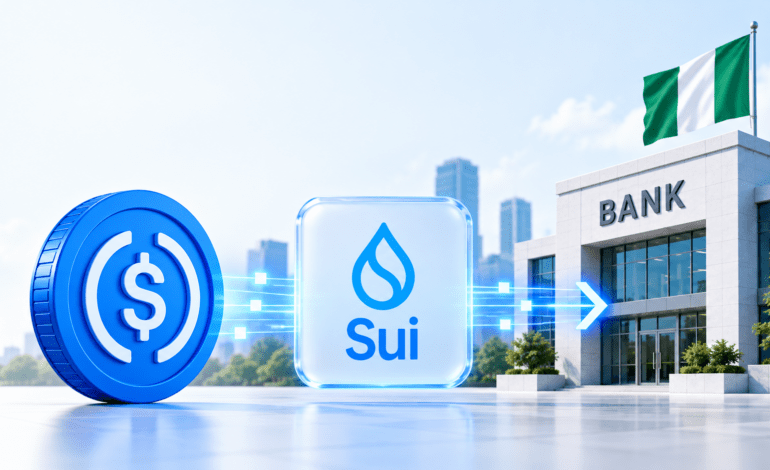
Daya has integrated the Sui blockchain as a settlement rail, allowing businesses in Nigeria to send supported stablecoins without paying blockchain network fees or keeping SUI tokens around just to pay for gas.
The integration went live on September 17, 2026, across Daya Business, Daya Pro and Daya APIs, according to the Sui Foundation’s announcement of the partnership.
For businesses accustomed to keeping a little of a blockchain’s native token somewhere in a wallet just in case a payment needs gas, the pitch is: Send the stablecoin; Forget the gas token.
The integration specifically allows businesses to move supported stablecoins without first acquiring SUI simply to pay network fees. The Sui Foundation says the feature is being used for stablecoin transfers and treasury rebalancing across Daya’s products.
The service is currently live in Nigeria, while Daya plans to expand into Kenya, Ghana and South Africa as it activates additional local-currency rails, according to Sui’s rollout details.
What Does “Gasless” Actually Mean?
Most blockchains charge a transaction fee, commonly called gas, whenever somebody sends an asset or interacts with an application.
The interesting part is that the fee is usually paid using the blockchain’s own native token.
A company may want to transfer dollars using USDC, for example, but still need another token sitting in the wallet to pay for the transaction.
On Ethereum, that normally means ETH.
On many other networks, it means keeping a balance of that network’s native token.
That creates a surprisingly annoying operational problem for businesses.
They have to buy another asset, track its balance and make sure there is always enough available whenever a transaction needs to be processed.
Sui is attempting to remove that step.
In May 2026, the network introduced gasless stablecoin transfers, allowing supported stablecoins to move without requiring the sender to maintain SUI purely for network fees.
Daya is now putting that infrastructure into a payments product aimed at African businesses.
Daya Is Using Sui as a Settlement Rail
The integration does not mean Daya has moved its entire operation onto Sui.
Sui is being used as settlement infrastructure across Daya’s product suite, including Daya Business, Daya Pro and Daya APIs, according to the official partnership announcement.
Customers are not expected to sit down before every payment and debate which blockchain looks nicest that afternoon. Daya handles the payment experience. Sui becomes part of the infrastructure underneath it.
The Sui Foundation says the network is being used for functions including stablecoin settlement and treasury rebalancing.
There Is an Important Catch: Daya Is Not Suddenly Free
“Gasless” can sound dangerously close to “everything is free.” That is not what this announcement means. The important point is that the blockchain network fee can disappear for eligible transfers. That does not necessarily mean every cost associated with using Daya disappears too.
A Nigerian company using Daya is not necessarily receiving a completely free international payment. It is avoiding one specific cost and one specific operational headache: maintaining a separate native token purely to pay blockchain gas.
Sui co-founder and Mysten Labs chief product officer Adeniyi Abiodun described gasless transfers as a way of removing one of the biggest barriers in blockchain payments, while Daya CEO Tomiwa “Aleph” Lasebikan said businesses should be able to move stablecoins without having to acquire, hold or understand a native network token. Their comments were published in the Sui partnership announcement.
That may sound like a small change but for a business executing transactions regularly, it can make the payment process considerably simpler.
Nigeria Comes First
For now, Nigeria is where the integration is live.
The Sui Foundation says Daya is live in Nigeria, where it holds the relevant licences, and that Sui has been deployed across its product suite.
For businesses dealing with international suppliers, contractors or customers, moving between naira and dollar-denominated assets can already form part of normal treasury operations.
Kenya, Ghana and South Africa Are Next
The Nigeria launch is intended to be the beginning rather than the end of the rollout.
Daya plans to expand into South Africa, Ghana and Kenya as it adds new local-currency rails, according to Sui’s announcement.
That gives the partnership a wider African angle.
If Daya activates the same infrastructure in those countries, businesses could eventually access similar stablecoin settlement routes while continuing to work with their local currencies at the edges of the system.
The confirmed deployment is currently Nigeria.
Kenya, Ghana and South Africa remain planned expansion markets.
Sui Has Been Pushing Further Into African Payments
Daya is also not Sui’s first significant African payments integration.
Earlier in 2026, Sui announced a partnership with Nigerian payments company Paga, integrating stablecoin infrastructure into Paga’s enterprise APIs and consumer ecosystem.
In that Paga partnership announcement, Sui said Paga processed more than $11 billion in payments and 169 million transactions during 2025.
The Daya integration therefore fits into a broader effort to place Sui infrastructure behind African fintech and payment platforms.
But the Daya partnership introduces a particularly useful feature for businesses:
stablecoin transfers where the user does not need a separate gas token.
That removes one of the most visible reminders that a blockchain is involved at all.