


Nigeria Bans Algorithmic Stablecoins, Sets ₦15 Billion Capital Requirement for Dollar-Backed Issuers

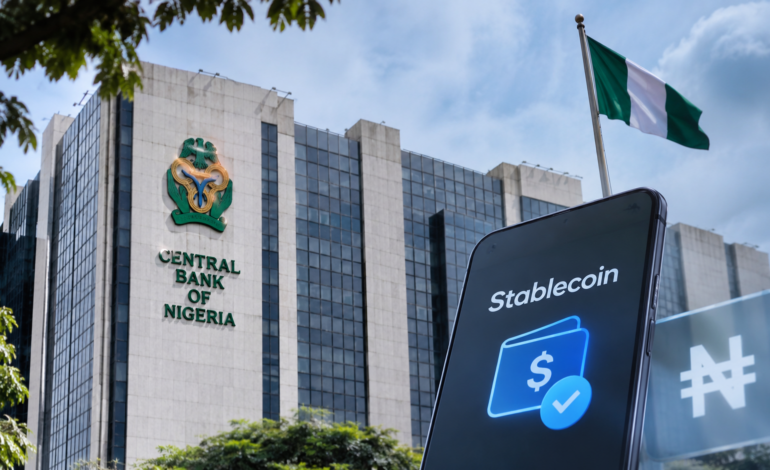
Nigeria has introduced new cryptocurrency regulations that prohibit certain algorithmic stablecoins and require companies issuing dollar-backed stablecoins to maintain at least ₦15 billion in paid-up capital. The rules also introduce licensing requirements for exchanges, payment providers, and other virtual asset businesses operating in the country.
The regulations took effect on November 5, 2026, marking a significant change in how Africa’s largest country by population supervises stablecoins and cryptocurrency-related payment services.
According to the Central Bank of Nigeria’s official regulations, businesses issuing stablecoins linked to foreign currencies, including the US dollar, must maintain a minimum paid-up capital of ₦15 billion.
Companies issuing stablecoins linked to the Nigerian naira must maintain at least ₦10 billion.
Other covered virtual asset service providers generally face a separate minimum capital requirement of ₦1 billion.
The regulations also prohibit certain stablecoins that depend primarily on algorithms or other cryptocurrencies to maintain their value, instead of holding adequate approved reserve assets.
Existing operators have 180 days from the commencement date to apply for the appropriate licences or authorizations, subject to additional transitional conditions.
The changes could significantly affect how stablecoins are issued, distributed, traded, and used for payments in Nigeria.
However, the regulations do not amount to a blanket ban on cryptocurrency.
So, what exactly has changed, and what does it mean for ordinary users and businesses?
What Has the Central Bank of Nigeria Announced?
The Central Bank of Nigeria has issued a comprehensive framework called the Regulations for the Operations of Non-Security Virtual Assets in Nigeria.
The document establishes requirements for companies involved in regulated cryptocurrency-related payment activities.
These include issuing stablecoins, exchanging digital assets, providing custody services, processing payments, and facilitating certain peer-to-peer transactions.
The central bank says the framework is intended to support financial innovation while addressing risks involving consumer protection, money laundering, currency management, and financial stability.
Stablecoins receive particular attention because they can function as alternatives to traditional money in certain payment arrangements.
The rules cover companies operating within Nigeria and, in specified circumstances, foreign companies offering regulated services to Nigerian users.
This means being registered outside Nigeria does not automatically exempt a company from the new requirements.
Importantly, the framework distinguishes between virtual assets used for payments and digital assets classified as securities or investment products.
The Securities and Exchange Commission retains its regulatory responsibilities for securities and capital-market activities.
How Much Capital Must Stablecoin Companies Have?
One of the most significant provisions is the minimum capital companies must maintain to operate.
Under Section 15 of the regulations, stablecoin issuers are divided into two main categories.
| Licence category | Minimum paid-up capital |
|---|---|
| Class 1: Naira-backed stablecoin issuers | ₦10 billion |
| Class 2: Foreign-currency-backed stablecoin issuers | ₦15 billion |
| Other covered virtual asset service providers | ₦1 billion |
These are minimum requirements.
The Central Bank of Nigeria can impose higher capital requirements depending on the business’s size, risk, and activities.
For example, a company issuing a stablecoin designed to maintain the value of one US dollar would generally fall under the Class 2 category.
It would need to meet the ₦15 billion minimum capital requirement and the other applicable conditions.
What does paid-up capital mean?
Paid-up capital is money that shareholders have contributed to a company as part of its capital.
It is not the same as the value of cryptocurrency held by customers.
For example, imagine a company plans to issue ₦20 billion worth of stablecoins.
The ₦10 billion paid-up capital requirement for a Class 1 issuer is separate from the reserve assets needed to back its issued tokens.
The company cannot simply count the stablecoins it has issued as its own paid-up capital.
This distinction is important because the new rules require stablecoin businesses to demonstrate financial strength in addition to maintaining reserves for token holders.
The regulations also impose specific requirements on how regulatory capital must be evidenced and maintained.
Why Has Nigeria Banned Algorithmic Stablecoins?
An algorithmic stablecoin is a cryptocurrency designed to maintain a stable price primarily through programmed adjustments to its supply or demand.
Unlike conventional reserve-backed stablecoins, these systems may depend on market incentives and automated token mechanisms rather than holding sufficient assets that can be used to repay holders.
For example, imagine a token designed to remain worth $1.
Instead of holding one dollar in approved assets for every token issued, the system attempts to maintain the price by automatically increasing or reducing the number of tokens available.
When demand falls, the system might try to reduce supply.
When demand rises, it might increase supply.
The problem is that such mechanisms can fail during periods of extreme market pressure.
If confidence disappears, the system may struggle to maintain its intended price.
What happened to TerraUSD?
One of the most widely known examples is TerraUSD (UST), which collapsed in May 2022.
The stablecoin relied on a mechanism involving another cryptocurrency called LUNA.
When the system came under severe pressure, it failed to maintain the intended one-dollar value.
Both tokens experienced enormous losses, affecting investors and other participants in the cryptocurrency market.
The incident demonstrated how a stablecoin designed to remain stable can rapidly lose value when its underlying mechanism breaks down.
Nigeria’s new rules aim to prevent similar arrangements from being issued or offered under its regulatory framework.
Does the ban apply to every stablecoin?
No.
The regulations specifically prohibit stablecoins relying solely or primarily on algorithmic supply or demand adjustments without sufficient eligible reserve assets.
They also prohibit certain fiat-referenced tokens backed wholly or primarily by other cryptocurrencies.
This is different from banning all stablecoins.
Reserve-backed stablecoins may be permitted if the issuer and token satisfy the applicable licensing, reserve, redemption, and other requirements.
What Happens to USDT and USDC in Nigeria?
USDT and USDC are widely used dollar-backed stablecoins.
USDT is issued by Tether, while USDC is issued by Circle.
Both are designed to maintain a value close to one US dollar.
Because they reference a foreign currency, services involving these tokens may fall under Nigeria’s Class 2 regulatory arrangements.
The CBN’s framework requires foreign-currency-referenced stablecoins admitted to the Nigerian market to meet local authorization requirements.
Under Section 15.3, there is no general exemption from Nigerian incorporation, licensing, or capital requirements simply because an issuer is based overseas.
A Class 2 stablecoin must be issued through an appropriately licensed Nigerian-incorporated entity, with the necessary token approvals.
Does this mean Tether and Circle have been banned?
The new regulations should not be described as an announcement that Tether or Circle has been individually banned.
The rules establish conditions governing foreign-currency-backed stablecoins and their availability through regulated services.
They do not, by themselves, establish that Tether or Circle has received approval.
Neither should readers assume that every existing USDT or USDC service automatically satisfies the new conditions.
Whether a particular issuer, token, exchange, or payment service can continue operating depends on its regulatory position and any applicable transitional permissions.
For users, the important distinction is between a general framework governing stablecoins and a specific regulatory decision concerning an individual company.
Stablecoin Issuers Must Maintain Full Reserves Plus an Additional Buffer
The new rules go beyond capital requirements.
The Central Bank of Nigeria requires licensed stablecoin issuers to maintain reserve assets backing their tokens.
Under Section 24, issuers must hold eligible assets sufficient to cover their outstanding stablecoin obligations.
They must also maintain an additional buffer of at least 2% of the value of stablecoins in circulation.
This creates a requirement equivalent to at least 102% coverage when the full backing requirement and additional buffer are considered together.
How would this work?
Imagine a licensed stablecoin company issues tokens worth ₦1 billion.
The company would need eligible reserve assets covering the full ₦1 billion.
It would also need an additional buffer of at least ₦20 million.
That produces a combined reserve requirement of at least ₦1.02 billion.
The extra buffer is intended to help absorb potential losses affecting reserve assets.
The rules also prohibit issuers from creating new stablecoins before receiving the corresponding approved reserve assets.
In other words, a company cannot simply promise to obtain the money later and issue new tokens immediately.
Why does reserve backing matter?
A stablecoin is useful only if users have confidence that they can redeem it for the value it is supposed to represent.
If a company issues more tokens than it can adequately support, customers could face losses if large numbers of people attempt to redeem their holdings.
Reserve requirements aim to reduce this risk.
However, even fully backed stablecoins can face operational failures, liquidity problems, or other risks.
Regulation can strengthen safeguards, but it cannot eliminate every possibility of loss.
Stablecoin Holders Must Have Redemption Rights
The regulations establish rights for people holding approved stablecoins.
Licensed issuers must provide legally enforceable redemption arrangements.
In general, holders must be able to redeem valid stablecoin claims at their reference value.
The rules require issuers to process valid redemptions no later than the end of the following business day, subject to the regulations’ specified exceptions.
This is particularly important during periods of market uncertainty.
For example, if a user holds an approved stablecoin worth ₦100,000, the regulatory framework is intended to ensure that the user has a defined claim against the issuer.
The specific process may depend on the issuer, the type of stablecoin, and the applicable redemption arrangements.
A legally enforceable right does not mean every request will always be processed instantly or that operational failures can never occur.
What Do the Rules Mean for Crypto Exchanges and P2P Platforms?
The framework also covers other virtual asset businesses.
These include certain cryptocurrency exchanges, wallet providers, payment gateways, custodians, and remittance services.
Covered service providers generally face a ₦1 billion minimum paid-up capital requirement, separate from any additional requirements imposed by other regulators.
Companies may also need approvals specific to their activities.
Will P2P cryptocurrency trading be banned?
The regulations do not announce a universal ban on all peer-to-peer cryptocurrency transactions.
However, they introduce requirements affecting platform-facilitated P2P services.
A platform that facilitates crypto transactions for customers may need specific regulatory approval and must comply with relevant identity verification, transaction monitoring, and anti-money laundering obligations.
This is different from saying every individual who transfers cryptocurrency between personal wallets must obtain a business licence.
The rules distinguish regulated service providers from ordinary users, although the specific activity and circumstances matter.
What about KYC?
KYC stands for Know Your Customer.
It is the process financial businesses use to identify and verify customers.
The new framework includes requirements involving customer identification, monitoring suspicious activity, sanctions screening, and compliance with the cryptocurrency Travel Rule.
The Travel Rule generally requires regulated service providers to obtain and transmit certain information about the sender and recipient of qualifying transfers.
These requirements may increase compliance costs for exchanges and payment companies.
They could also change how customers are onboarded and how particular transactions are processed.
How Long Do Existing Crypto Businesses Have to Comply?
Existing operators generally have 180 calendar days from the regulations’ November 5, 2026 commencement date to apply for the appropriate licences or authorizations.
However, that does not mean every business can operate without restrictions for six months.
Section 54 introduces several transitional obligations.
Existing operators must register with the CBN within 30 days, comply with applicable anti-money laundering requirements from commencement, and begin supervisory reporting within 60 days or an earlier period specified by the bank.
They must also submit complete applications within the 180-day window.
During the transition, continued operations are restricted to the existing scale and remain subject to the CBN’s interim conditions.
Some foreign-currency stablecoin arrangements may need express interim permission from the central bank.
A company that fails to meet the application deadline may be required to stop the affected activities until it obtains the necessary licence or authorization.
The transitional arrangements therefore provide a path toward compliance, not a general exemption from regulation.
Why Is Nigeria Tightening Stablecoin Regulation?
The Central Bank of Nigeria identifies several concerns behind the new framework.
One is financial stability.
Stablecoins can move value quickly across borders, but they can also create risks if issuers fail, reserve assets lose value, or redemption arrangements break down.
Another concern is monetary policy.
Dollar-backed stablecoins can provide access to foreign-currency value without relying on traditional bank accounts.
That can be useful for international trade and payments.
However, widespread use of foreign-currency stablecoins may also complicate how authorities monitor capital flows and foreign exchange activity.
The bank also wants stronger controls against money laundering, financial crime, and fraudulent virtual asset services.
At the same time, the regulations acknowledge the potential role of digital assets in making payments and settlement more efficient.
This suggests the CBN is seeking to regulate stablecoins rather than reject their use entirely.
Could the ₦15 Billion Capital Requirement Hurt Smaller Startups?
The new capital requirements may be challenging for startups and smaller financial technology companies.
A business developing an innovative stablecoin payment system may not have access to billions of naira in shareholder capital.
For example, raising ₦15 billion could be significantly harder for a new fintech company than for an established bank or well-funded international business.
This could encourage smaller companies to partner with licensed institutions rather than become stablecoin issuers themselves.
It could also reduce the number of businesses able to issue stablecoins independently.
However, these are potential market effects.
The CBN has not published evidence establishing that the requirements will cause a particular number of companies to close or prevent specific startups from entering the market.
Supporters of stricter capital requirements may argue that stablecoin issuers should have enough financial resources to withstand operational problems and protect customers.
Critics may argue that very high barriers could limit competition and favor large established companies.
The eventual impact will depend on implementation, regulatory approvals, and how the industry responds.
How Could Nigeria’s Rules Affect Stablecoin Payments Across Africa?
Nigeria is an important market for cryptocurrency and international payment services.
Changes to its regulatory environment could influence regional fintech businesses, foreign stablecoin issuers, and payment infrastructure providers.
For example, an African payments company offering services between Kenya and Nigeria may need to assess whether its Nigerian operations or local partners fall under the new requirements.
A business using stablecoins to settle supplier payments may also need to understand which tokens and intermediaries are approved.
The regulations could encourage more structured partnerships between blockchain companies and licensed financial institutions.
However, companies operating across Africa must still comply with the rules applicable in each country.
A Nigerian stablecoin licence does not automatically authorize operations in Kenya, Ghana, South Africa, or other jurisdictions.
Is Nigeria Becoming More Crypto-Friendly or More Restrictive?
The answer depends on the type of activity.
For compliant businesses, the introduction of formal licensing arrangements could create more regulatory clarity.
For companies operating without appropriate authorization or issuing prohibited stablecoins, the rules introduce significant restrictions.
For stablecoin issuers, the capital, reserve, and redemption requirements are substantial.
For ordinary users, the framework could bring stronger protections when dealing with licensed service providers.
However, the regulations do not guarantee that every user will gain access to every cryptocurrency product.
They may also influence fees, service availability, and the number of businesses entering the market.
Nigeria is moving toward a more formalized digital asset payment industry, but the effects on competition and consumer access are not yet known.
Frequently Asked Questions
Has Nigeria banned stablecoins?
No. Nigeria has prohibited specified categories of stablecoins, including algorithmic stablecoins without adequate reserve backing. Reserve-backed stablecoins may be permitted under the applicable licensing and approval requirements.
What is the minimum capital for dollar-backed stablecoins in Nigeria?
Companies issuing foreign-currency-referenced stablecoins must maintain at least ₦15 billion in paid-up capital, or a higher amount if required by the CBN.
How much capital is required for naira stablecoin issuers?
Class 1 issuers must maintain a minimum paid-up capital of ₦10 billion.
Has Nigeria banned USDT and USDC?
The regulations establish requirements for foreign-currency stablecoins but do not, by themselves, establish a company-specific ban or approval for Tether or Circle.
Are algorithmic stablecoins illegal in Nigeria?
The new regulations prohibit issuing, offering, distributing, or trading algorithmic stablecoins that rely solely or primarily on algorithmic mechanisms without adequate eligible reserve backing.
Do stablecoin issuers need 102% reserve coverage?
The regulations require full backing of outstanding stablecoin liabilities plus an additional reserve buffer of at least 2%.
Can ordinary Nigerians still trade cryptocurrency?
The framework does not impose a blanket prohibition on ordinary cryptocurrency ownership or trading. However, regulated service providers must meet applicable licensing and compliance requirements, and prohibited tokens face restrictions.
How long do existing crypto businesses have to register?
Existing operators generally have 180 calendar days to apply for the appropriate licence or authorization, but must meet earlier registration, anti-money laundering, and reporting obligations.
Do foreign stablecoin issuers need a Nigerian licence?
Foreign-currency stablecoin issuers seeking regulated access to the Nigerian market must satisfy the local incorporation, licensing, and approval requirements applicable to Class 2 arrangements.
Is Nigeria’s new framework the same as Europe’s MiCA?
No. Both address aspects of digital asset regulation, but they are separate legal frameworks with different licensing arrangements, capital requirements, and supervisory structures.
Key Takeaways
- Nigeria’s new non-security virtual asset regulations took effect on November 5, 2026.
- The CBN prohibits specified algorithmic and inadequately backed stablecoins.
- Naira stablecoin issuers must maintain at least ₦10 billion in paid-up capital.
- Foreign-currency stablecoin issuers must maintain at least ₦15 billion.
- Other covered virtual asset service providers generally face a ₦1 billion minimum.
- Stablecoin issuers must maintain full reserve backing plus an additional 2% buffer.
- Licensed issuers must provide enforceable redemption rights.
- Foreign issuers do not receive an automatic exemption from Nigerian incorporation and licensing requirements.
- Existing operators face a 180-day application period with additional interim obligations.
- The regulations do not create a blanket ban on cryptocurrency ownership or trading.